
Street Art Locations in London: Where to Go and Shoot
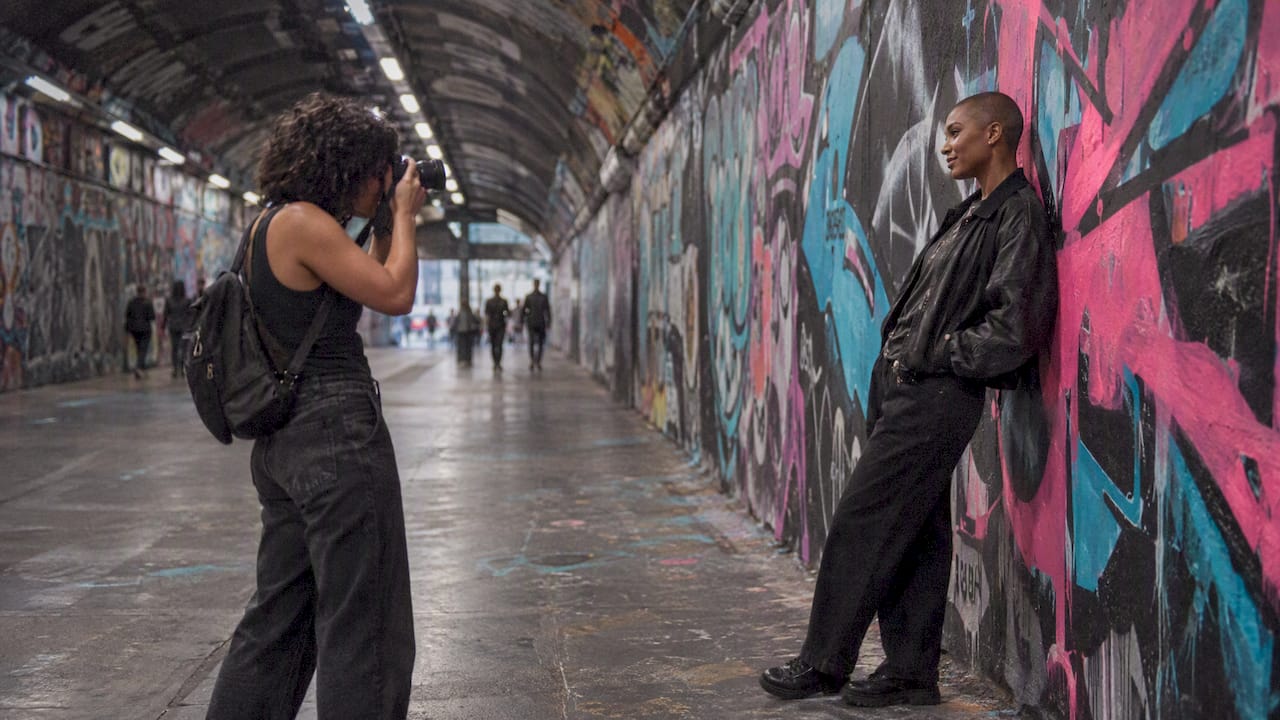
The densest street art in London is in three places: the Leake Street Tunnel under Waterloo, the Shoreditch and Brick Lane streets, and Hackney Wick. Camden, Brixton and the South Bank add more. The walls change constantly, so treat any list, including this one, as a set of neighbourhoods to explore rather than a checklist of pieces.
We are a London photography agency that matches people with queer photographers, so we spend a lot of time in these streets with couples, creatives and brands. This guide is about where to go, what to expect, and how to make pictures there that feel like yours.
TL;DR
- Leake Street Tunnel (Waterloo): the biggest legal graffiti space in the city, free, and repainted so often that a visit rarely looks the same twice.
- Shoreditch and Brick Lane: the classic walking route, with side streets and yards that reward slow wandering.
- Hackney Wick, Camden and Brixton: quieter, more local, and often better for a shoot.
- Don’t plan around one famous piece. Murals get painted over, removed or sold, so choose a neighbourhood and stay flexible.
- For a shoot, go early or midweek, and ask whoever is photographing you to scout on the day.
Table of Contents
- Leake Street Tunnel, Waterloo
- Shoreditch and Brick Lane
- Hackney Wick
- Camden, Brixton and the South Bank
- Why a list of walls only goes so far
- Read the wall before you photograph it
- A suggested half-day route
- Photographing street art: what works
- When to hire a photographer for it
- Choosing the neighbourhood for your shoot
- FAQ
- Sources
Leake Street Tunnel, Waterloo
If you only have an hour, start here. Visit London describes Leake Street Arches as an urban gem under Waterloo Station, at Leake Street, SE1 7NN. Its street art guide puts the tunnel at over 300 metres of graffiti.
It is often called the Banksy Tunnel. Banksy invited graffiti artists to paint it in 2008, and it has been a legal painting space since. Because anyone can paint here, the layers are thick and new work can appear within hours. That is the appeal and the catch: you cannot promise yourself a particular piece.
Practical notes
- It is free and open to the public, and it is a walkway, so people and cyclists pass constantly.
- It is covered, so the light is flat and even, which helps portraits on grey days.
- Midday weekends are busy. Early mornings are calmer, and a quiet tunnel feels completely different.
- Waterloo, Lambeth North and Embankment are all within walking distance, and the South Bank is a short stroll away.
Shoreditch and Brick Lane
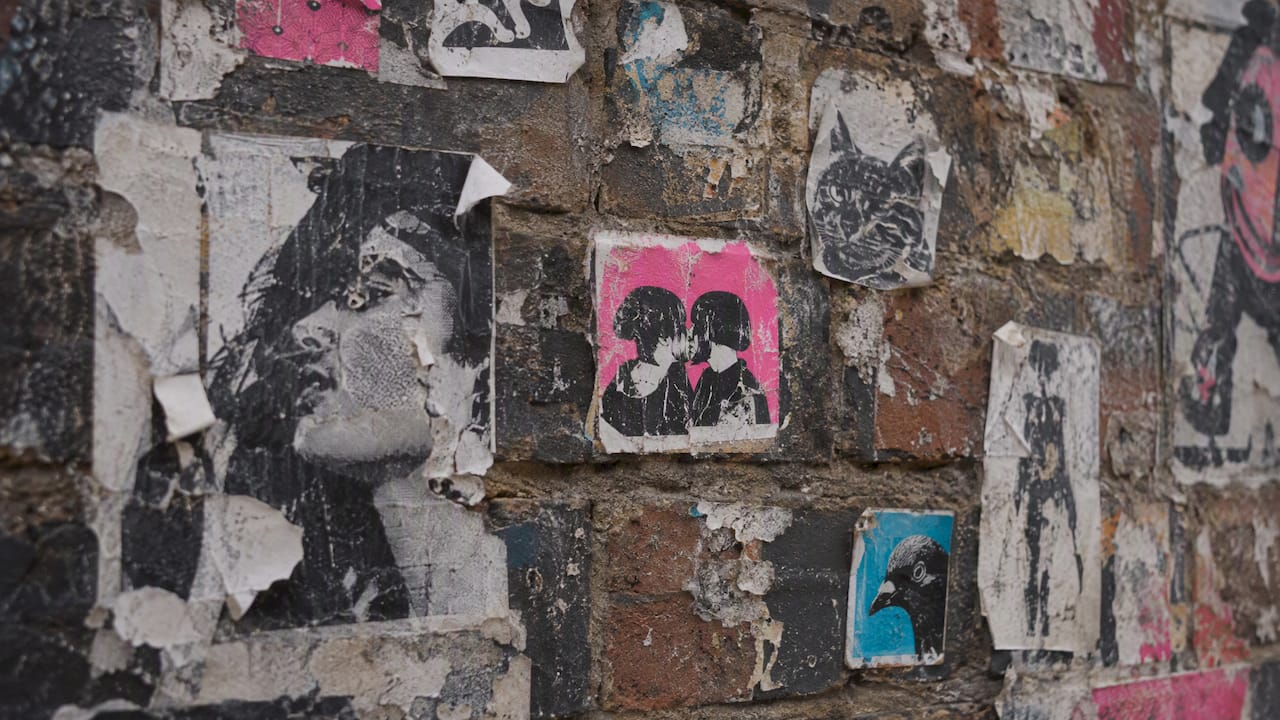
This is the route most people mean when they say street art in London. A walk around Brick Lane and Shoreditch takes in an ever-changing scene of murals, stencils and paste-ups, and local guides keep pointing people to the same pockets.
Good streets to start with, going by what local guides repeatedly name:
- Brick Lane and its side streets, including Hanbury Street and Princelet Street.
- Dray Walk and the Truman Brewery yards, for small pieces tucked into corners.
- Rivington Street and the streets around it, where the area is sometimes called a designated graffiti zone.
- The Shoreditch High Street end of Wheeler Street, where walls and a tunnel turn up.
The area is a long way from a gallery. Brick Lane is also the heart of London’s Bangladeshi community, with curry houses, bagel shops and vintage stalls beside the walls. One travel writer’s route notes it is reachable from Aldgate East on the District and Hammersmith & City lines, or from Shoreditch High Street on the Overground.
If you go on a Sunday, expect crowds. A quiet weekday morning gives you room to look up, notice the small stickers and wheat-pastes, and take your time.
Hackney Wick
For many locals, this is the better answer. Londonist’s guide describes Hackney Wick as the place where you will find the most action in the borough. It used to be an enclave of artists living in old industrial buildings, and nearly every surface carried a stencil or sticker.
The area has gentrified, and new flats now sit among the warehouses. But the same guide says the Lord Napier pub, a former squat once covered in street art, has kept the tradition going. Walk the canal towpath and the streets either side of the station, and look at the bridges and the sides of workshops.
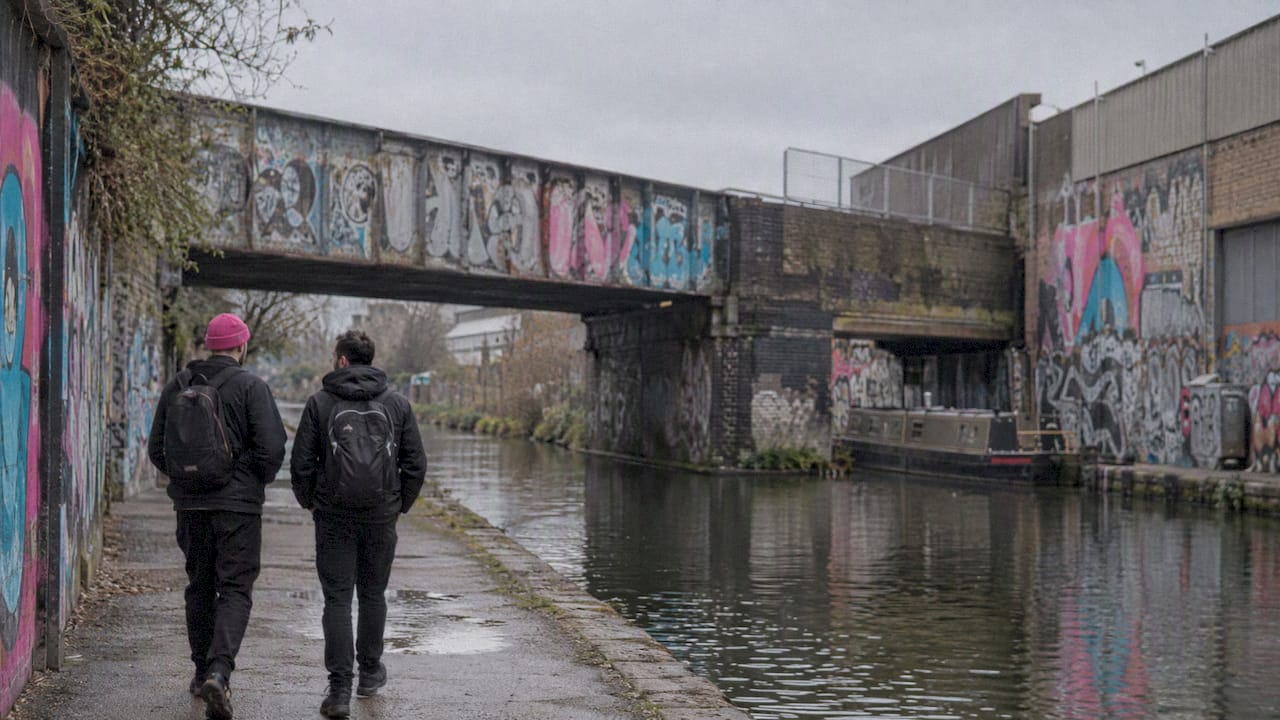
The feel is more residential and more relaxed. People are less in a hurry, the backgrounds are simpler, and a couple or a portrait client is less likely to feel like they are on a tour. If you want to understand the borough better, our page on queer photographers in Hackney is a good place to start.
Camden, Brixton and the South Bank
Camden. The market has lost its wild reputation, but the streets nearby still have murals. Londonist points to an Amy Winehouse mural by JXC behind the Hawley Arms as the biggest of many tributes in Camden Town. It is a place where people pause out of affection, so be considerate with a camera.
Brixton. Visit London lists Brixton among the boroughs with extensive murals. Walk from the Tube through the market lanes and look at the sides of buildings, where large community pieces tend to live.
South Bank. Around Leake Street, the riverside is busy but photogenic. Visit London also lists the Leake Street tunnel as one of its photo spots, which tells you how many other people will be there with phones out.
Why a list of walls only goes so far
Street art is temporary by nature. Some of the best-known examples show why.
Banksy’s Balloon Girl was painted on a London shop and voted the nation’s favourite artwork in 2017, yet the original wall is not something you can plan a shoot around. In 2013, a Banksy mural painted before the Diamond Jubilee vanished from a London street and turned up for sale at a US auction site. More recently, a wildlife series appeared in summer 2024, and the BBC reported on how authenticity gets confirmed for works that show up unannounced.
The lesson is practical. If your brief says “the dog mural on that corner”, check the day before. If it says “colour-heavy walls in east London”, you will find something.
Read the wall before you photograph it
A mural is someone’s work, and often someone’s community. In 2022 the Mayor of London’s Untold Stories funding supported projects in 19 boroughs, including rainbow plaques celebrating LGBTQ+ history and murals honouring influential Black women in Lewisham. Pieces like that are tied to local identity, and they are more than a backdrop.
A few habits that help:
- Find out who made it. Many artists sign pieces. If you are using the image commercially, credit matters and permission may too.
- Check the setting. Some yards and courtyards are private or managed spaces. Stick to public streets unless you have asked.
- Be light-footed. Do not block a doorway, a shopfront or a cycle lane for a pose.
- Think about what the piece says. A memorial wall is not the place for a styled fashion shot.
The same care applies when you are photographing people. Every shoot we run respects pronouns and personal boundaries, and the same attitude belongs in public space.
A suggested half-day route
This is a route you can walk without rushing. Adjust it for weather and energy.
| Time | Where | Why |
|---|---|---|
| 8.30am | Leake Street Tunnel | Quiet, even light, the thickest layers of paint |
| 10.00am | Walk or Tube to Shoreditch High Street | Coffee, then the side streets around Rivington Street |
| 11.30am | Brick Lane and Hanbury Street | Murals, paste-ups and small details |
| 1.00pm | Hackney Wick | Lunch by the canal, then a slower look at the walls |
If you want a soundtrack for the evening, the same part of London has a long live music scene. This guide to jazz jam sessions in London shows where players and listeners go once the light fades.
Photographing street art: what works
Most visitors take the same shot: someone in front of a big wall, centred, squinting. These ideas make better pictures.
- Go early or late. Famous spots are at their most crowded at peak times, and an early session is often the only way to keep the frame to yourselves.
- Use the wall as texture, not as the subject. A partial crop of colour behind a face often feels more personal than the full piece.
- Pick a colour that suits you. Clothes that echo or contrast with the wall make the image look planned, even if it was not.
- Move through the street. Walking shots feel natural, especially for couples.
- Keep one backup. If the wall has gone, a second option nearby saves the day.
For weddings, elopements and engagement sessions, we cover choosing locations, permits and timing on our page about London photoshoot locations for LGBTQ+ couples. It is written for people who want a spot that fits them, not just the most famous one.
When to hire a photographer for it
Plenty of people will happily take their own pictures here, and that is fine. But if the images are for a brand, a book, an editorial feature or a milestone, a photographer who knows the streets saves time and avoids the pitfalls above: walls painted over, private yards, crowds in the wrong hour.
Our photographers are vetted and personally represented, and a real person, not an algorithm, matches you to the right one, often within 24 hours. All imagery is original, never stock or AI generated. These are the shoots that most often use London’s walls:
- Portraits and personal branding. A personal brand session starts from £200 one-off. See all packages for the full list, or read about queer creative branding.
- Editorial and documentary. For stories about people and place, our community documentary photographers and editorial photographers know how to work with public space.
- Brand content days. A content day can include several neighbourhoods in one go.
- Pride and events. For organisations, we have a Pride event photographer team.
- Nightlife and vogue. If the street leads to the dance floor, we also cover club nights and ballroom.
If you want video instead of stills, we also offer video services. Pricing for most packages is set out on our prices page, so you can see what suits before you get in touch.
Choosing the neighbourhood for your shoot
The right place depends on what you want the pictures to say.
- Loud and graphic: Leake Street, early in the morning. It suits bold fashion, creative portraits and brand content.
- Classic East End: Shoreditch and Brick Lane side streets. It suits couples, editorial, and people who want London to be obvious in the frame.
- Calm and local: Hackney Wick, by the canal. It suits relaxed portraits, engagement shoots and documentary work.
- Affectionate and a bit nostalgic: Camden, away from the main crowds.
A good photographer will ask what you want to feel in the picture before suggesting where to stand. That conversation is often more useful than any map.
FAQ
Where is the best place to see street art in London?
For sheer density, start at Leake Street Tunnel under Waterloo, then head to Shoreditch and Brick Lane. If you want somewhere calmer, try Hackney Wick. The mix of all three gives you a good sense of the scene.
Where can I see Banksy street art in London?
There is no reliable list, because his pieces are often removed, vandalised or sold. Leake Street has a Banksy connection through the 2008 event he organised, but the paint there changes constantly. Check recent news and local reports before a trip, rather than relying on an older guide.
Is Leake Street Tunnel worth visiting?
Yes, especially early in the day. It is free, it is over 300 metres long, and the art changes often enough that repeat visits feel different. Go on a weekday morning to avoid the crowds.
Is there a London street art map I can use?
Several online maps exist, but they go out of date quickly. Use them to choose an area, then walk the streets around it and let the walls surprise you. If you are planning a shoot, ask your photographer to check the day before.
Sources
- Leake Street Arches, Visit London
- Arty things to do in London, Visit London
- Shoreditch street art tours, Visit London
- 10 best photo spots in London, Visit London
- Where to see street art in London, Londonist
- Hidden London: 3 places to find street art, One Journey Away
- Banksy’s balloon girl chosen as nation’s favourite artwork, BBC News
- Banksy mural vanishes from London, appears at US auction, BBC News
- Banksy wildlife series, BBC News
- New artworks to help enrich the diversity of London’s public realm, London City Hall