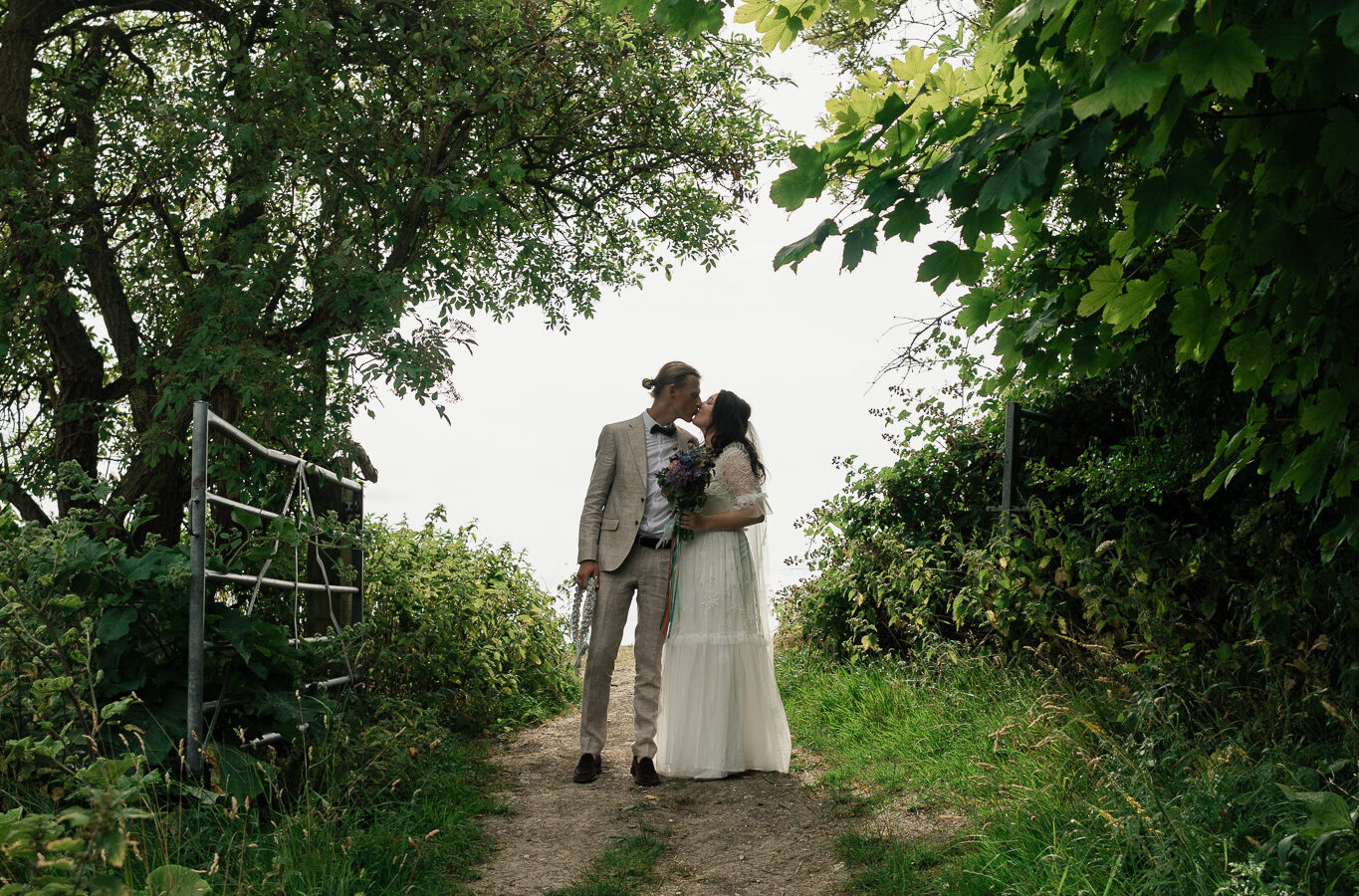
Permits from £294: London photoshoot locations for LGBTQ+ couples
For simple portraits, head to a riverside landmark at dawn: South Bank, Tower Bridge, or St Paul’s Cathedral all work without a permit if you’re a small group with no tripod. If you need kit, privacy, or bad weather cover, book a studio like Vanity Studios or match with a photographer through Queer.Photo. Anything organised with lighting, models, or more than a handful of people usually needs a permit and Public Liability Insurance.
TL;DR:
- Casual outdoor portraits at dawn without equipment or groups generally do not require permits at landmarks like South Bank, Tower Bridge, or St Paul’s Cathedral.
- Most professional or organized shoots with lighting, models, or multiple people need permits and Public Liability Insurance, with fees ranging from around £294 for city gardens to over £1,000 per hour for managed squares.
- Booking popular locations like Sky Garden and The Shard requires advance reservations and checking specific restrictions before shooting, especially with tripods or reflectors.
- Public parks and landmarks are best visited early or on weekdays to avoid crowds, and weather contingency plans include indoor studios or sheltered outdoor spots.
- Matching shoot type, group size, and kit to suitable locations avoids wasted time, and professional photographers can handle permit processes and location scouting through services like Queer.Photo.
Table of Contents
- The best London photoshoot locations, compared
- Top outdoor London photo locations and how to shoot them
- How do I choose the right London location for my shoot?
- Permits, licences and what they actually cost
- Getting there: transport, parking and access at each spot
- Props and outfits that actually work at each location
- What if it rains during your outdoor shoot?
- Current restrictions affecting London photoshoots
- Where to apply for permits and permission
- Safety and etiquette for shooting in public spaces
- Book a photographer who already knows these locations
- Sources
- FAQ
The best London photoshoot locations, compared
Working out where to shoot in London means separating two different decisions: which place gives you the backdrop you want, and which provider actually takes the photos. A landmark like Tower Bridge is a location. Vanity Studios is a provider. You can combine both (hire a photographer to shoot you at St Dunstan in the East) or pick a provider that supplies its own four walls entirely.
The table below mixes verified public landmarks with private studios so you can see, at a glance, which ratings and review volumes back each option, and what each is genuinely best suited to.
A few things jump out once you read down the “best for” column rather than the star ratings. If you’re shooting couples somewhere quiet and a little romantic, St Dunstan in the East Church Garden beats the crowds at Tower Bridge for a reason: it’s genuinely tucked away. If it’s raining (and in London, budget for that), a studio session with Studio Grey or Nassau Street Studios for headshots costs you nothing in weather anxiety. And if you want someone who understands what you’re actually trying to capture without you having to explain it twice, that’s where matching with a photographer through Queer.Photo earns its place on this list rather than just being another studio in a directory.
Families and newborn sessions point clearly towards moonalitta photography, given its specialism in early-life photography. Anyone shooting for a personal brand or corporate use should look at Studio Grey or Nassau Street Studios rather than trying to fake a professional headshot against a railway bridge. And self-portrait sessions, oddly underused by most Londoners, get a genuinely useful low-cost option in you self-portrait studio, where you control the camera yourself.
Top outdoor London photo locations and how to shoot them
Every outdoor spot on this list rewards a bit of planning — for a practical guide on making the most of your visit, see this London itinerary for first-time visitors. Turn up at the wrong hour and you’ll spend more time dodging tourists than composing shots.
- South Bank and Westminster. Shoot at dawn or blue hour for the cleanest light and the fewest people between you and the London Eye or Big Ben. Midday here means wall-to-wall visitors, and your background will be full of strangers rather than skyline.
- Tower Bridge. The high-level walkways sit 42 metres above the Thames, giving you a vantage point most visitors never use. Go on a weekday morning; the bascules get busy with foot traffic later in the day, and it shows in your frames.
- St Paul’s Cathedral and Millennium Bridge. Use the wet pavement or glass reflections after light rain, and shoot wide open to separate your subject from the crowd behind them. The dome makes a strong, symmetrical backdrop if you square up to it directly.
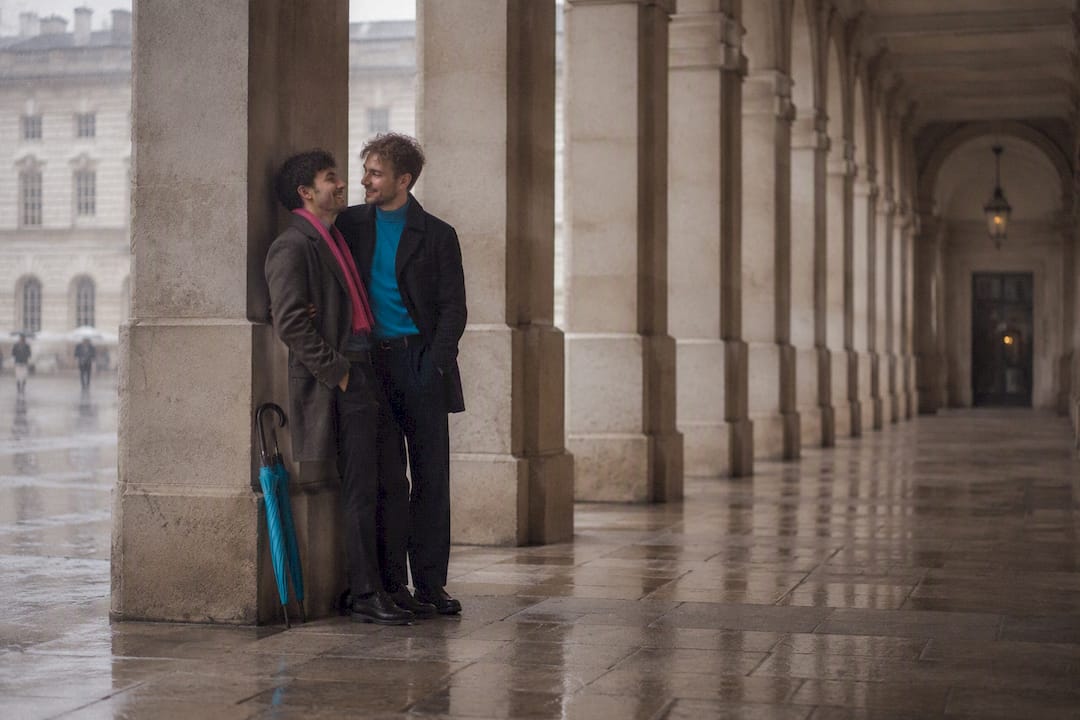
- Somerset House. The colonnades give you shelter from both sun and rain, and the courtyard changes character with the seasons, including a winter ice rink that makes for a genuinely different set of shots than anywhere else on this list.
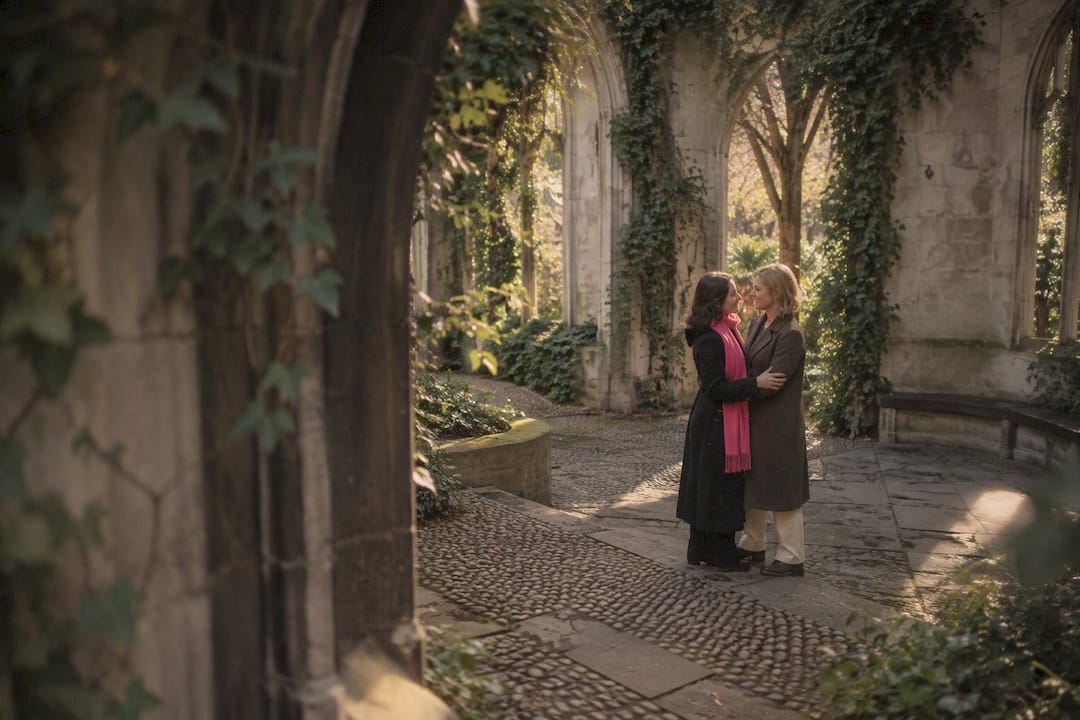
- Leadenhall Market and St Dunstan in the East. Both are sheltered, characterful, and quieter than the big landmarks. Leadenhall’s ornate ironwork suits editorial or fashion-style portraits; St Dunstan’s ruined walls and ivy suit something softer and more romantic.
- Sky Garden and The Shard. Both require booking ahead, and both have photography restrictions worth checking before you arrive with a tripod or a second person carrying reflectors. Don’t assume you can turn up and shoot freely; confirm the rules on the day you book.
Pro Tip: Shoot Tower Bridge and St Paul’s back to back on the same weekday morning. They’re a short walk apart along the river, and you’ll get two very different backdrops before the tourist crowds properly wake up.
How do I choose the right London location for my shoot?
Start with the objective, not the postcode. A couple wanting soft, intimate portraits needs a very different spot to a small business owner needing sharp corporate headshots, and matching the wrong location to the wrong brief wastes your whole afternoon.
- Match the shoot type to the location type. Portraits and headshots usually suit a studio; couples and editorial work often suit a landmark or garden; family sessions can go either way depending on the children’s ages and the weather forecast.
- Count your people and your kit. A phone and two people is casual photography almost everywhere. A tripod, reflectors, or a model plus stylist tips you into “organised shoot” territory, which is where permits start applying.
- Check if the site needs advance booking. Sky Garden and The Shard’s viewing platforms both require booking ahead, sometimes with paid tickets, so this isn’t something you can decide on the morning.
- Plan your timing around the venue, not your own schedule. Golden hour suits portraits almost everywhere; early weekday mornings suit the big tourist landmarks; midweek suits markets like Leadenhall, which get genuinely difficult to shoot in on a Saturday.
Permits, licences and what they actually cost
Anyone shooting casually with a phone or a single camera rarely needs paperwork in London. The moment you add a tripod, a model, or a stylist, several public bodies start treating your shoot as commercial activity, and the rules differ depending on where you plan to stand.
The Royal Parks require a wedding or lifestyle photography permit for organised shoots, with a minimum of 10 working days’ notice and Public Liability Insurance cover of at least £5,000,000. The City of London charges for photography in its gardens, with a 2-hour licence priced at around £294, a reasonable trade for guaranteed access in the Square Mile. Trafalgar Square and similarly managed public squares can charge commercial rates starting around £1,000 (+VAT) per hour, so check before assuming any central square is free to use.
- Royal Parks: 10 working days’ notice, £5m Public Liability Insurance
- City gardens: roughly £294 for a 2-hour photography licence
- Managed squares: fees can start around £1,000 (+VAT) per hour
- TfL restricts tripods, flash, and treats promotional shoots as commercial, requiring written permission first
Getting there: transport, parking and access at each spot
London’s photo locations sit almost entirely within Zones 1 and 2, which means the Tube, bus, or river boat will usually get you closer than a car will. South Bank, Tower Bridge, St Paul’s, and Somerset House all sit within a short walk of multiple Underground stations, and none of them offer meaningful parking, so plan to arrive on foot or by public transport rather than driving.
Wheelchair access varies more than you’d expect for a city this old. Sky Garden and The Shard are both fully accessible by lift, since they’re modern buildings designed around visitor flow. St Paul’s Cathedral has step-free routes to most of its ground floor, though some upper galleries remain harder to reach. St Dunstan in the East, being an open-air ruin with uneven paving, is manageable but not fully level throughout, so it’s worth a site visit beforehand if mobility is a factor for anyone in your group.
Studios tend to solve accessibility questions more simply. Vanity Studios, Studio Grey, and OLD AND NEW STUDIO all operate from fixed indoor premises, so checking lift access and step-free entry with the studio directly before booking takes a two-minute phone call rather than a scouting trip. If accessibility is a genuine constraint on your shoot, that single phone call is worth more than any amount of guesswork based on a landmark’s general reputation.
Props and outfits that actually work at each location
Outfits and props should respond to what’s already in the frame, not fight it. Tower Bridge and St Paul’s both have strong architectural lines and neutral stone or grey tones, so bold, saturated colours (a red coat, a mustard dress) tend to pop far more than anything muted, which risks blending into the background.
St Dunstan in the East, being green, quiet, and slightly overgrown, suits softer palettes: creams, sage, dusty pink, and flowing fabric that catches the breeze. Bringing a small posy or a picnic blanket here works because the setting is already intimate; anything too formal fights the mood of the space. Leadenhall Market’s ironwork and colour rewards structured, tailored outfits and works well for a single striking prop, like an umbrella or a vintage suitcase, rather than several competing accessories.
Studios give you the most control, since you’re not fighting daylight or weather. Body & Soul Studios and Vanity Studios both work well with simple wardrobe changes between shots, something genuinely difficult outdoors without a changing tent. For self-portrait sessions at you self-portrait studio, keep props minimal. A single chair or a length of fabric photographs better than a bag full of accessories you’ll never use once the timer starts.
What if it rains during your outdoor shoot?
London rain is close to a certainty on any given day, so build a contingency into your plan rather than treating it as bad luck. Somerset House’s colonnades and Leadenhall Market’s covered arcades both give you a dry, still-characterful backup within a short walk of their outdoor equivalents, meaning you don’t need to abandon the day entirely if a shower rolls through.
Sky Garden and The Shard both offer genuine indoor alternatives with skyline views, so a booking there gives you weather insurance built into the location itself. For anyone who’d rather not gamble on the forecast at all, booking a studio from the outset removes the risk completely. Studio Grey, Nassau Street Studios, and Vanity Studios all run entirely indoors, with lighting you control rather than negotiate with.
The most reliable approach for any shoot with a fixed date, a hired photographer, or a group that’s hard to reassemble is to build a studio session in as the fallback from day one, rather than scrambling for one once the rain has already started. A photographer matched through Queer.Photo can often suggest this kind of contingency plan as part of the original booking, so it’s worth raising early rather than after the weather’s already turned.
Current restrictions affecting London photoshoots
Most pandemic-era restrictions on photography in London public spaces have been lifted, and the rules governing shoots today are back to being about permits, insurance, and site-specific policy rather than public health measures. That said, individual venues retain the right to set their own conditions, and it’s worth checking directly with a venue if you’re planning a shoot with more than a handful of people.
The practical restrictions that remain are the ones covered above: Royal Parks permits, City of London garden licences, and TfL’s rules on tripods and flash. None of these are pandemic-related; they predate 2020 and will likely outlast any future public health guidance too. If a venue does have a current notice about group sizes or access hours, it’s usually posted on the venue’s own booking page rather than folded into general photography policy, so check the specific site you’re using rather than assuming a blanket London-wide rule applies.
Where to apply for permits and permission
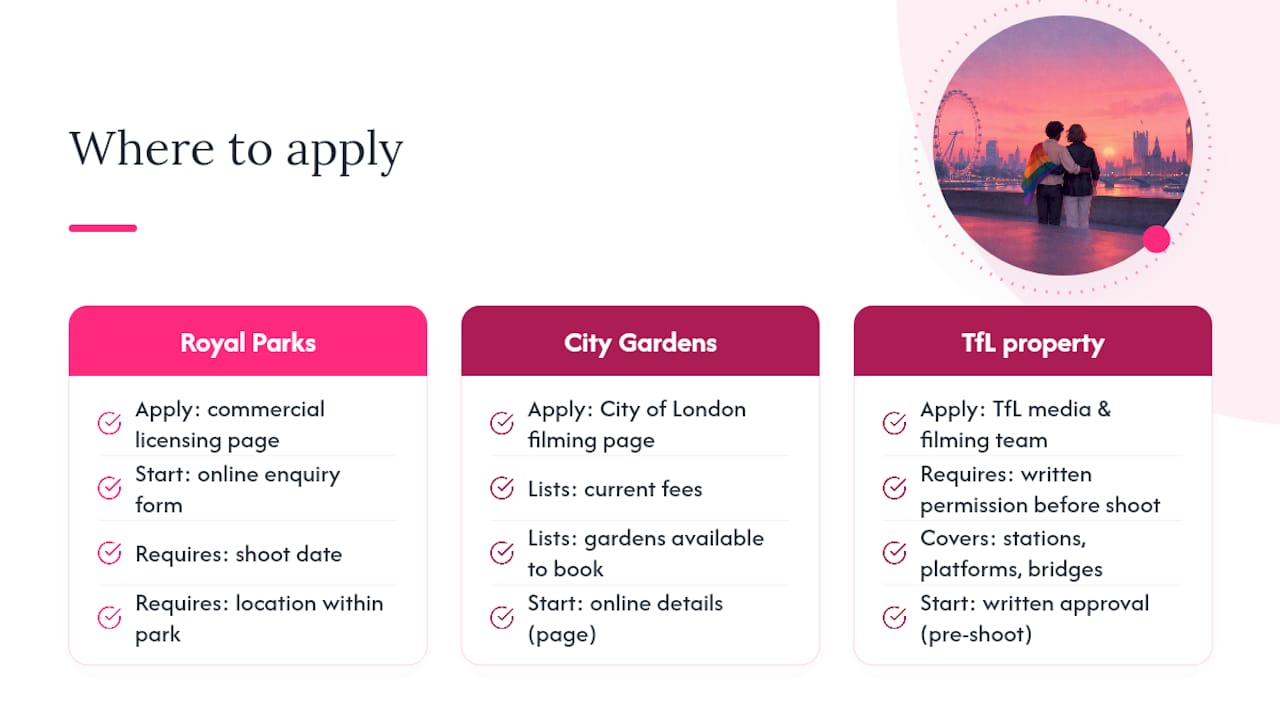
Applications for Royal Parks photography permits go through the Royal Parks commercial licensing page directly, and the process typically starts with an online enquiry form rather than a phone call. Expect to submit your shoot date, location within the park, group size, and insurance details as part of that application.
City of London garden licences run through the City of London’s filming and photography page, which lists current fees and the gardens available to book. For anything involving Transport for London property, including stations, platforms, or bridges under TfL’s remit, written permission needs to come from TfL’s media and filming team before you shoot, not after.
If navigating all three of these feels like more admin than your shoot warrants, that’s precisely the gap a managed booking through Queer.Photo can close, since a matched photographer will often already know which locations need what paperwork.
Safety and etiquette for shooting in public spaces
Busy London locations mean sharing space with commuters, tourists, and residents who didn’t sign up to be in your background. Basic courtesy goes a long way: keep your setup compact, avoid blocking thoroughfares, and move quickly if a member of staff or security asks you to.
Watch your belongings as closely as your composition. Popular spots like South Bank and Tower Bridge draw pickpockets precisely because photographers get absorbed in framing a shot and stop watching their bags. Keep valuables on your body, not on a bench beside you.
If you’re using a tripod anywhere near TfL property, be ready to explain what you’re doing and to whom, since TfL treats even casual-looking promotional shoots as commercial activity requiring written permission. Staff have the right to stop you on the spot if you don’t have it. And with couples or intimate portraits in quieter spots like St Dunstan in the East, be mindful that these gardens remain public spaces used by dog walkers and lunch-break visitors, not private sets. A little awareness of who else is around keeps the shoot pleasant for everyone, including you.
Book a photographer who already knows these locations
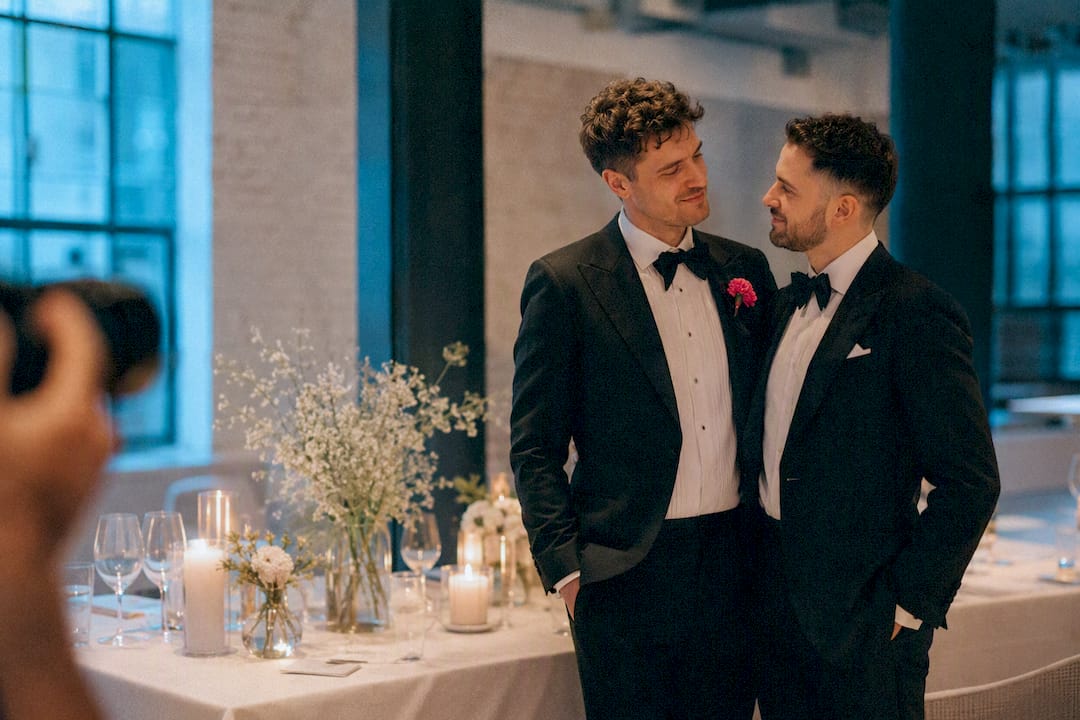
Scouting permits, checking weather forecasts, and working out whether Tower Bridge or St Dunstan in the East suits your couple’s portraits takes time most people don’t have to spare before a shoot. Queer.Photo removes that groundwork by matching you with a vetted queer photographer within 24 hours, someone who already knows which London spots need paperwork and which don’t, and can recommend a studio backup like Vanity Studios or Studio Grey if the forecast turns against you.
Packages run from a Mini session through to a Full day shoot, with a Personal brand package starting from £200 for a one-off session, so there’s a format for a solo portrait sitting, a couple’s engagement shoot, or a full content day with multiple outfit changes. If video coverage matters alongside stills, Queer.Photo’s video services cover that too, without needing a second booking with a different provider.
Every photographer on the roster is personally vetted and matched by a real person, not an algorithm, with every shoot respecting pronouns and personal boundaries throughout. If you’re planning couples portraits at St Dunstan in the East, a family session in a studio, or a content day covering several London landmarks in one afternoon, get matched with a photographer and let someone who already knows the permit rules handle the logistics for you.
Sources
- Wedding & lifestyle photography — The Royal Parks
- Filming and photography in City gardens — City of London
- Filming and photography on the TfL network — TfL
- Tower Bridge — Visit London
FAQ
What are some good locations for a photo shoot in London?
Riverside landmarks like Tower Bridge and South Bank give strong outdoor backdrops, while St Dunstan in the East Church Garden and Somerset House suit quieter, more intimate portraits. For guaranteed weather protection and controlled lighting, studios such as Vanity Studios or Studio Grey work well, and matching with a photographer through Queer covers both options in one booking.
Which location should I choose for a photoshoot?
Match the location to your shoot type first: studios suit headshots and family sessions, while landmarks suit couples and editorial work. Check group size and kit next, since anything beyond casual phone photography with a tripod or model may need a permit from bodies like the Royal Parks.
What are some good ideas for a photoshoot in London?
Dawn shoots along South Bank, architectural portraits at St Paul’s Cathedral using reflections on the Millennium Bridge, and sheltered editorial shots in Leadenhall Market all offer distinct looks within a short walk of each other. A studio session at OLD AND NEW STUDIO or a self-portrait sitting at you self-portrait studio gives a controlled, weather-proof alternative on the same day.
How do I find photoshoot locations?
Start with verified reviews and photos on Google Places for public landmarks, then check each site’s own photography policy before assuming access is free. For a faster route, booking through an agency like Queer means a photographer already familiar with permit requirements can recommend the right spot for your specific shoot.
Do I need a permit to take photos in a London park?
Casual photography without a tripod or models rarely needs a permit in most parks. Organised shoots in Royal Parks need a minimum of 10 working days’ notice and £5,000,000 in Public Liability Insurance, so apply well ahead of your date.