7 Contract Clauses to Secure Your Wedding Photo Rights (UK)

Under UK law, the photographer is normally the first owner of copyright in your wedding photos, not you, even though you booked and paid for the day. What you actually get depends entirely on the contract: a licence to print and share the images, or, less often, a written assignment that hands ownership over. If your contract is silent or vague, check it now, before an anniversary post or an album order turns into an awkward email exchange.
TL;DR:
- Most wedding photographers in the UK retain copyright unless they specifically transfer it through a written assignment, not just upon payment or receipt of files.
- Couples generally receive a licence for personal use, which excludes commercial activities, resale, or extensive editing without formal agreement.
- To obtain full ownership or broader rights, couples must negotiate an assignment or a tailored licence explicitly included in the contract from the start.
- UK privacy rights and GDPR can restrict photo use, especially for wedding images published without explicit consent from all identifiable individuals, regardless of copyright status.
- Disputes over image use often stem from unclear contractual terms; clear, written agreements protect both photographers and clients against misunderstandings.
Table of Contents
- Who Owns Wedding Photos Under UK Copyright Law?
- What Do Couples Actually Get in Their Wedding Contract?
- How Do You Get Full Ownership or Broader Rights?
- Do Privacy Laws and GDPR Affect Your Wedding Photos?
- What If a Photographer Uses Your Photos Without Permission?
- Pre-Booking Checklist: Questions to Ask Before You Sign
- Commissioned Weddings vs. Spontaneous Event Photography
- Can You Post Your Wedding Photos on Social Media?
- What Happens With Photos Taken Jointly by Multiple People?
- What Happens to Ownership If the Photographer Dies or Closes Their Business?
- Why Clear Terms Protect Everyone at the Table
- How Queer Handles Usage Rights for Wedding Clients
- Sources
- FAQ
Who Owns Wedding Photos Under UK Copyright Law?
Copyright law treats the person who clicks the shutter as the author, and the author is the first owner of the copyright. That principle comes straight from section 11 of the Copyright, Designs and Patents Act 1988, and it applies whether your photographer is a sole trader or working for a studio, with one exception: photos taken by an employee during their normal job usually belong to the employer instead.
Gov confirms that for something like wedding photography, copyright will usually remain with the photographer unless a written agreement says otherwise. Paying the invoice does not change that. Neither does receiving a USB drive full of edited files.
A few things worth separating in your head:
- Copyright is the legal right to copy, publish, adapt, and distribute the images.
- Possession of prints or digital files just means you have copies, not the underlying rights.
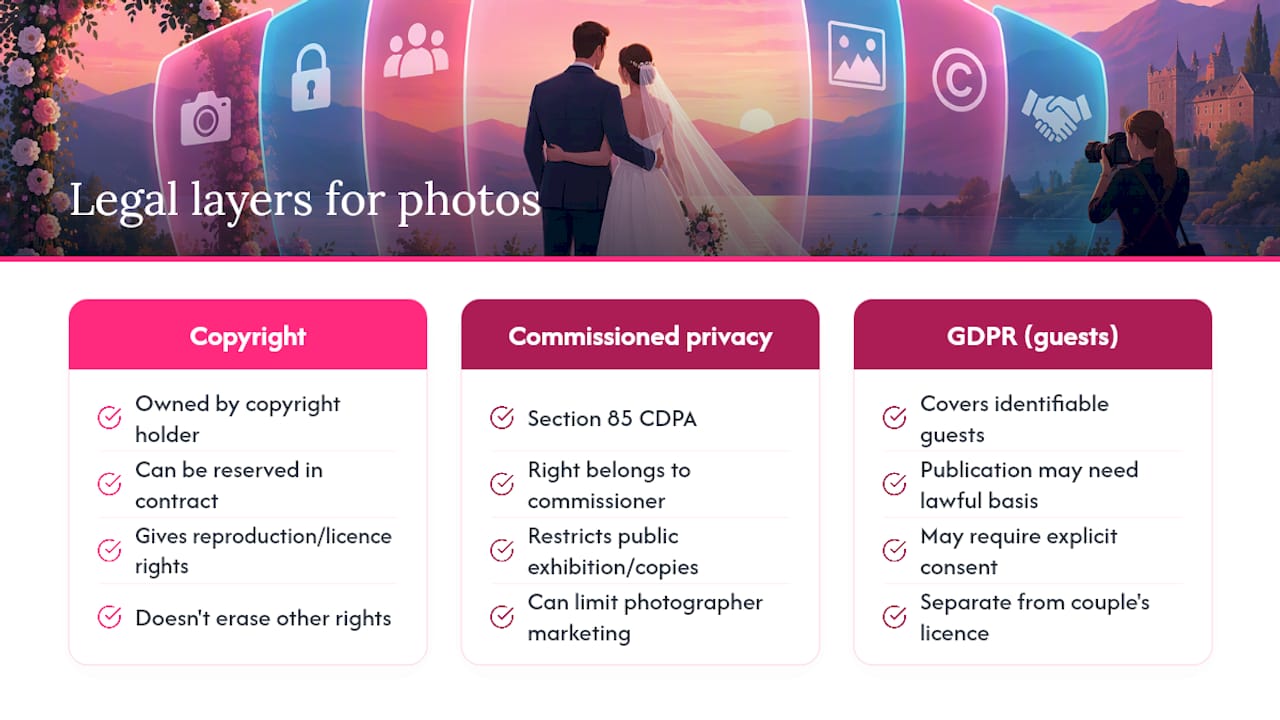
- Privacy rights under CDPA section 85 give you a separate, personal protection against public use of images commissioned for private purposes, even when the photographer holds copyright.
Those three layers rarely get explained together, which is exactly why couples assume ownership follows payment. It doesn’t.
What Do Couples Actually Get in Their Wedding Contract?
Most wedding photography contracts hand couples a licence, not copyright. That licence typically covers:
- Printing photos for personal use (albums, frames, gifts to family)
- Sharing images privately with guests
- Posting to personal social media accounts
What it typically excludes is just as important:
- Commercial use of the images (using them in your own business marketing, for instance)
- Reselling or sublicensing photos to a magazine, blog, or brand
- Editing, cropping, or applying filters beyond what the contract allows
Handing over the RAW files or a full-resolution folder does not equal a transfer of copyright either. It’s easy to read “here are all your photos” as ownership when it’s really just wider access to copies. The Intellectual Property Office’s guidance on copyright and GDPR makes this distinction explicit: possession of files and permission to use them are two separate questions, and a contract needs to answer both.
How Do You Get Full Ownership or Broader Rights?
If personal-use permissions aren’t enough (say you want to use your wedding photos in a personal brand shoot, or you want the freedom to license one to a publication later), you have two real paths: assignment or a tailored licence.
Assignment transfers copyright entirely, in writing, usually signed by the photographer. Once assigned, you become the legal owner and can do what you like with the images, subject to any moral rights the photographer keeps (more on that below). GOV.UK’s guidance on ownership of copyright works confirms a written assignment is what makes this transfer legally binding, not a verbal promise or an implied understanding.
A licence, by contrast, grants specific permissions without moving ownership. It is almost always the cheaper option, and for most couples it’s genuinely the better fit, since a licence tailored to your actual plans (albums, social sharing, maybe a slideshow at the reception) covers what you need without paying a premium for rights you’ll never use.
Here’s what to request in writing, regardless of which route you choose:
- A clear statement of who owns copyright after the shoot.
- The exact scope of your licence: personal use, social media, print, commercial use, or all of the above.
- Whether you can commission edits, crops, or derivative works, or whether that requires the photographer’s involvement.
- Access terms for RAW files, if you want them.
- Whether the photographer retains portfolio or marketing rights to use your photos.
- Photographer credit requirements, if any.
- Any additional fee for a full assignment versus a standard licence.
Pro Tip: Ask your photographer to write the agreed scope directly into the contract rather than relying on an email exchange. If a dispute ever comes up, a signed document beats a friendly reply-all thread every time.
Do Privacy Laws and GDPR Affect Your Wedding Photos?
Copyright isn’t the only legal layer at play. Section 85 of the CDPA gives the person who commissions a photograph for private and domestic purposes, that’s you, a statutory right against having those images publicly exhibited, issued as copies, or communicated to the public without their consent.
This matters most when a photographer wants to use your wedding photos for their own marketing. Even if their contract reserves copyright, your privacy right can still limit what they publish. The two rights sit side by side rather than one canceling the other out.
Then there’s GDPR. If your photos include identifiable guests, publishing them (on a blog, in an ad, on social media) may require a lawful basis or explicit consent, separate from whatever your photography contract says about copyright. A licence that covers your own image use doesn’t automatically cover your Auntie Carol’s face showing up in someone’s marketing feed.
What If a Photographer Uses Your Photos Without Permission?
Start with the contract before anything else. Most disputes trace back to a portfolio or marketing clause the couple skimmed past at booking.
- Re-read the permitted uses. Many contracts include a standard clause letting the photographer use images for portfolio or marketing purposes, which covers most social posting you might object to.
- Send a written, polite request first. Ask for a takedown, a credit correction, or clarification of what’s permitted, before assuming bad faith.
- Negotiate a licence or fee if the use is commercial. If your photos are appearing in paid advertising or a third-party publication, that likely falls outside a standard personal-use grant, and it’s fair to ask for compensation.
- Consider your privacy right or legal advice if unresolved. Persistent public use against your wishes can potentially trigger a CDPA s85 claim, though formal enforcement carries real costs and is worth weighing against the actual harm before pursuing it.
Pre-Booking Checklist: Questions to Ask Before You Sign
Get these answers in writing before deposit day, not after the honeymoon.
- Who legally owns copyright in the final images?
- What personal uses are explicitly permitted (printing, albums, social sharing)?
- Can you post images to social media without additional permission?
- Does the photographer retain portfolio or marketing rights to your images?
- Will you receive RAW files, and under what terms?
- Is there a fee for full copyright assignment, and what does it cost?
- What credit, if any, does the photographer require when you share images?
Red flags in standard terms and conditions include vague phrases like “photographer retains all rights” with no explanation of what you’re actually licensed to do, or marketing clauses buried in fine print with no opt-out.
Pro Tip: Once you’ve negotiated specific terms, get them into the signed contract itself, and keep the email thread where you discussed them. Verbal assurances at your tasting session won’t hold up if a disagreement arises two years later.
Commissioned Weddings vs. Spontaneous Event Photography
Ownership rules apply the same way in principle across commissioned and spontaneous photography, but the practical reality differs quite a bit.
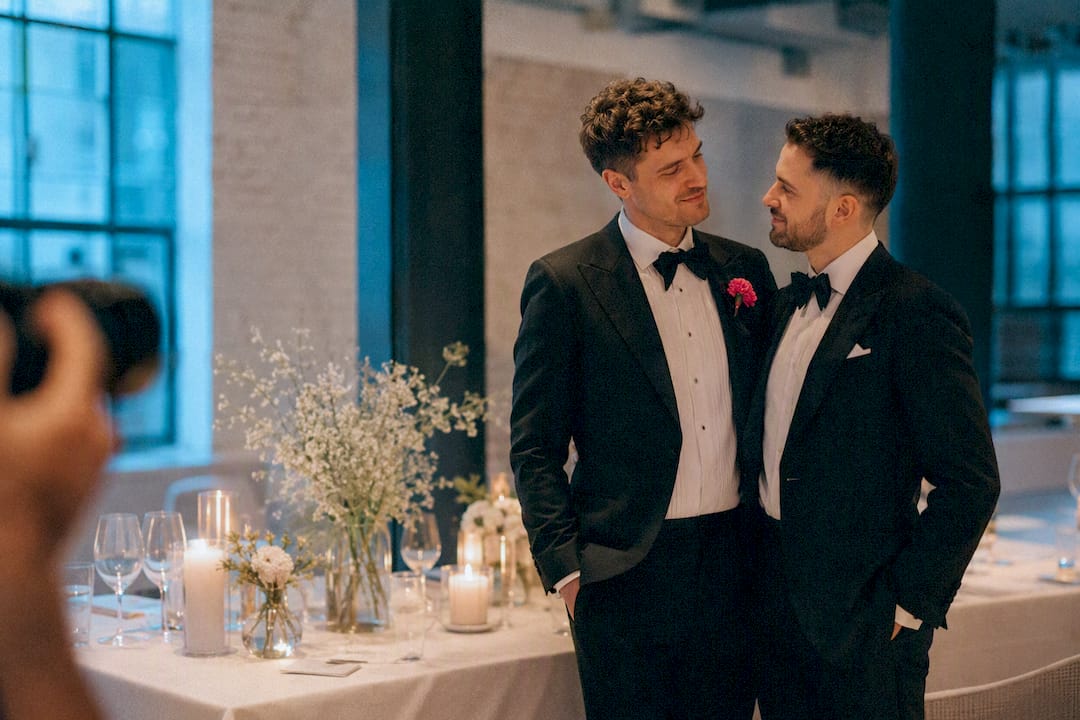
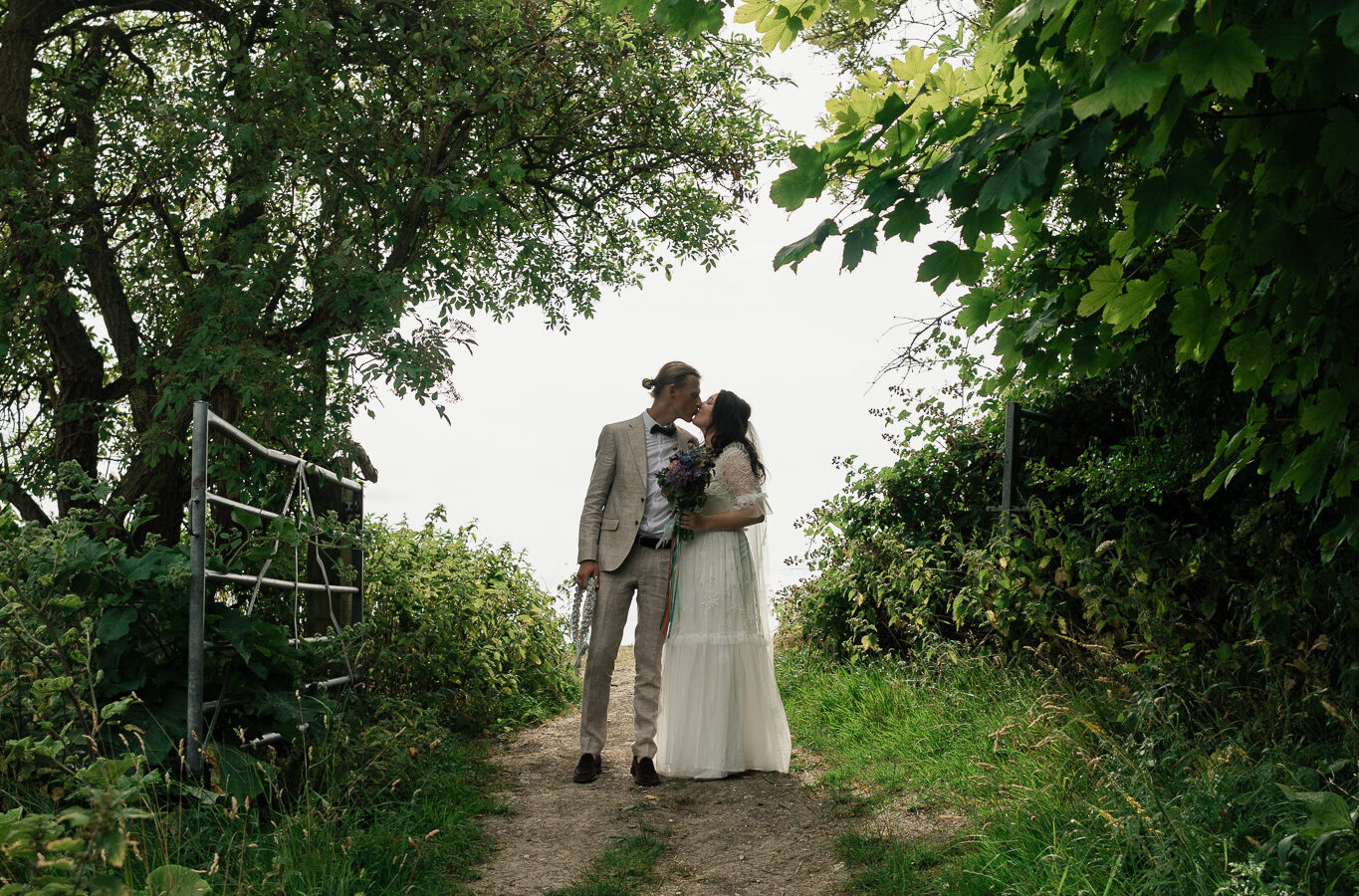
A commissioned wedding shoot comes with a contract, a named photographer, agreed deliverables, and usually a licence spelling out permitted uses. That paper trail is exactly what protects you: it defines who owns what, and it’s the document you point to if a dispute ever comes up.
Spontaneous event photography, think a guest snapping candids on their phone, a friend running a second camera, or a photo booth attendant, sits in murkier territory. Technically, whoever pressed the shutter owns copyright in that image, even if it’s a guest at your own wedding. There’s rarely a contract governing casual phone photos, so the default statutory rule (author as first owner) applies without any negotiated exceptions layered on top.
This creates a strange but real situation: your wedding day can generate images under several different ownership arrangements simultaneously. Your hired photographer’s shots follow your contract. Your cousin’s phone photos belong to your cousin. A venue’s in-house photographer, if you used one, may operate under entirely separate terms with the venue itself. If you want to compile everything into one shared album, it’s worth asking guests informally for permission to include their shots, since technically their copyright applies too, even for a casual family photo.
Can You Post Your Wedding Photos on Social Media?
Whether you can post your own wedding photos comes down entirely to what your licence permits, and this is the single most common gap between what couples assume and what their contract actually says.
Most standard wedding photography licences do include personal social media sharing. But “personal sharing” and “unrestricted public posting” aren’t always the same thing in a photographer’s terms. Some contracts specify low-resolution or watermarked versions for online use, reserving full-resolution files for print. Others require you to credit the photographer in any public post, a request that’s both common and reasonable given they built their business on that visibility.
Where it gets trickier is when you want to do more than post: using a photo in a personal brand shoot, a business announcement, or a paid collaboration. That typically crosses from personal into commercial use, which most standard licences exclude outright. If you’re an influencer, run a small business, or simply suspect you might want commercial flexibility later, negotiate that scope before the wedding, not after you’ve already posted the photo and gotten a polite but firm email about it.
There’s also a reverse scenario worth knowing: your photographer’s own social posting of your images. Most contracts include a portfolio or marketing clause letting them share select images publicly, which is standard practice and generally how photographers attract new clients. If you’d rather they didn’t, for privacy reasons or simply preference, this needs an explicit opt-out written into the contract, not a verbal request at the reception.
What Happens With Photos Taken Jointly by Multiple People?
Weddings rarely have just one person behind a camera. Between a hired photographer, a videographer, guests with phones, and maybe a disposable camera on each table, joint creation raises real questions about who owns what.
The law generally treats each photographer’s output separately rather than blending it into shared ownership. If your hired photographer and a guest both photograph the same first kiss from different angles, each image has its own author and its own copyright owner. There’s no merged ownership just because the subject matter overlaps.
True joint authorship, where copyright is genuinely shared, only applies in the narrow case where a single work is created by two or more people whose individual contributions aren’t distinct from each other, think two photographers physically collaborating on one composite image. That’s uncommon at a typical wedding. Two people photographing the same moment from separate cameras produces two separate copyrighted works, not one joint one.
This matters most for post-wedding albums or slideshows that blend photos from multiple sources. If you want to compile your hired photographer’s shots alongside guest photos into one shared drive or printed book, you technically need permission from each contributing photographer, even if that “photographer” is just your best man with an iPhone. In practice, most guests are happy to share, but it’s worth asking rather than assuming, particularly if you plan to distribute the compilation further, say to a wedding blog or a shared family archive.
What Happens to Ownership If the Photographer Dies or Closes Their Business?
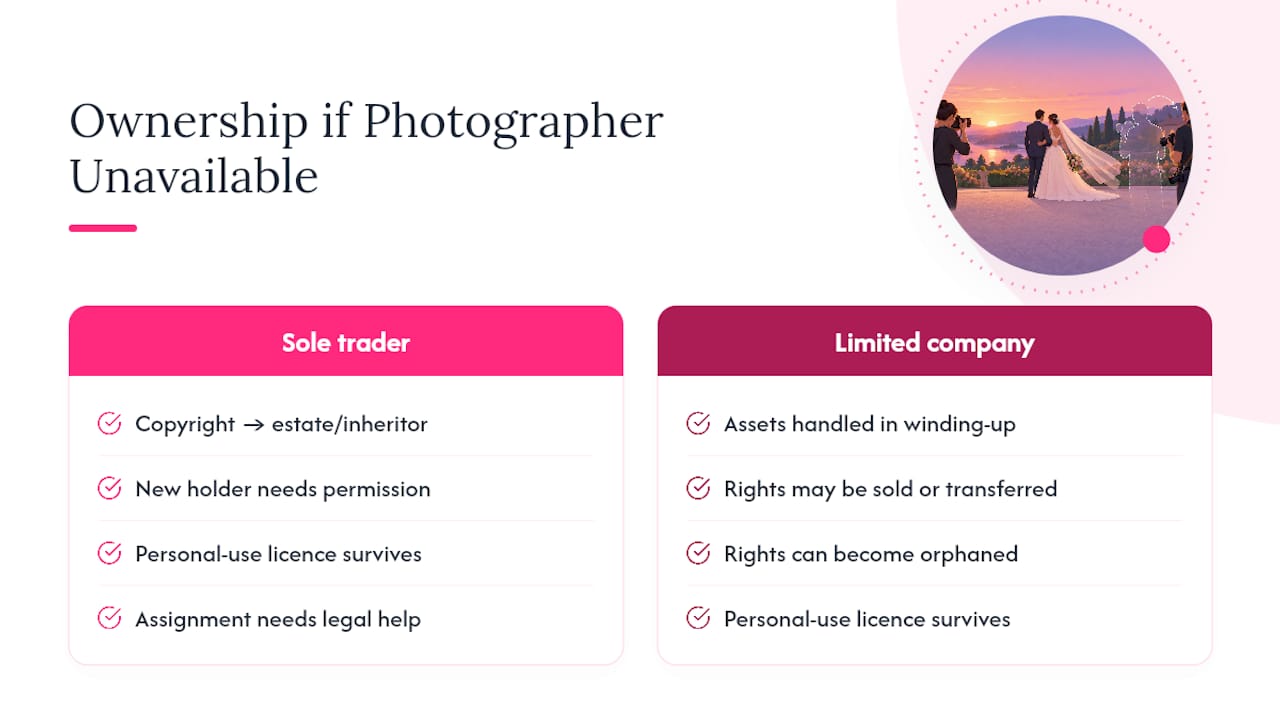
Copyright doesn’t vanish when a photographer retires, closes their studio, or passes away. It’s treated as property, which means it transfers according to inheritance rules or business succession, just like any other asset.
If a sole trader photographer dies, copyright in their work typically passes to their estate, then to whoever inherits under their will or under intestacy rules if there’s no will. That person or entity becomes the new copyright holder, which technically means you’d need their permission for anything beyond what your original licence already covered. In practice, tracking down an estate to ask about wedding photo rights years later is rarely worth the effort for personal-use questions, but it matters enormously if you ever want to expand your rights or pursue a formal assignment after the fact.
Business closure works similarly. If your photographer operated through a limited company that dissolves, copyright ownership depends on what happened to the company’s assets during winding up. Sometimes rights get sold or transferred to another party; sometimes they become effectively orphaned, meaning no one is actively managing or enforcing them. This is precisely the scenario where having your permitted uses spelled out clearly in your original contract pays off, because your licence to use the images for personal purposes typically survives regardless of what happens to the business afterward. A licence is a right you were granted, not a service that lapses when the provider does.
Where things get genuinely complicated is if you wanted an assignment or an expanded licence and the photographer is no longer around to negotiate it. There’s no simple fix for that beyond legal advice, which is exactly why getting broader rights sorted at the time of booking, while the photographer is still reachable and motivated to keep a happy client, matters more than most couples realize.
Why Clear Terms Protect Everyone at the Table
Most wedding photo disputes I’ve seen traced back aren’t really about greed or bad faith. They’re about assumptions that never got written down. A couple assumes payment means ownership. A photographer assumes their standard portfolio clause is obviously fine. Neither party is wrong exactly, they just never had the same conversation.
Specificity protects both sides. A licence that names your actual plans, printing, sharing, maybe a future brand shoot, beats a vague blanket clause every time, and it’s usually cheaper than full assignment, which only makes sense if you genuinely need unrestricted control. Don’t overlook moral rights either: even after an assignment, photographers can retain the right to be credited and to object to derogatory treatment of their work. Good contracts spell that out too, so nobody’s left guessing after the fact.
— Emmet
How Queer Handles Usage Rights for Wedding Clients
Photographers in the roster are carefully selected and matched to clients, and licence terms are discussed from the start to ensure clarity. If you know you’ll want broader rights, a personal brand shoot down the line, commercial use, or full assignment, tell us during booking and we’ll work that into your agreement directly.
We believe you should never have to guess what you’re allowed to do with your own wedding photos. That’s why usage terms get discussed plainly, in writing, before your same-sex wedding photography or elopement shoot begins, not negotiated after an awkward social media moment. Every shoot also comes with proper photographer credit built in, respecting the person whose eye captured your day.
Whether you’re planning a full wedding day or a smaller queer wedding celebration, our pricing page lays out packages from a personal brand session starting at £200 through to full-day coverage. If you want expanded rights or a full assignment, mention it when requesting a quote so it can be included in the contract from the beginning.
Sources
FAQ
Who owns the rights to wedding photos?
The photographer normally owns copyright by default under UK law, unless a written assignment transfers it to you. Couples typically receive a licence covering personal use, printing, and social sharing instead of full ownership.
Who owns the photos if I pay a photographer?
Payment covers the service, not automatic copyright transfer. GOV.UK guidance confirms that unless your contract specifically assigns copyright, the photographer keeps it and you receive a licence for agreed uses.
Who legally owns a photograph?
Whoever takes the photo, the author, is the first legal owner of copyright under section 11 of the CDPA. The one exception is work created by an employee during their job, where the employer typically owns it instead.
How do I know the real owner of a picture?
Check the contract first: look for an assignment clause (ownership transferred) versus a licence clause (permission granted for specific uses). If nothing is written down, the default legal position applies, and the photographer holds copyright.
Can I sell my wedding photos?
Only if your licence or assignment specifically permits commercial use or resale, which most standard wedding contracts exclude. If you want that flexibility, negotiate it in writing before booking rather than assuming it’s included.