


30+ Documentary Family Photography Ideas for UK Shoots
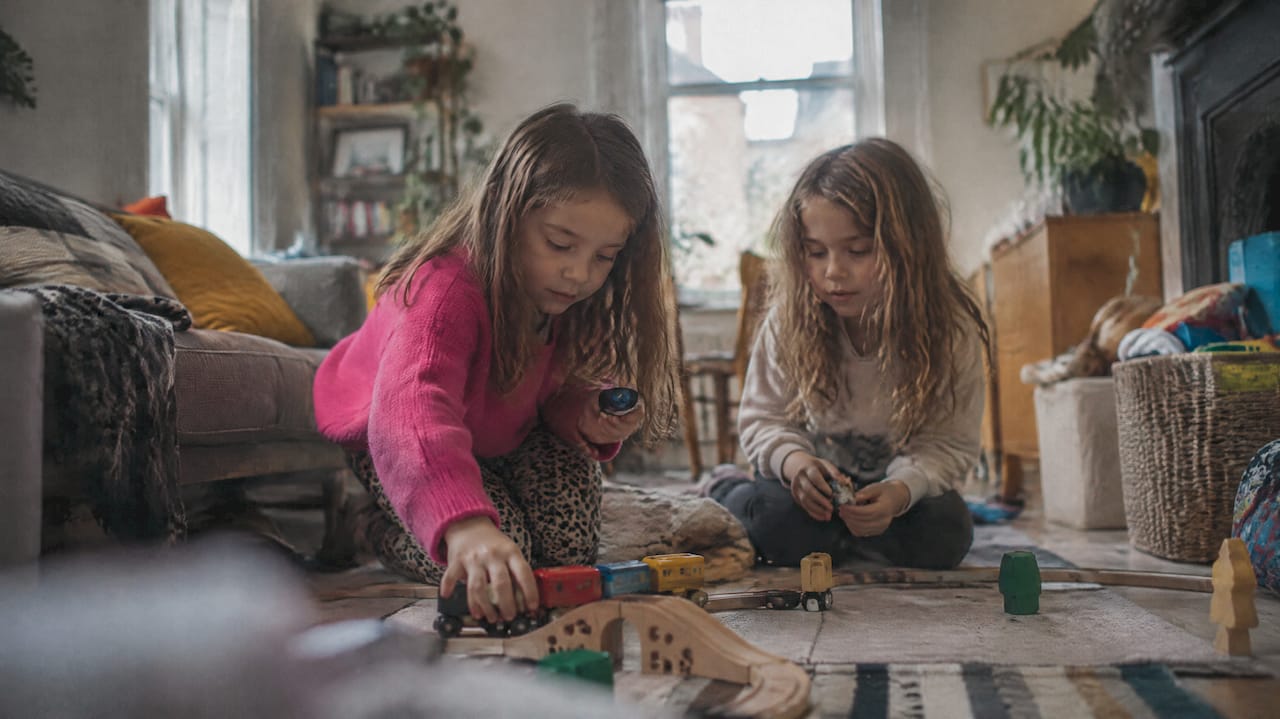
The best documentary family photos come from activity-led, child-centred prompts, not posed shots. Give everyone something to do, keep your camera profile low, and wait. Below you will find a scannable list of ideas, shooting tips for golden hour and indoor light, three copyable mini shoots, and a short checklist based on UK safeguarding guidance for photographing children.
TL;DR:
- Choose two or three prompts from one setting, then let the routine unfold; toy tours and phone diaries can reveal children’s own interests.
- Shoot at least 50 frames of a moment, use burst mode and continuous autofocus, and check indoor shutter speed stays above 1/125 second.
- Use open shade or late afternoon light, get down to a child’s eye level, and wait for the reaction after the action.
- Before photographing, explain where images may appear and get specific, informed, freely given consent from a parent or carer, with a plan for withdrawal.
- When sharing publicly, remove location metadata and identifying details such as school logos or street signs; use password protected galleries for private delivery.
Table of Contents
- 1. Over 30 documentary family photography ideas you can use today
- 2. How to run each idea: short micro-recipes
- 3. Why child-led methods work, and how to use them
- 4. Light, composition and vantage points for candid shots
- 5. Settings and minimal kit for documentary family sessions
- 6. Permissions, safeguarding and privacy: a practical UK checklist
- 7. Editing and sequencing your images into a family story
- 8. Three short shoot plans you can copy
- 9. How we can help: documentary sessions with vetted queer photographers
- FAQ
- Sources
1. Over 30 documentary family photography ideas you can use today
Pick two or three from a single context and let the rest of the day carry on around you. Each idea has a short execution note.
At home
- Breakfast chaos: shoot from the doorway as everyone reaches, spills and chats. Stay out of the way.
- Morning hair and teeth: capture a parent and child sharing the bathroom mirror. Shoot the reflection.
- Pyjama reading: get low beside the sofa as a story is read aloud. Frame hands and pages.
- Bath time splashes: shoot from the side with a towel nearby. Focus on faces and tiny hands.
- Building a den: photograph through the blanket gap to add layers of context.
- Parent working, child nearby: place both in one frame, one busy, one wandering.
- Dancing in the kitchen: ask for one favourite song and stay near the edge of the room.
- Tickle fights: shoot from child height and keep shooting after the laughter peaks.
Outdoors
- Puddle jumping: crouch ahead of them and shoot as they land.
- Garden digging: frame dirty hands and wellies in close detail.
- Playground push: capture the parent’s face as the swing arcs away.
- Kite or bubble chasing: shoot from behind, with the sky doing the storytelling.
- Leaf piles: place yourself downwind and keep your lens at their eye level.
- Picnic on a rug: photograph the unpacking, the sharing and the crumbs.
- Walking to school or nursery: follow a few metres behind, holding hands, in a long lens frame.
Travel and errands
- Bus or train window gazing: shoot a child’s reflection in the glass.
- Supermarket trolley rides: capture the pointing and the negotiating.
- Café hot chocolate: shoot the marshmallow moustache from across the table.
- Packing the bag: photograph what each family member insists on bringing.
- Waiting rooms and queues: look for the small fidgets that reveal personality.
Rituals and celebrations
- Birthday candle moment: stay back and shoot the faces watching, not only the cake.
- Sunday roast preparation: peeling, stirring and tasting across generations.
- Grandparent phone call: frame the screen and the face looking at it.
- Festival or holiday decorating: the untangling of lights is a gift.
- Pet greetings at the door: a dog’s tail and a child’s arms in one frame.
- Gift opening, child’s version: let them tear paper and shoot their reaction, not the present.
Quiet routines
- Bedtime tuck-in: use available lamp light and photograph the hand smoothing the duvet.
- Sleeping child, parent watching: shoot from the doorway, with soft shadow.
- Washing up together: one washes, one dries, one splashes.
- Homework table: capture the chewed pencil and the parent’s patient hand.
- Plant watering or feeding the fish: a small daily job with tactile detail.
- Hair brushing: an intimate, repeated moment that families rarely photograph.
Child-led prompts (ask, then step back)
- “Show me your favourite toy” and follow them with the camera.
- “Take a photo of something you love” and photograph them photographing.
- “Teach me how this game works” and let the instructions unfold.
One multisensory favourite: baking or cooking with sticky dough, a wagging dog nearby and noisy mixers gives you texture, sound and expression in a single frame.
2. How to run each idea: short micro-recipes
Here are eight prompts expanded so you can walk in and start without overthinking.
- Toy tour. Ask your child to show you three favourite things. Stand or kneel beside them, not in front. On a phone, hold it low with both hands.
- Den building. Offer a blanket and a chair, then say nothing else. Shoot from outside the den first, then lean in for a close, reflective frame.
- Kitchen dance. Play one song, keep your distance and shoot wide at first. Move closer only when the rhythm settles.
- Baking. Set out flour, bowls and spoons. Say “show me how you stir it”. Stand to the side and focus on hands.
- Puddle jumping. Walk ahead and kneel low. Shoot a burst as feet land.
- Bedtime story. Dim the room and use only the lamp. Sit on the floor and shoot upward gently.
- Pet greeting. Ask someone to arrive home as usual. Be ready at the door, at pet height.
- Walking to school. Follow behind and shoot between the parent and child.
Pro Tip: Take far more frames than you think you need: practitioners suggest at least 50 shots of a single moment, because the real gem often hides in the middle of the chaos.
Phone users can hold the shutter for burst mode and lock exposure by pressing on the face. Camera users can set continuous autofocus and shoot from the hip, which feels less intrusive. Indoors, move closer to a window; outdoors, shoot against open shade so nobody squints.
3. Why child-led methods work, and how to use them
Letting children lead is not just a gentle approach. It reveals material you would never think to ask for. The National Day Nurseries Association guide to children’s photography says that when young children act as the “authors” of their own imagery, for example by leading a toy tour, their interests and connections come to the surface in a way adult-led, posed work rarely achieves. The guide draws on early years children aged 3 to 6.
Early findings from the University of East London Kinder Play Study also suggest that shared play brings parents and children physically and emotionally closer, and that studying play in natural settings reveals interaction patterns worth documenting.
Practical ways to apply this:
- Toy tours: invite your child to introduce their favourite things and photograph the walk and the telling.
- Mobile phone diaries: give an older child a phone for a day and ask them to record what matters. Research on child-led practice methods lists toy tours, phone diaries and parent-recorded video as adaptable techniques.
- Parent-recorded video: film a few minutes of play, then pull stills later for a different pace of storytelling.
- Age-appropriate consent: explain simply what you are doing, show them a few images and let them say no to any they dislike.
4. Light, composition and vantage points for candid shots
Great candid images are mostly about where you stand and when. Late afternoon is the friendliest time for family sessions, and photographers recommend golden hour for warm, flattering outdoor light that avoids harsh overhead shadows.
- Open shade, then golden hour: a doorway, a tree or a building wall gives soft light on faces. Avoid mid-day sun straight above.
- Get low: dropping to a child’s eye level gives intimacy and reduces camera anxiety.
- Shoot through things: a doorframe, a curtain edge or a fence adds context and depth.
- Embrace motion: a faster shutter speed can freeze running; a slower speed can turn a spin into a deliberate blur.
- Wait for the second beat: the reaction after a moment is often better than the moment itself.
The numbers that help: professionals suggest at least 50 frames of a single moment to find the natural one, so shoot freely and edit later.
5. Settings and minimal kit for documentary family sessions
You do not need much. Less kit means less fuss and fewer wary glances.
- Aperture priority: set around f/2.8 to f/4 indoors and let the camera choose shutter speed. Check it stays above 1/125 second for movement.
- Continuous autofocus and burst mode: children do not hold still, so let the camera follow them.
- ISO: adjust it to suit the available window light, and raise it before accepting blur.
- Lenses: a fast 35mm or 50mm prime is light and unobtrusive; a compact 24–70mm gives flexibility when space is tight.
- Phones: use burst, lock exposure and focus by tapping, and turn on stabilisation. Shoot from low or odd angles to avoid the standard snapshot look.
6. Permissions, safeguarding and privacy: a practical UK checklist
Photographing children is a trust exercise first and a legal question second. The NSPCC offers UK safeguarding guidance on seeking parental or carer consent when photographing children, and says consent should be specific, informed, freely given and easy to withdraw. Even where photography is legal, avoiding identifiable details remains best practice.
- Consider consent carefully with a parent or carer, and keep a dated record of the decision.
- Explain what the images are for and where they may appear, in plain words.
- Avoid identifying details such as school logos, uniforms with names or street signs when publishing.
- Strip location metadata before uploading anything online.
- Name one consent-holder for each shoot or event, so everyone knows who to ask.
- Use marker systems such as coloured wristbands at larger gatherings, as suggested in UK guidance for organisers.
- Plan for withdrawal: decide in advance how you will remove an image if consent is pulled.
- Use password-protected galleries for sharing, with an expiry date.
Our own model release checklist walks through the paperwork, and our guide to image usage rights covers what to record before anything is published.
Pro Tip: Put the consent conversation first, at the doorstep, not after the shoot: families relax far more when the rules are clear before the camera comes out.
7. Editing and sequencing your images into a family story
A strong set tells a small story, not a pile of lookalike frames. Choose with a clear head and cut ruthlessly.
- Select for emotion, ritual, relationship and touch: a hand on a shoulder beats a perfect smile.
- Vary scale and rhythm: mix wide scene-setters with tight details.
- Sequence like a short film: establishing frame, action, close detail, reaction, quiet finish.
- Edit with restraint: correct exposure and colour balance, but leave texture, grain and untidy bookshelves alone.
- Be honest: a family story that looks too polished stops feeling like yours.
Our guide to RAW file policy and GDPR is a useful read if you want to understand how originals are stored and delivered.
8. Three short shoot plans you can copy
- New baby at home. Goal: quiet intimacy. Shoot feet and hands, a feed, a nap, a sibling peeking, a parent’s tired smile and the nursery window light. Use available light and adjust the camera settings to suit the scene. A shared care app such as Naluna can help you note routines and sync photos with the rest of the family. Keep face-forward baby images off public accounts.
- Baking with toddlers. Goal: messy joy. Shoot weighing, stirring, flour in the air, sticky fingers, a taste test, the oven door glow and the washing up. Choose a shutter speed suited to the movement. Share the gallery privately.
- Relaxed day trip. Goal: movement and place. Shoot the walk, a snack, a climb, a quiet rest, skimming stones, a hand held and the journey home. Keep street names out of public posts.
9. How we can help: documentary sessions with vetted queer photographers
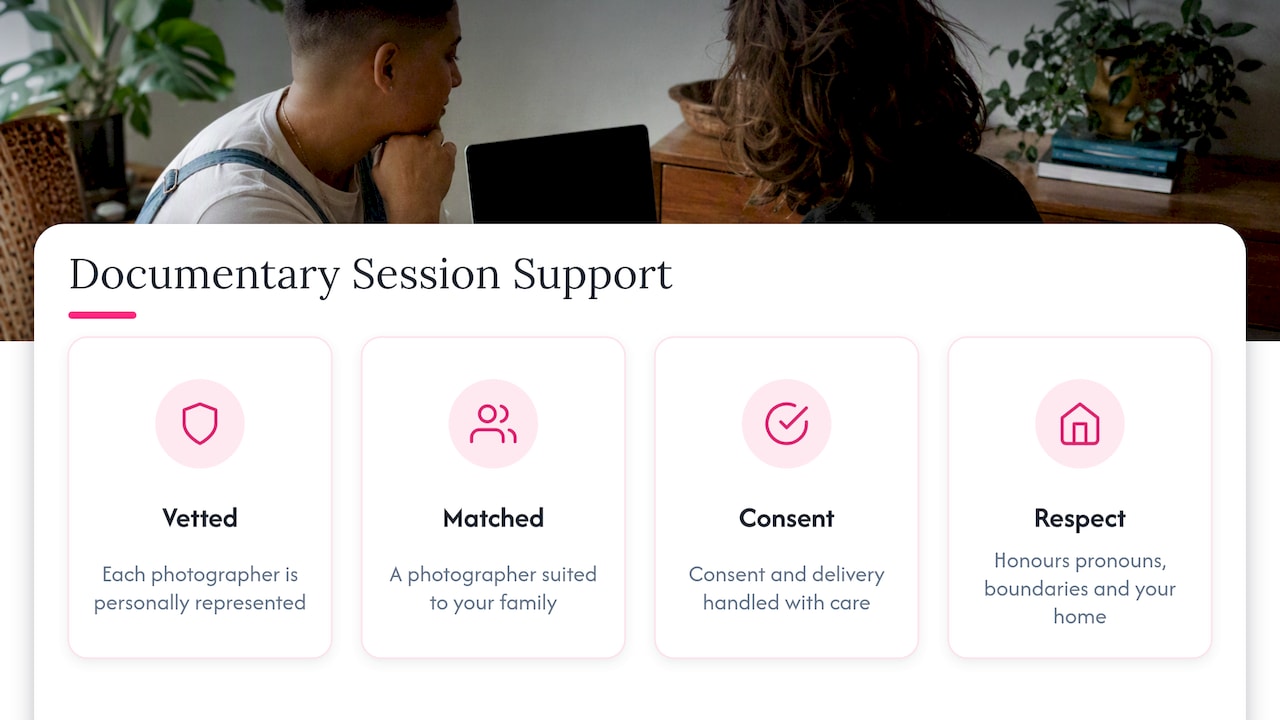
If you would rather be in the frame than behind the camera, we can match you with a vetted documentary photographer. We represent each photographer personally, match you with a person suited to your family, and handle consent and delivery with care. Every image is original, and every shoot respects your pronouns, your boundaries and your home as you arranged it. You can compare session shapes on our pricing page and book online when you are ready.
FAQ
Can you give me some ideas for documentary photography?
Start with everyday routines: breakfast, bath time, bedtime stories, kitchen dancing and the walk to school. Give people an activity and shoot from a distance. The checklist above has plenty of ideas to try.
What are some creative ideas for a family photo shoot?
Try a den-building afternoon, a baking session or a toy tour led by your child. Activity-based prompts work better than posing, because genuine joy appears when people are busy. Practitioner advice also stresses embracing chaos and imperfection.
Can you give me some examples of documentary photography?
Documentary family photography includes a parent’s hand smoothing a duvet, children mid-splash in a puddle or grandparents on a video call. The images record real life without direction. Child-led methods such as toy tours are a good starting point.
How do I get consent to photograph other people’s children?
Ask the parent or carer first, explain what the images are for and keep a dated record. The NSPCC advises that consent should be specific, informed and easy to withdraw, and that identifying details are best left out of anything published.
Sources
- Royal photographer Alexi Lubomirski reveals five top tips for the perfect family photo | Amnesty International UK
- Activity: Children’s photography
- Photographing and filming children | Images guidance | NSPCC Learning
- UEL and Kinder launch parent–child play study | University of East London