
LGBTQ+ Wedding Traditions: Keep, Reinvent or Make Your Own
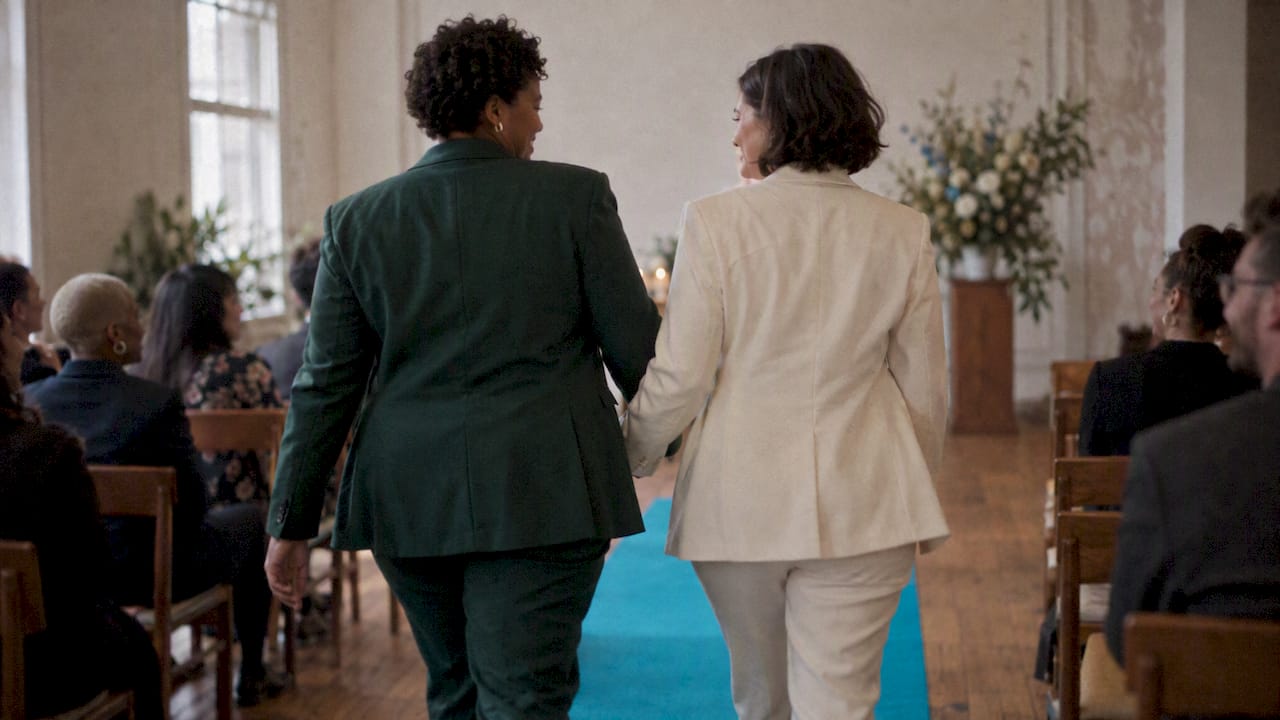
There is no single set of LGBTQ+ wedding traditions, and that is the best thing about them. Most queer couples borrow the wedding rituals they love, change the parts that were written around a bride and a groom, and add something that is genuinely theirs. This guide walks through what couples commonly do with the aisle, the outfits, the speeches and the rituals, how the UK legal side fits in, and how to make sure the day is photographed the way you lived it.
TL;DR
- Researchers describe same-sex weddings as playful borrowing: couples use familiar rituals while changing their gendered meanings.
- Aisle walks, wedding parties, speeches and outfits are all open choices. Nobody has to be “given away” or cast as the bride or groom.
- Unity rituals such as handfasting, pouring sand or breaking a glass work well when both partners do the same thing and you explain why in one sentence.
- In England and Wales the legal marriage and the ceremony you design can be the same event or two separate ones.
- Tell your photographer about the traditions you are keeping and the ones you are skipping, so the pictures match the day.
Table of Contents
- What counts as an LGBTQ+ wedding tradition?
- Walking in: aisles, entrances and who goes first
- Wedding parties, titles and the language of the day
- Outfits without a bride-and-groom script
- Speeches, toasts and hen and stag traditions
- Unity rituals, reworked
- Nontraditional ceremony ideas for the format itself
- The legal side in the UK
- Photographing the traditions you chose
- How we can help
- FAQ
- Sources
What counts as an LGBTQ+ wedding tradition?
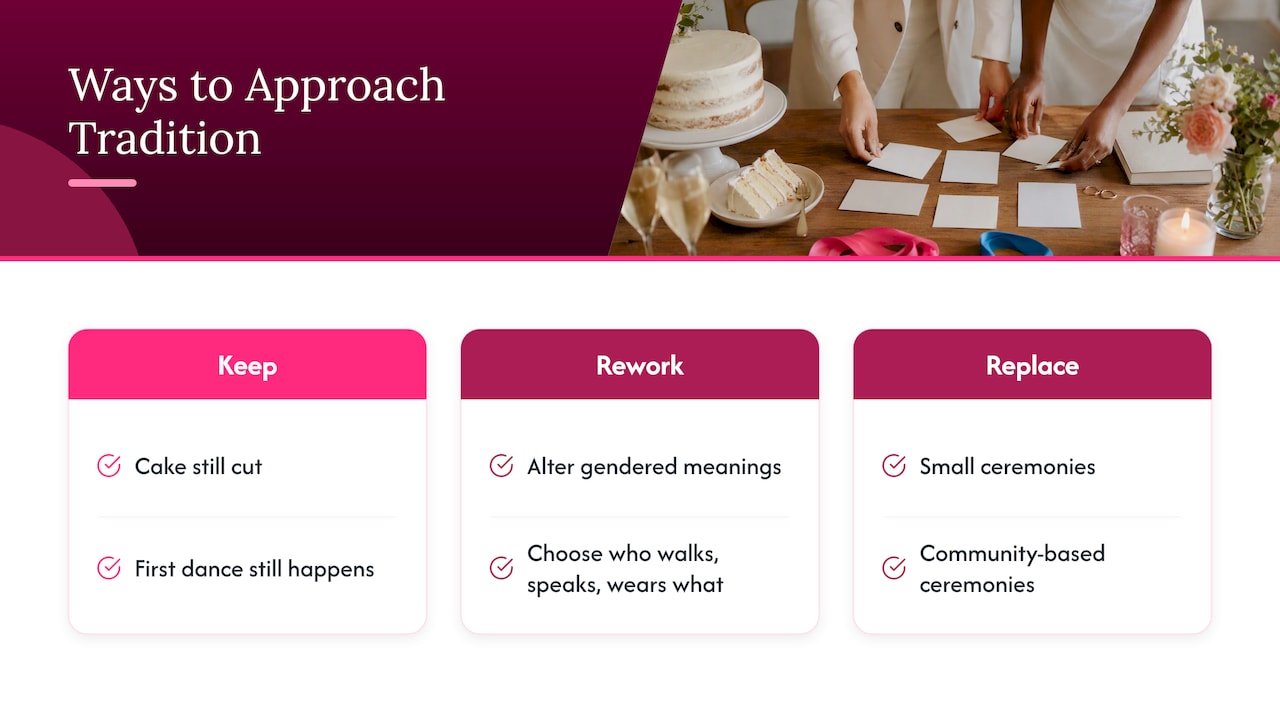
Honestly, it is less a list than an attitude. A peer-reviewed study of same-sex couples in the UK in the journal Sociology describes “playful appropriation”: couples take recognisable wedding rituals and question or alter their original gendered meanings, rather than rejecting the wedding form outright. The cake is still cut. The first dance still happens. But who walks, who speaks and who wears what is decided by the two of you.
A more recent study in Sexuality & Culture, which spoke to 18 LGBTQ+ people in the United States, points the same way. Participants often challenged heterosexual wedding norms through outfits, vows and activities, and some chose small or community-based ceremonies instead of a conventional one. It is American evidence, so treat it as a useful comparison rather than a UK portrait, but the pattern will feel familiar to many couples here.
So when you read “tradition” below, think of three moves: keep it, rework it, or replace it. All three are equally valid.
Walking in: aisles, entrances and who goes first
The father-walks-the-bride picture is the first thing most couples want to rethink, because it assumes one partner is handed over to the other.
The options are wide open. According to SquareMeal’s guide to wedding roles, couples may walk down the aisle together or one at a time. Writing in Country Life, Sophia Money-Coutts argues there are no fixed rules for same-sex weddings: a partner might walk alone, with one or several parents, a friend, a child or another meaningful person, or the two of you might choose different entrances altogether.
Some ways couples handle it:
- Both walk, one after the other. Each gets their own moment, and each guest sees both faces light up.
- Meet in the middle. You enter from opposite ends and arrive at the same point together.
- Walk in together. A shared entrance says “we are doing this as equals” without a word.
- Escorted by someone who matters. A parent, a sibling, a best friend, a child. A UK celebrant, Zadie Ward, suggests in her inclusive-ceremony guide that anyone can escort a partner, even a pet.
- No aisle at all. One company’s blog on non-traditional ceremonies suggests dancing in, entering with the whole wedding party, or starting the ceremony while you are already mingling with guests. It also reminds couples to adapt an entrance if someone uses a wheelchair.
If you have family who are not yet comfortable, or who are no longer in your life, the aisle is also a place where chosen family can take the space. That is one of the oldest queer traditions there is, and it needs no justification.
Wedding parties, titles and the language of the day
Bridesmaids and groomsmen sit awkwardly in many queer weddings, mostly because the words come with expectations about who stands on which side. The fix is usually simple: let people stand where they want.
Zadie Ward recommends mixed-gender wedding parties and swapping gendered assumptions for choices that feel right to the couple. SquareMeal’s guide also mentions less gendered terms, such as “nearlyweds”, in place of bride and groom. Other couples invent their own titles: “the Witnesses”, “the Crew”, “our people”. Words matter in a ceremony, and it is worth saying them aloud before the day to check they feel right.
The same goes for your names. Decide how you want to be introduced, which pronouns your celebrant or registrar should use, and whether you want “spouses”, “partners”, “husband and husband”, “wife and wife” or something else entirely. Put it in a one-page note for whoever is leading the day.
Outfits without a bride-and-groom script
There was never a formal dress code for queer couples, and many treat that as freedom. Common pairings, as set out in one UK wedding blog’s outfit round-up, include matching styles in different colours, one dress and one suit, jumpsuits, colourful suits and matching classic suits.
A few practical principles that couples tell us work:
- Start with how you want to feel, not what you are “supposed” to wear. Comfortable people photograph as relaxed people.
- Echo, don’t match. A shared colour, texture or accessory ties two different outfits together. A velvet suit and a velvet ribbon say “together” without looking identical.
- Plan for movement. If you want to dance, hug forty people and sit through a long dinner, test the outfit doing all of that.
- Think about the pictures early. Fabric, colour and cut look different in a church hall, a registry office and a back garden. Mention your outfit plans when you brief your photographer.
If you are planning a portrait session before the wedding, an engagement shoot is a low-pressure way to try outfits in front of a camera. Our 30 inclusive engagement photo ideas include a simple brief you can adapt.
Speeches, toasts and hen and stag traditions
The old script gave the groom, his best man and the bride’s father the microphone. That leaves out most of the people who love you.
SquareMeal’s guide says couples can both give speeches rather than assigning speaking to one partner. Some couples go further: a short speech from each of you, a toast from a parent or sibling, an open-mic moment from friends, and no one is told to “say a few words” without warning. If you dread public speaking, a pre-recorded message or a short reading is perfectly fine.
Pre-wedding gatherings are also up for reinvention. Couples do separate nights out, one big shared party, a quiet dinner with chosen family, or skip the lot. Do whatever suits your friends and your budget.
As for the vows, many queer couples write their own because the template wording often presumes a husband and wife. Even if you use the legal words (more on those below), you can add personal promises before or after.
Unity rituals, reworked
A unity ritual is a symbolic act that shows two lives joining: lighting a candle, pouring sand, tying cords. It is optional and has no legal weight, so it is the easiest part of the ceremony to make your own.
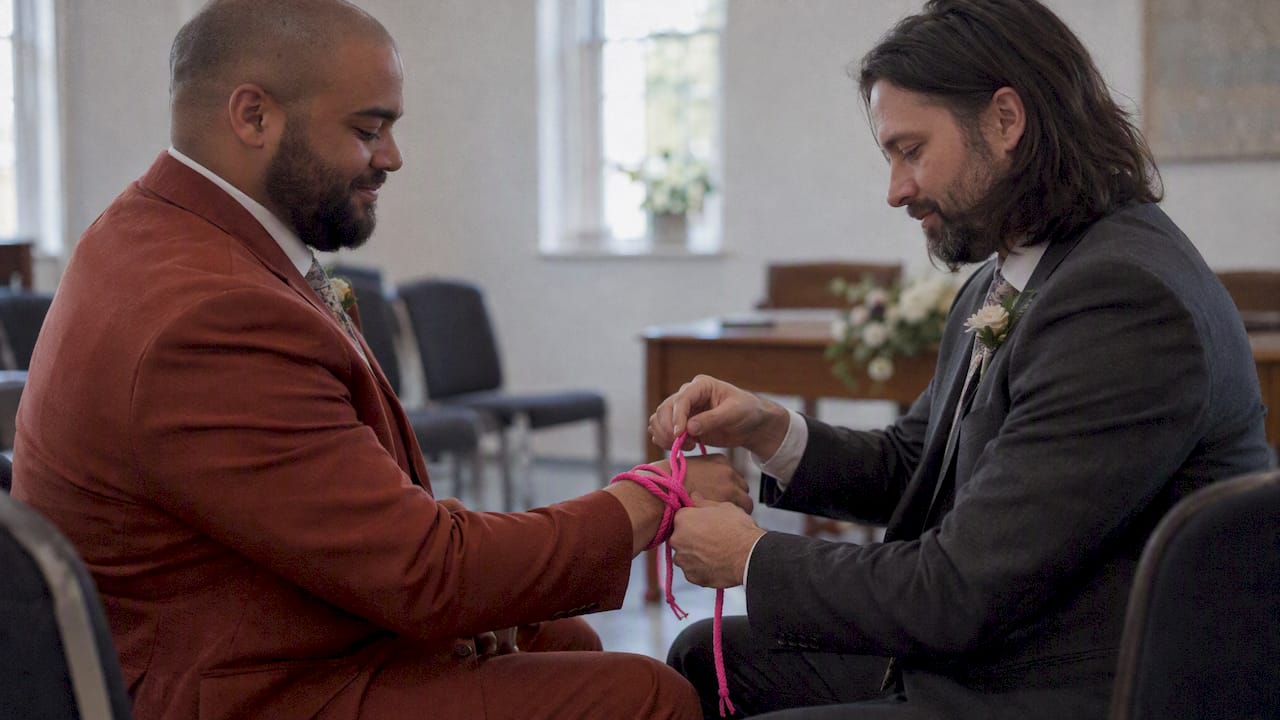
One US celebrant, Robyn Ashley Weddings, recommends adapting rituals symmetrically. Both partners can break a glass, both can pour sand or light candles together, and handfasting can use meaningful cords or a rainbow ribbon. Explaining the reason in one sentence helps: for example, you pour together because neither of you was given away. That sentence turns a borrowed gesture into your own.
Other ideas from a UK blog on non-traditional ceremonies:
- passing a meaningful object around so guests can bless it
- planting a tree
- a collaborative canvas that guests add to
- blending a custom cocktail
- sharing food that matters to you
- a group singalong
- a tattoo
Guest-participation rituals like these also give your photographer something wonderful to look for: faces, hands and mess. If a ritual involves a lot of movement, tell us in advance so we can position ourselves where we will not interrupt it.
Nontraditional ceremony ideas for the format itself
Sometimes the thing to change is the shape of the ceremony. The same non-traditional ceremony guide lists a circular ceremony with guests around you, a short vow exchange, live music or poetry, a flash mob and food-and-drink-based ceremonies. It also suggests building in accessibility: suitable seating, quiet spaces, lower volume and visual or written support.
Community-based celebrations are a real thread too. Some couples choose a smaller gathering, a ceremony in a place that tells their story, or a larger party that feels more like a community event than a formal wedding. A photographer’s account of how couples’ stories shape wedding photos is a good reminder that the best images come from knowing what the day means to you, whatever its format.
A few questions to ask yourselves when you are choosing a format:
- Who needs to be in the room for it to feel real?
- Where will you both feel most yourselves?
- Which moments do you want to remember in detail?
- Which traditions are you keeping because you love them, and which because someone expects them?
The last question does the most work. If you cannot answer it, the tradition probably does not belong.
The legal side in the UK
A ceremony and a legal marriage are not always the same thing, and that gives you room to design.
In England and Wales, GOV.UK’s guide for authorised persons explains that a same-sex marriage in a registered building requires the building to be registered for same-sex marriages and the authorised person to be specifically appointed. The couple must say a prescribed declaration and contracting words. Those words are short, so many people say them and then follow with the ceremony they actually wrote.
The same guidance notes that a religious ceremony may follow a civil marriage as a blessing, and it does not invalidate or replace the civil marriage. That is why some couples do the legal part quietly first and then hold a celebrant-led ceremony on the big day, with all the rituals, readings and vows they want.
Scotland has its own framework. The Marriage and Civil Partnership (Scotland) Act 2014 provides for same-sex marriage and authorises civil, religious and belief celebrants. Its explanatory notes state that civil marriage ceremonies may take place anywhere, other than religious premises, agreed by the couple and the registrar. If you are marrying in Scotland, check the current rules with the registrar or celebrant you are working with, and do the same in England and Wales with your local register office.
Photographing the traditions you chose
Once you have decided what to keep, rework or drop, the photography brief nearly writes itself. A good brief covers:
- The people. Who matters most, including chosen family and anyone who should be photographed together.
- The rituals. Which unity ritual, who participates, and roughly when it happens.
- The names and pronouns. How you want to be described in captions, galleries and any shared posts.
- The boundaries. Anyone who should not be photographed, or moments that stay private.
- The feel. Candid and documentary, or a few directed portraits, or both.
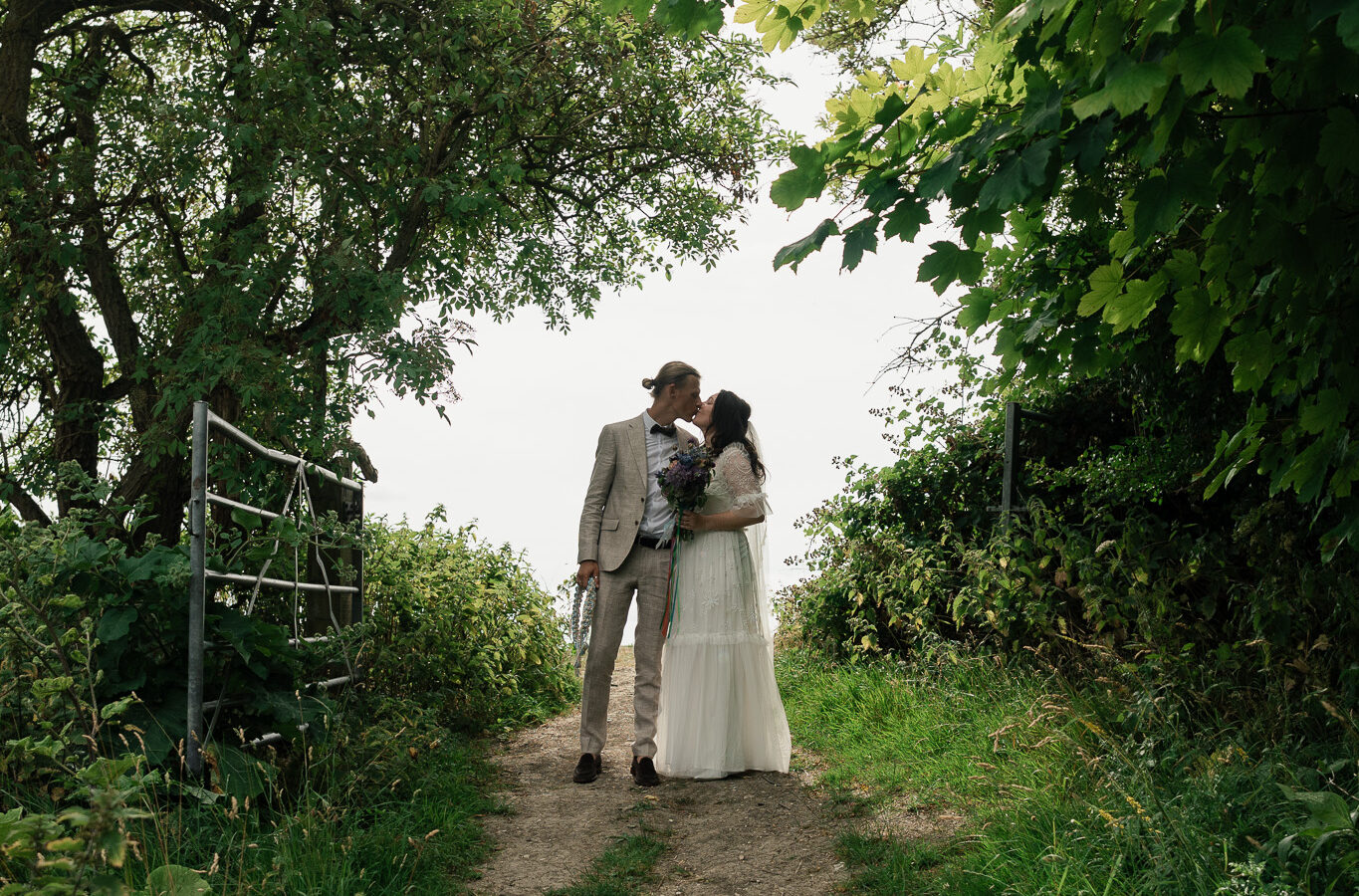
We put together 12 LGBTQ+ wedding photo ideas to share with your photographer, and a printable wedding shot list that is built to honour queer families as well as the couple.
How we can help
Queer.Photo is a London-based agency that represents vetted queer photographers. You are matched with the right person by a real person, not an algorithm, often within 24 hours. Every image is original, never stock or AI-generated, and every shoot respects pronouns and personal boundaries. If you are planning a wedding or celebration, start with our queer wedding photographer page or see the packages and what each includes on our prices page. Planning something smaller? We also cover elopements in London.
FAQ
Do LGBTQ+ couples have to follow wedding traditions?
No. Beyond the legal words in a civil marriage, nothing in a ceremony is compulsory. Many couples keep traditions they love, change those that assume a bride and groom, and add personal rituals of their own.
Who walks down the aisle at a same-sex wedding?
Whoever you choose. Both partners may walk, one may walk alone or with a parent, friend or child, or you may enter together. Sophia Money-Coutts notes that there are no fixed rules for same-sex weddings.
What is a unity ritual, and can we make our own?
It is a symbolic act, such as lighting candles, pouring sand or handfasting, that shows two lives joining. It has no legal effect, so you can adapt it freely. Making it symmetrical and explaining the meaning in a sentence helps guests understand it.
Can we have a celebrant ceremony and a legal marriage separately?
Yes. In England and Wales a religious ceremony can follow a civil marriage as a blessing without invalidating it, according to GOV.UK guidance. Many couples complete the legal part first and hold the celebrant-led ceremony later.
How do we tell a photographer about the traditions we have chosen?
Send a short brief with your rituals, key people, pronouns and any boundaries, plus the rough timing of each moment. A shot list helps too. Our team will match you with a photographer who is comfortable with your plans.
Sources
- When Same-Sex Couples Say ‘I Do’: Display Work and the Wedding (Sociology)
- “It Was Perfectly Queer”: LGBTQ+ Engagement and Wedding (Sexuality & Culture)
- A guide to wedding roles (SquareMeal)
- Sophia Money-Coutts on same-sex parents and the aisle (Country Life)
- How to make your wedding ceremony more inclusive (Ceremonies by Zadie)
- Non-Traditional Wedding Ceremony Ideas (With Bells On)
- LGBTQ+ Wedding Ceremony: Language & Scripts (Robyn Ashley Weddings)
- 22 Wedding Outfits Ideas For Same-Sex Couples
- A guide for authorised persons (GOV.UK)
- Marriage and Civil Partnership (Scotland) Act 2014
- How Couples’ Stories Shape Wedding and Engagement Photos