12 LGBTQ+ Wedding Photo Ideas to Share With Your Photographer
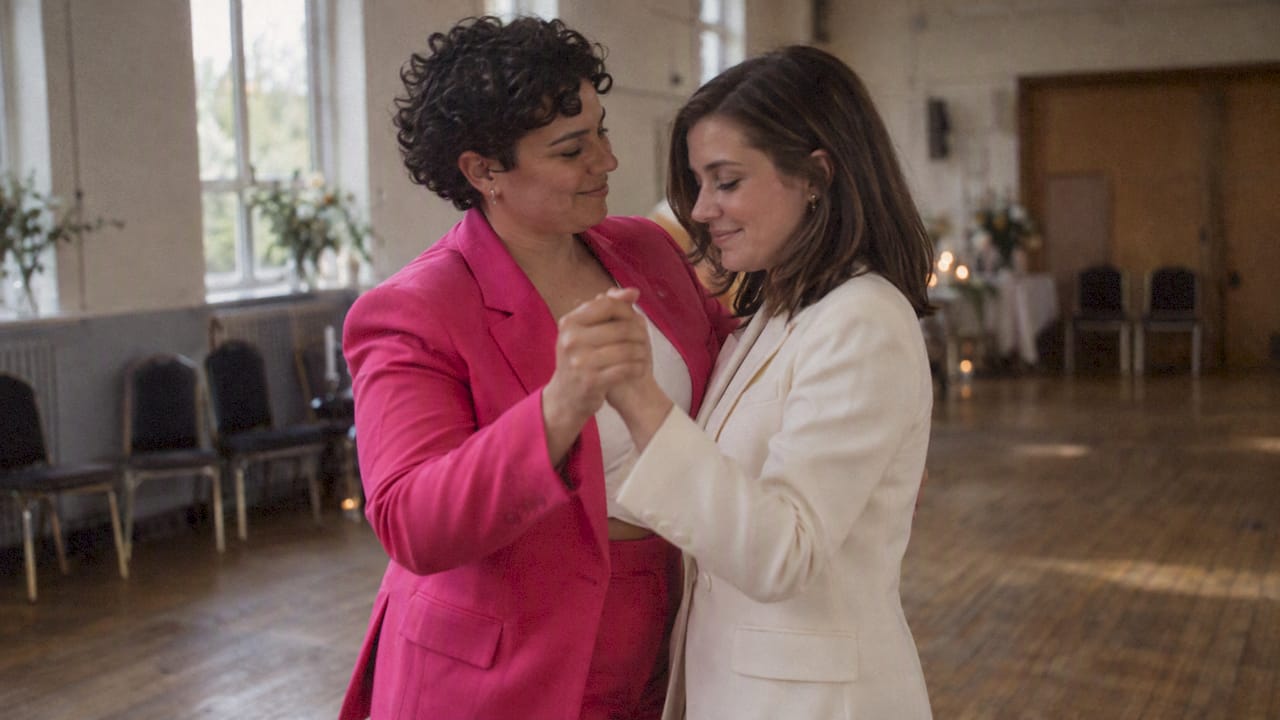
The best LGBTQ+ wedding photos skip gendered posing altogether and focus on what’s actually happening between two people: the glance, the grip, the laugh that escapes mid-sentence. Pick several ideas from the shortlist below and hand them to your photographer before the day. We’ll also walk through the directing language, ceremony priorities and shot-list timing that turn a good idea into a photograph you’ll still love in twenty years.
TL;DR:
- Give the photographer six to ten reference ideas, but treat them as prompts; directions built around actions and position swaps avoid assigning a partner a supporting role.
- Reserve 20 to 30 minutes before the ceremony for a first look or solo portraits, then 30 to 40 minutes afterward for couple and group photographs.
- Group guests by relationship rather than traditional sides, brief one coordinator with names and pronouns, and photograph chosen family with the same care as relatives.
- For ceremonies involving more than two partners, plan portraits for each relationship, plus pairs, trios, and the full group, rather than framing one central couple.
- Ask the photographer to show queer wedding work and discuss pronouns, family sensitivities, and affection boundaries during a call before the wedding.
Table of Contents
- 1. Quick shortlist: 12 high-impact LGBTQ+ wedding photo ideas
- 2. Posing and directing techniques that avoid heteronormative assumptions
- 3. Ceremony and vows: capturing intimacy and key candid moments
- 4. Group, family and mixed-party shots with chosen roles and pronouns
- 5. Styling, colour and props that amplify queer celebration
- 6. Location and lighting ideas for mood and variety
- 7. Practical shot list and timing: how to plan photos into a wedding day
- 8. How a queer-led photographer or agency puts these ideas into practice
- 9. Incorporating meaningful LGBTQ+ symbols and traditions into photography
- 10. Strategies for capturing diverse relationship dynamics beyond couples
- 11. Ideas for showcasing LGBTQ+ wedding fashion and non-traditional attire
- 12. Advice on working with photographers to ensure authentic storytelling
- How Queer.Photo can help and clear next steps
- FAQ
- Sources
1. Quick shortlist: 12 high-impact LGBTQ+ wedding photo ideas
These work because they capture a moment rather than a pose. Swap who does what in each one and shoot both versions: the one that feels truer is usually the better photo.
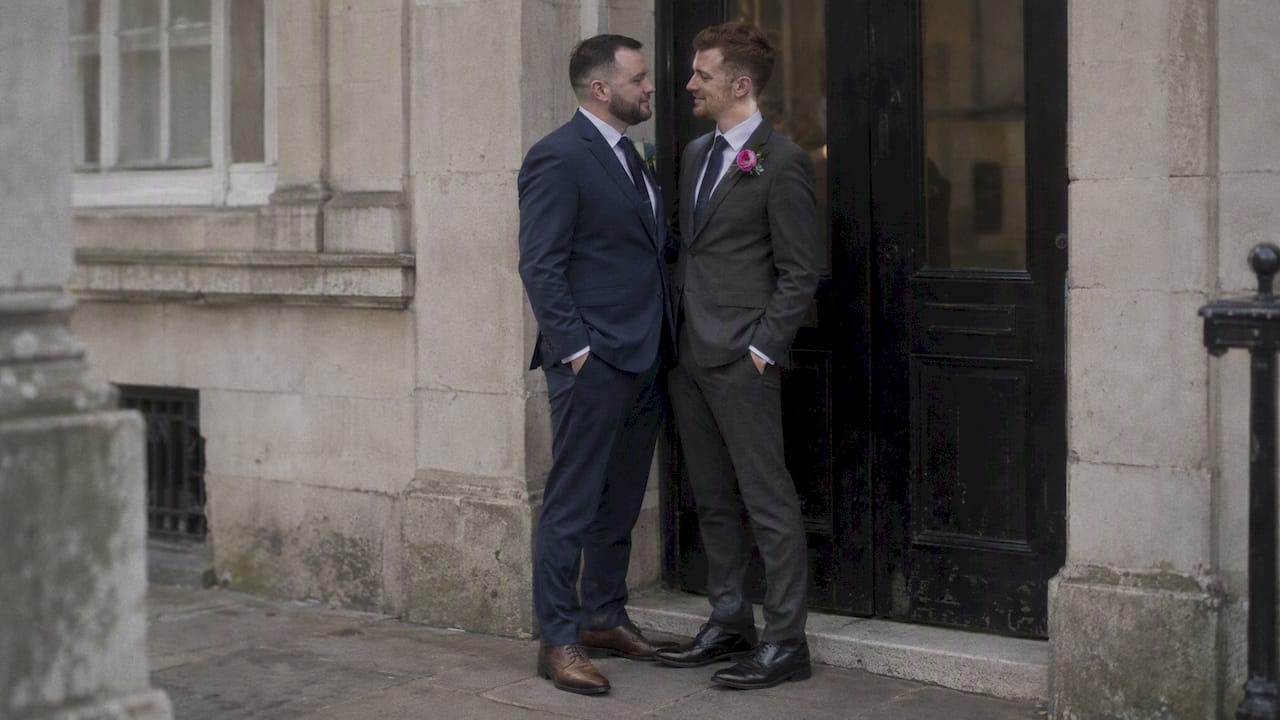
- First look, your way – face to face, back to back, or one partner walking into frame as the other waits.
- Vow close-ups – hands held, foreheads touching, captured on a longer lens so neither partner feels watched.
- Mirrored portraits – identical framing of each partner getting ready, edited as a diptych.
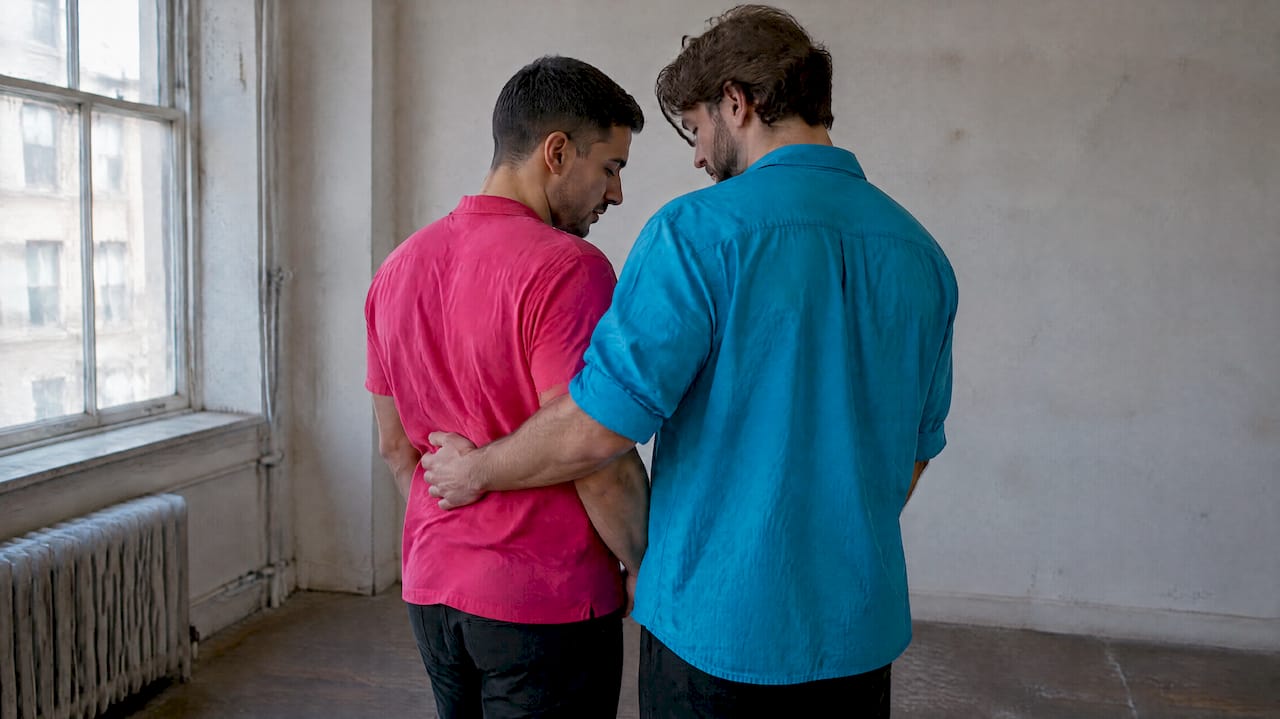
- Seated embrace – one partner seated, the other leaning in, then reverse it and compare.
- Quiet morning-after frame – coffee, unmade bed light, no performance for the camera.
- Confetti or exit shot – movement and noise, shot wide to catch the whole party.
- Detail shots – rings, cufflinks, fabric textures, shoes side by side.
- Role-reversal portraits – whoever “never carries the bouquet” carries it for one frame.
- Playful movement – a spin, a jump, a dash across a car park, anything unposed.
- Inclusive party line-up – friends and family grouped by closeness, not by gender.
- Pets and children – woven into portraits rather than isolated to one “family photo”.
- Rainbow-accent details – a ribbon, a cake layer, a boutonniere thread, subtle rather than literal.
Try both versions of every pose that implies a hierarchy. If one partner is always the one looking up, swap it, and keep whichever frame feels more like you.
2. Posing and directing techniques that avoid heteronormative assumptions
Traditional wedding posing often assigns one partner the “support” role and the other the “supported” one, a habit that rarely fits queer couples and often looks stiff anyway. Direction built on action rather than position avoids that trap, and it works for every pairing. Inclusive posing guidance recommends exactly this: give couples something to do, not something to stand like.
- Say “walk toward me and whisper one thing you love about them” instead of arranging limbs.
- Swap positions after every pose, left becomes right, front becomes back, so no one carries the visual weight twice in a row.
- Ask for a specific memory (“tell them about your first date”) and shoot the reaction, not the smile.
- Build in movement: a slow turn, a dance step, a hand brushing hair back, anything that breaks a frozen stance.
Pro Tip: Shoot the three seconds after you call “stop”. That’s usually when the real laugh happens.
3. Ceremony and vows: capturing intimacy and key candid moments
The ceremony is short and unrepeatable, so prioritise ruthlessly. A longer lens from a slight distance protects the moment while still getting you close enough for genuine emotion.
- Vow close-ups, shot from an angle that catches both faces without stepping into the aisle.
- The ring exchange, framed tight enough to see hands trembling or steady.
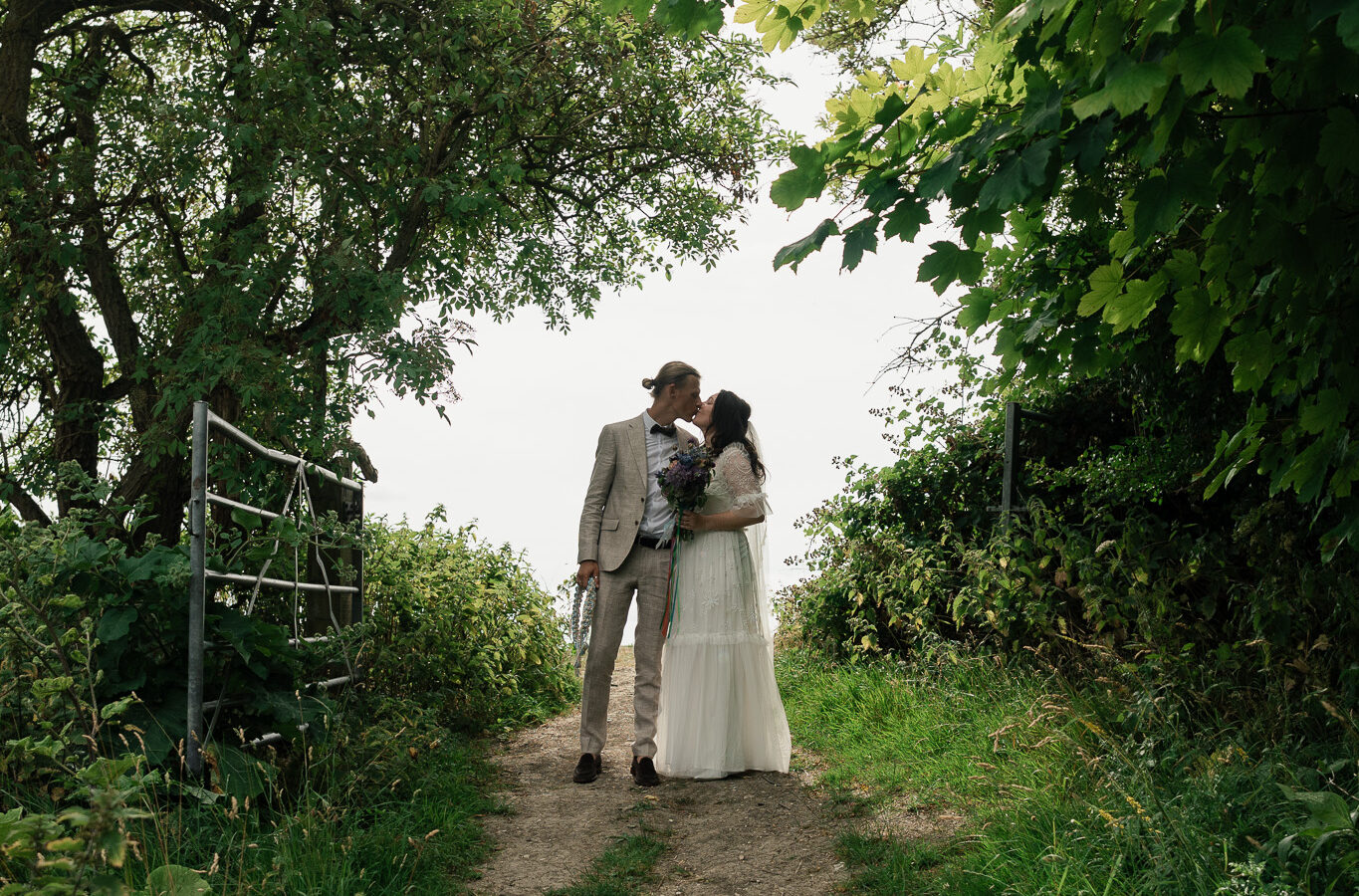
- The first kiss, held for a beat longer than instinct suggests, since the best reaction often follows it.
- Guest reaction shots, caught with a second lens or a second photographer where budget allows.
Same-sex marriage has been lawful in England and Wales since the Marriage (Same Sex Couples) Act 2013, and registrars will use a couple’s chosen names and pronouns wherever the ceremony allows it, so there’s no need to brace for an awkward script on the day itself.
4. Group, family and mixed-party shots with chosen roles and pronouns
Group photos move fastest when guests already know what’s expected of them, so brief your photographer and your loudest friend in advance with a short written list rather than shouting names across a lawn.
- Send your photographer a list grouped by relationship, not by “bride’s side” or “groom’s side”.
- Ask whoever is coordinating guests to use names and pronouns from that same list, word for word.
- Photograph chosen family and non-traditional party roles, best person, co-parents, found siblings, with the same care as blood relatives.
- Shoot biggest groups first, then work down to pairs, so people can return to the party sooner.
Gov confirms ceremonies can be personalised within the legal requirements, which gives you room to shape the day, and the photos, around the people who actually matter to you.
5. Styling, colour and props that amplify queer celebration
Styling should photograph like it belongs to you, not like it was borrowed to signal something. A single deliberate accent usually reads better than a dozen scattered symbols.
- Pick one colour thread, a ribbon, a lining, a manicure, and repeat it across two or three details rather than everywhere at once.
- Mix textures deliberately: a structured suit against a flowing jumpsuit photographs with more contrast than two matching outfits.
- Choose props that mean something to you specifically, a family brooch, a well-worn jacket, over generic rainbow motifs.
- Let the couple’s own taste lead every decision, since styling chosen to look inclusive rather than felt tends to show in photos.
6. Location and lighting ideas for mood and variety
Different light tells a different story, so choosing two or three contrasting settings gives your album range instead of forty near-identical frames.
- Golden hour in an open field or park gives warm, soft light that suits relaxed portraits.
- A sheltered urban corner, brick, shadow, a single streetlamp, adds contrast and drama for evening shots.
- A moody interior with window light works well for quieter, intimate frames.
- A reflector or a simple off-camera flash fills shadows without flattening the mood entirely.
- Keep a short list of indoor backups ready in case the forecast turns, so nothing depends on the weather holding.
7. Practical shot list and timing: how to plan photos into a wedding day
A written shot list and rough timing keep everyone, planner, photographer, guests, on the same page without turning the day into a schedule to survive.
- Allow 20 to 30 minutes for a first look or solo portraits before the ceremony.
- Reserve 30 to 40 minutes after the ceremony for couple and group portraits combined.
- Give family and party groupings their own 15 to 20 minutes, using the list from the previous section.
- Leave reception photography loose and unscheduled so candid moments can happen on their own time.
- Brief one point of contact, often the planner or a chosen friend, to hold the shot list and field last-minute requests.
Build in slack between each block. The best candid frames usually happen in the five minutes nobody planned for.
8. How a queer-led photographer or agency puts these ideas into practice
We built Queer around matching couples with photographers who already understand this list instinctively, rather than treating it as a special briefing document. Every photographer on our roster is vetted and personally represented, and we match clients to the right specialist within 24 hours.
- We never supply stock or AI-generated imagery, only original work from the matched photographer.
- Matching accounts for the couple’s specific identity and the kind of day they’re planning, not just general availability.
- Photographers on our wedding roster are briefed on pronouns and boundaries before the shoot, not during it.
- Couples wanting a trans or non-binary specialist can request one directly through matching.
9. Incorporating meaningful LGBTQ+ symbols and traditions into photography
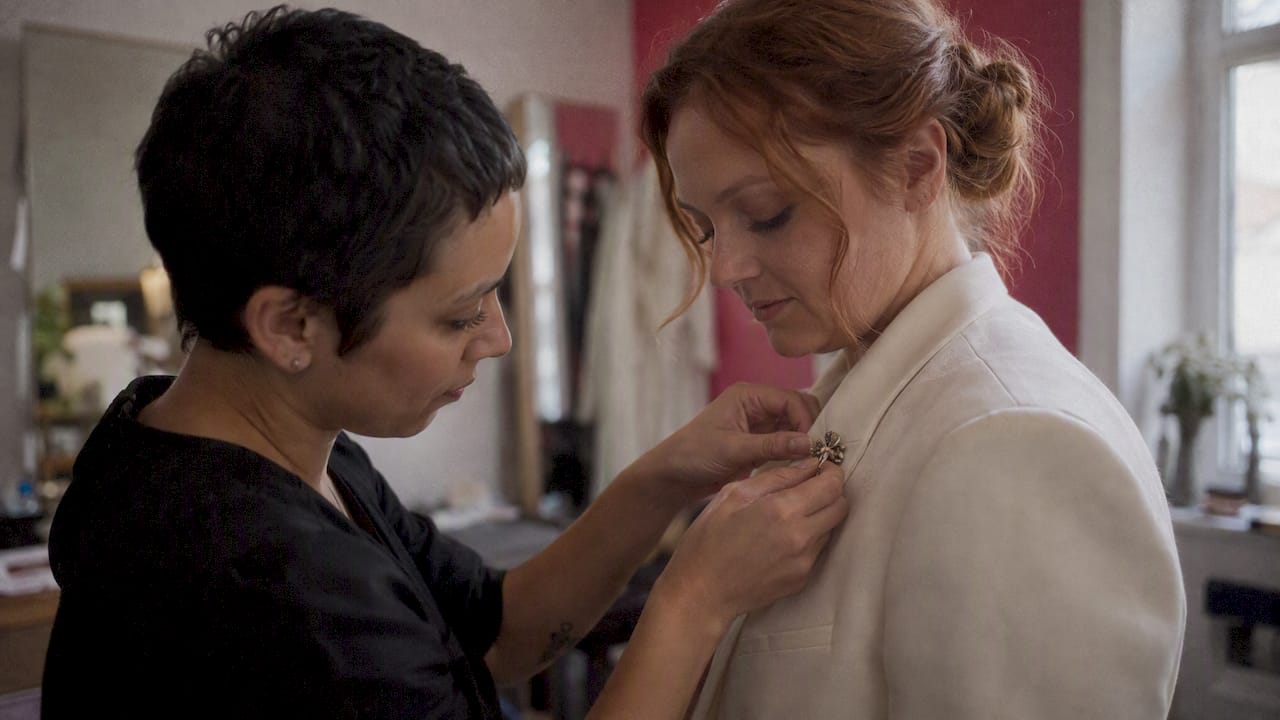
Symbols work best in a photograph when they’re specific to the couple rather than borrowed wholesale from Pride iconography. A grandmother’s brooch pinned next to a small rainbow thread says more than a flag draped across a chair, because it ties a shared history to a public celebration.
Consider incorporating a broom-jumping moment if it has personal or cultural resonance, a reading from a queer poet chosen because it mattered to one partner, or a cake design that nods to a shared joke rather than a generic motif. Candle-lighting ceremonies, unity rituals adapted from family traditions, or a first dance to a song that carries specific meaning all photograph with more weight than a prop chosen purely because it “reads queer” to a stranger.
The strongest symbolic photographs usually come from asking each partner, separately, what from their own history they want visible on the day. One answer might be a tattoo, another a piece of jewellery passed down, another a ritual borrowed from a found-family gathering years earlier. Photographing these details close-up, with the same care given to a ring shot, lets the symbolism carry weight without needing a caption to explain it.
10. Strategies for capturing diverse relationship dynamics beyond couples
Weddings involving more than two partners, or built around a wider chosen family, need a slightly different approach to composition and group logic, not a smaller version of a two-person shot list.
For polyamorous ceremonies, avoid default two-person framing: ask who stands where, and photograph pairs, trios and the full group as distinct compositions rather than assuming one “main couple” and supporting cast. Give each relationship within the group its own portrait moment, since flattening everyone into a single wide shot tends to erase the specific connections the day is meant to honour.
Chosen family deserves the same structured attention given to blood relatives elsewhere in this guide. A found-family portrait, co-parents standing together, a long-term support network gathered for one frame, carries real weight when it’s planned with the same care as a parents’ photo rather than squeezed in as an afterthought. Ask in advance who the couple considers family in the photographic sense, and build that into the same list used for traditional group shots.
11. Ideas for showcasing LGBTQ+ wedding fashion and non-traditional attire
Attire on an LGBTQ+ wedding day often breaks from the traditional dress-or-suit binary entirely, and photography should treat that as the main event rather than a footnote. A jumpsuit, a tailored suit with unconventional tailoring, or a mix of both partners in structurally similar outfits all photograph strongest when given the same formal portrait treatment usually reserved for a traditional gown.
Full-length portraits in good light let fabric, cut and texture register properly, which matters more for non-traditional attire than for a standard off-the-rack dress. Detail shots, cufflinks, unconventional footwear, a tailored lapel, a hand-beaded hem, work as well for non-traditional outfits as they do for a bridal gown train, and they’re often the frames couples return to years later.
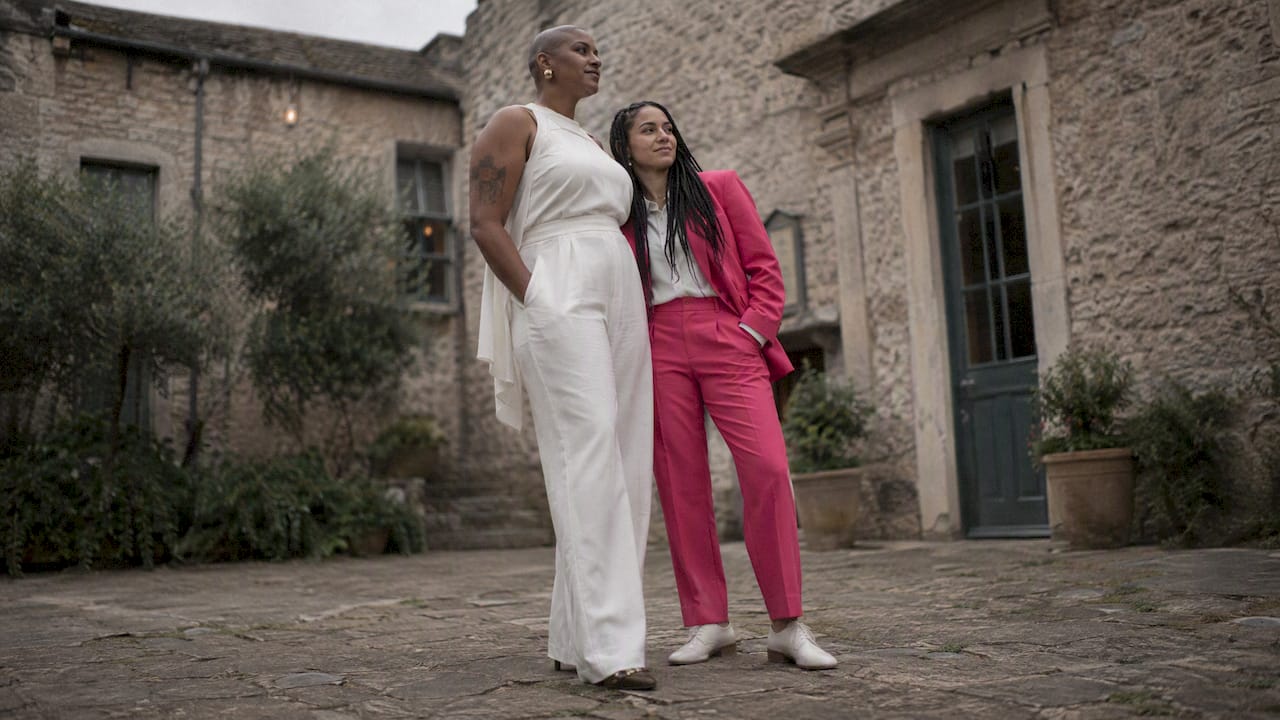
Outfit changes between ceremony and reception, increasingly common at queer weddings, give photographers two distinct looks to document rather than one, so plan a short window for a second round of portraits if a change is happening. A list of styling ideas built for queer celebrations is a useful starting point for couples still deciding what to wear, particularly where comfort and personal expression matter as much as formality.
12. Advice on working with photographers to ensure authentic storytelling
The clearest route to photographs that feel like you is a direct conversation before the day, not a mood board handed over in silence. Tell your photographer specifically how you want to be seen: which traditions matter, which poses feel wrong for your dynamic, where your boundaries sit around public affection in front of extended family.
Share the shortlist from this guide, but treat it as a starting point rather than a script, since the strongest images usually come from a photographer who understands your relationship well enough to deviate from the plan when something better happens in front of them. A short call beforehand, covering pronouns, family sensitivities and anything you’d rather avoid, saves both of you from guessing on the day itself.
Ask to see a photographer’s previous work with queer couples specifically, not just their general portfolio. A photographer who already has that experience will ask better questions during briefing, and will know, for instance, when to step back during a ceremony moment that registrars handle with chosen names and pronouns rather than legal terminology.
How Queer.Photo can help and clear next steps
If you’d rather hand the planning to someone who already thinks this way, wedding packages can cover everything from an intimate Elopement through to a full Half day or Full day of coverage, matched to a photographer thoughtfully chosen for your identity and your day. Booking through us means inclusive briefing happens automatically, not as a special request.
Full package details and current options sit on our pricing page, where you can see what’s included before you book. When you’re ready, get matched with your photographer there.
FAQ
Is same-sex marriage legally recognised across the UK?
Same-sex marriage is lawful in England and Wales under the Marriage (Same Sex Couples) Act 2013. Scotland and Northern Ireland have their own separate legislation, so couples marrying outside England and Wales should check the rules that apply there.
Will a registrar use our chosen pronouns during the ceremony?
Registrars generally use a couple’s chosen names and pronouns during the ceremony itself, though legal gender terms are required for the formal solemnisation wording. It’s worth raising this directly with your registrar in advance so there are no surprises on the day.
How many photo ideas should we actually give our photographer?
Six to ten ideas is usually enough to guide a photographer without boxing in their creative judgement. Too long a list eats into time meant for spontaneous, unplanned moments.
What makes wedding posing feel less gendered?
Action-based direction, asking couples to do something rather than arrange their bodies into a position, tends to avoid the visual hierarchy that gendered posing often creates. Inclusive posing guidance also recommends swapping positions between partners so neither one consistently takes the supporting role.
How quickly can we get matched with a queer wedding photographer?
Through our matching process, couples are typically connected with a vetted photographer within 24 hours of enquiry. Full package options are listed on our pricing page.
Sources
- Marriage (Same Sex Couples) Act 2013 — Section 1
- Marriage and civil partnership in England and Wales (accessible version)
- LGBTQ+ wedding photography: how to pose your couples — Equallywed
- Choose a marriage or civil partnership ceremony | Oxfordshire County Council