Inclusive Photo Shoot Playlist: How to Build One That Works
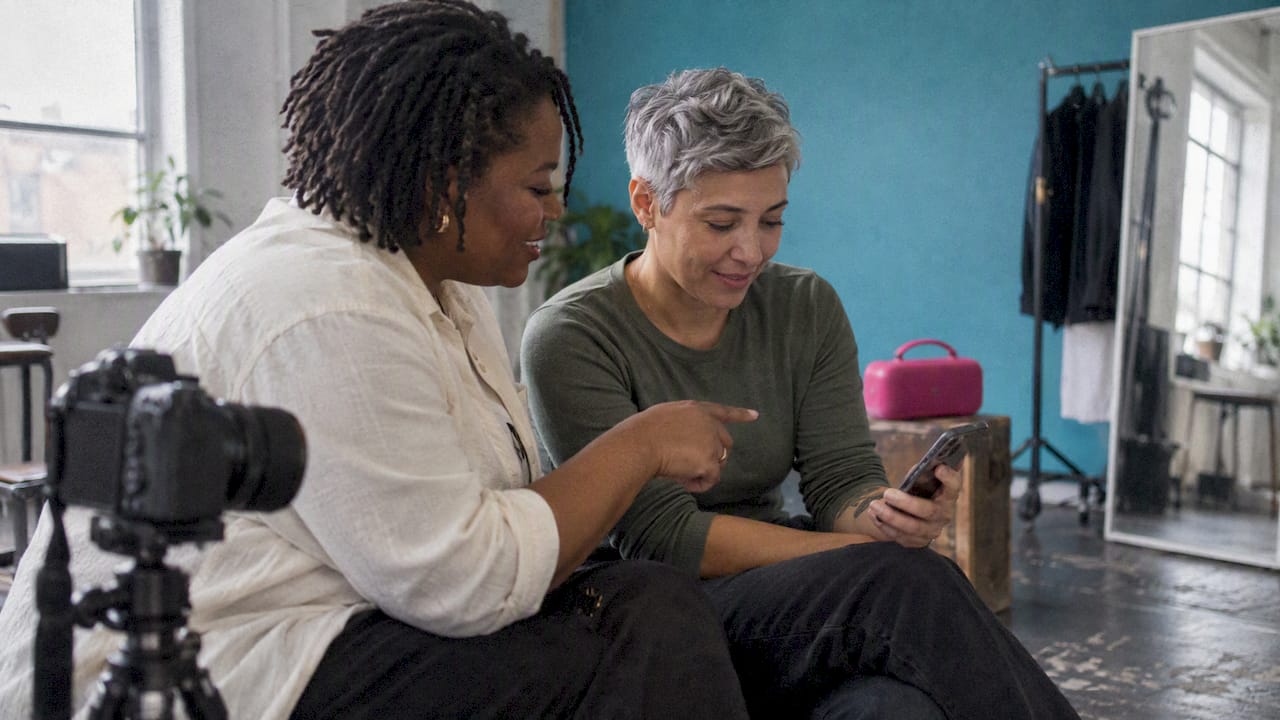
An inclusive photo shoot playlist is one the person in front of the camera helped shape. Ask what they love, agree what they would rather not hear, match the energy to the kind of shoot, and keep the volume low enough that everyone can talk, move and say “actually, can we change this?” Below you will find how to do that, plus starter lists by mood with queer artists at the centre.
We work with queer photographers across London, and music is one of the quietest ways a shoot goes well or badly. The right song turns a stiff first ten minutes into something that looks, in the final frames, genuinely theirs.
TL;DR
- Ask before you play: send a short music question in your pre-shoot message and let the subject choose, veto and change tracks.
- Match tempo to the shoot: slow and warm for portraits and boudoir, mid-tempo for couples, high-energy for content days and parties.
- Include queer artists on purpose, and keep a clean, lyric-light backup list for nervous starts.
- Think about access: volume, sensory needs and D/deaf or hard-of-hearing clients matter as much as taste.
- For commercial or video work, check lyrics, and clear any music that could end up audible in the final cut.
Table of Contents
- Why music changes how people look on camera
- Ask first: the music questions to send before the shoot
- Match the music to the kind of shoot
- Choosing queer artists with care
- Access and comfort: the part most playlists skip
- Technical set-up that keeps it simple
- Commercial shoots and video: lyrics, captions and licensing
- How we use music on our shoots
- FAQ
- Sources
Why music changes how people look on camera
Most people are not relaxed when a lens points at them. Many queer clients have extra reasons to be wary: past shoots where they were misgendered, photographers who treated their identity as a theme rather than a life, or simply the vulnerability of being seen as you actually are.
Music is the gentlest way to change the room. Fstoppers makes a simple point that holds up in practice: a favourite tune helps a subject relax and feel comfortable, and asking what someone wants to listen to lightens the mood and starts a conversation. That conversation is often the real gain. Before the first frame, you have already shown that their preferences count.
For us, that is the whole principle behind an inclusive playlist. It is not a list of “gay songs”. It is a way of handing a little control to the person being photographed.
Ask first: the music questions to send before the shoot
Put these into the pre-shoot message, the same one where you confirm names and pronouns. Keep it light, and make every question optional.
- What do you listen to when you want to feel like yourself? One or two artists is plenty.
- Is there a song that makes you feel confident? Sometimes the answer is a surprise, and it is often the best track of the day.
- Anything you would rather not hear? Some lyrics, genres or artists carry bad memories. Nobody needs to explain why.
- Do you want music on at all? Some people concentrate better in near silence, and that is a perfectly good answer.
- Can we change it mid-shoot? Say yes, and mean it. Tell them they can ask to skip, lower or pause any track.
- How loud? Most people want it as background, so you can hear each other.
Fstoppers advises asking clients what they enjoy before a shoot because familiar music can relax people, support movement between shots and help build rapport. Treat the answers as the foundation of the playlist, and add your own tracks around them.
If they say “I don’t mind, you choose”
This happens a lot, often because someone feels shy about their taste. Start with a neutral, warm mid-tempo list (see below) and watch their shoulders. A foot tapping or a small smile is a signal. Then say, “That one seemed to work. Want more like it?” You are inviting an opinion without making them produce one on the spot.
Match the music to the kind of shoot
The playlists ranking for this topic tend to sort by mood: confident, soft, hype, boudoir. That instinct is right. Tempo shapes how people move. Faster beats lift energy, and slower pieces settle nerves. Here is how we think about it by shoot type.
| Shoot type | Energy | What to aim for |
|---|---|---|
| Headshots and portraits | Low to medium | Warm, steady, not distracting. Easy to talk over. |
| Boudoir | Low to medium | Slow, sensual, sparse lyrics. Subject-led, always. |
| Engagement and couples | Medium | Songs the couple already share. Nostalgic beats work well. |
| Weddings and elopements | Varies | Quiet during vows and portraits, lively for the party. |
| Content days and brand shoots | Medium to high | Upbeat, keeps a team moving through outfit changes. |
| Fashion and editorial | Medium to high | Stylised, atmospheric, often chosen with the creative team. |
| Events and Pride coverage | Set by the venue | The photographer rarely controls it. Plan around it. |
Relaxed portraits and headshots
Here you want music that fades into the room. Think soft R&B, gentle indie, acoustic, downtempo electronic. Arlo Parks is a good fit: her music is described as helping listeners work out who they are and where they are going, which suits a portrait session where someone is working out how they want to be seen.
Starter ideas: Arlo Parks, Rhye, Kehlani’s slower tracks, Moses Sumney, Perfume Genius, Sampha.
Boudoir and intimate sessions
One of the ranking pages collects songs for boudoir shoots, with names such as Rhye and Years & Years. The logic is sound: slow tempo, warm production, nothing jarring. The choice should be even more the client’s than usual, because this is the most exposed kind of session. Our trans boudoir sessions in London begin with exactly this conversation, and the client’s list usually wins.
Starter ideas: Rhye, Years & Years, FKA twigs, Sade, Solange, Kaytranada’s slower cuts.
Couples and engagement shoots
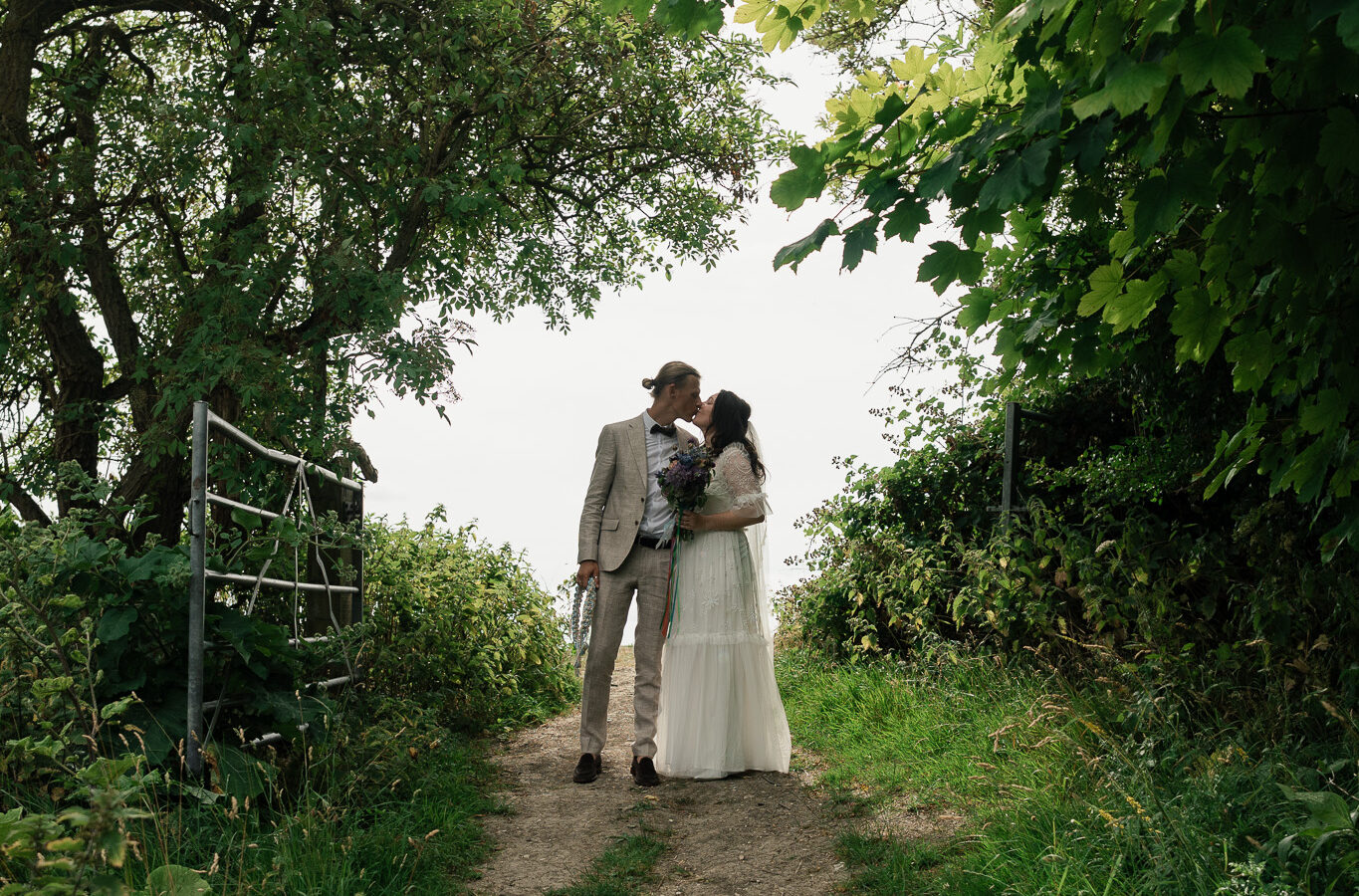
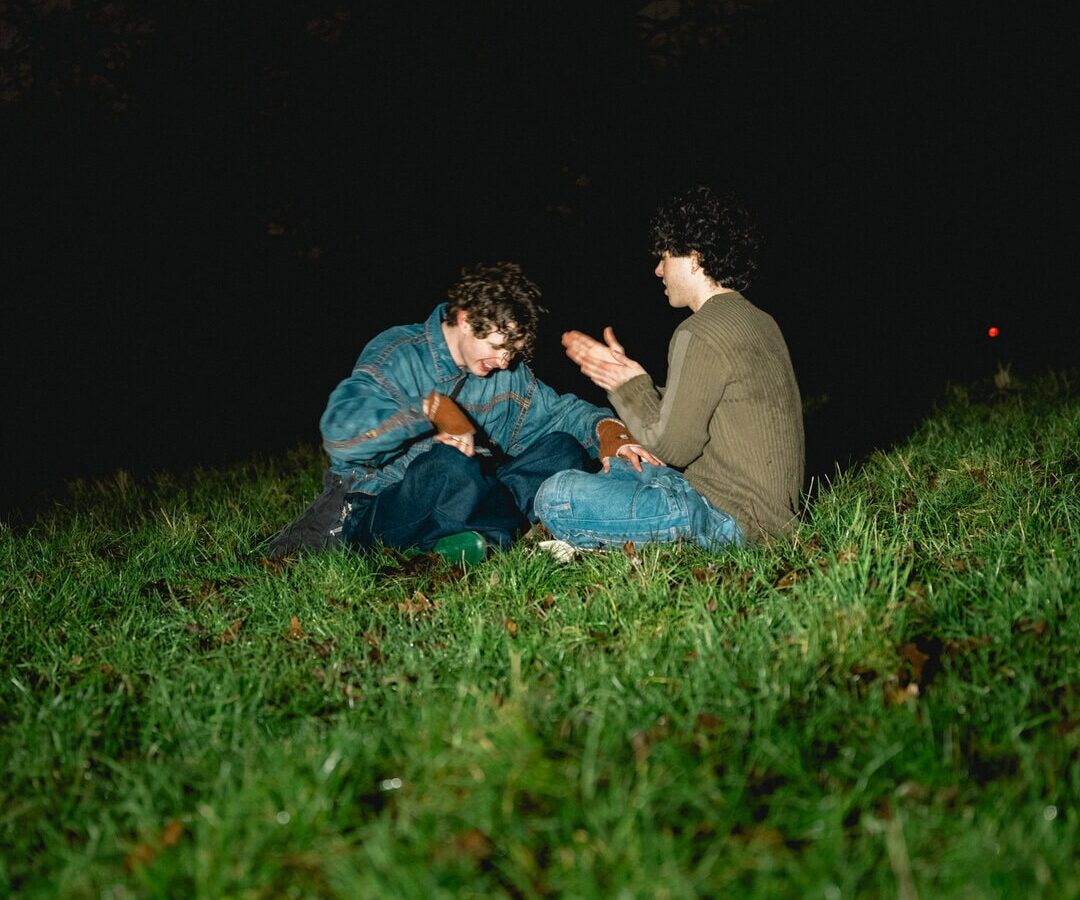
Ask each partner for one song, then add the song they danced to, drove to, or first heard together. A shared list gives you real moments: one starts mouthing the words, the other laughs, and that is the frame. If you want ideas for the shoot itself, our engagement photo ideas and simple brief will help.
High-energy shoots
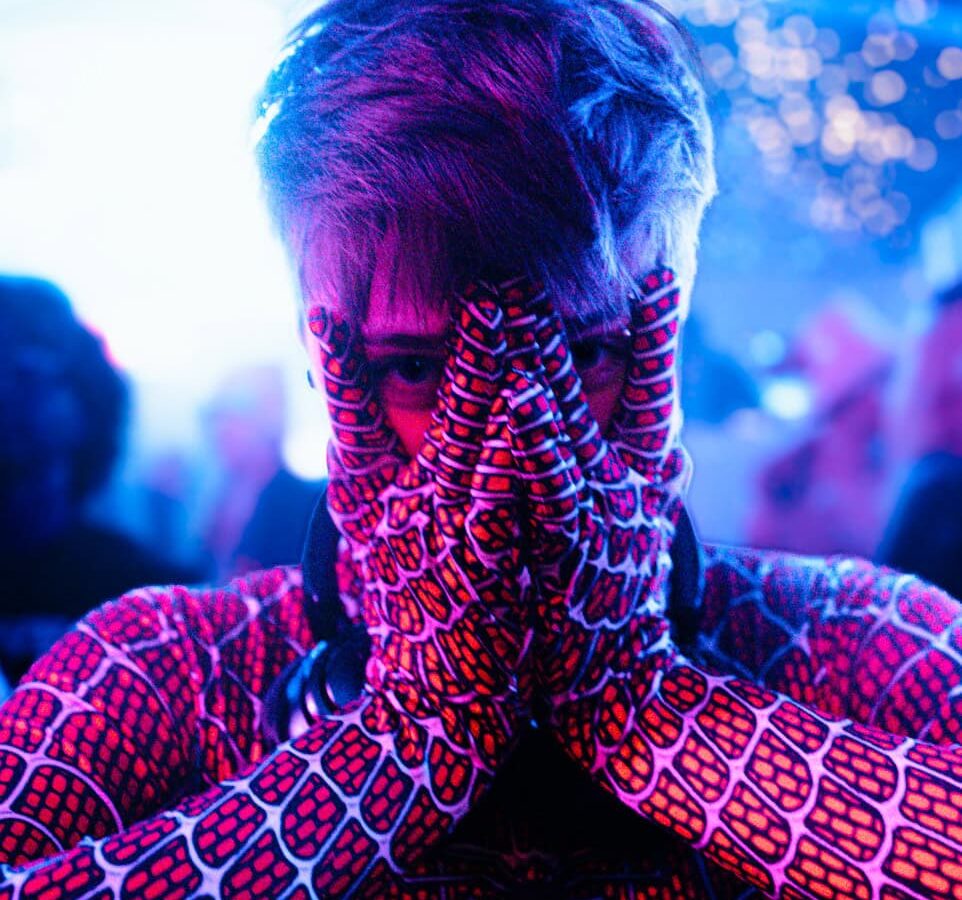
For content days, birthday shoots, or anyone who wants to feel like a pop star for an hour, turn it up a notch (but not so far that you cannot communicate). Dance-pop and club tracks help people move rather than pose. Hayley Kiyoko, Kehlani, Lady Gaga, Janelle Monáe and girl in red all appear in Out’s round-up of queer anthems and artists connected to affirmation.
Choosing queer artists with care
It is tempting to build a “Pride playlist” of the ten most obvious anthems and call it done. A few better habits:
- Mix eras, genders and genres. Queer listeners are not one taste. Include pop, rap, folk, club music and quiet bedroom songs.
- Include trans and non-binary artists, not only gay men and lesbian pop stars.
- Do not assume. A client may love country or drill or musical theatre. Their list outranks yours.
- Use real discoveries. Southbank Centre’s magazine has a mixtape of queer and trans artists curated by Sans Soucis, a good place to find UK acts beyond the usual names.
Musician Anoushka Maskey describes a quiet solidarity among queer artists: even when a song is not about queerness, it can carry a shared understanding of being an outsider. That is the feeling to aim for in a shoot: music that feels like company, not a statement.
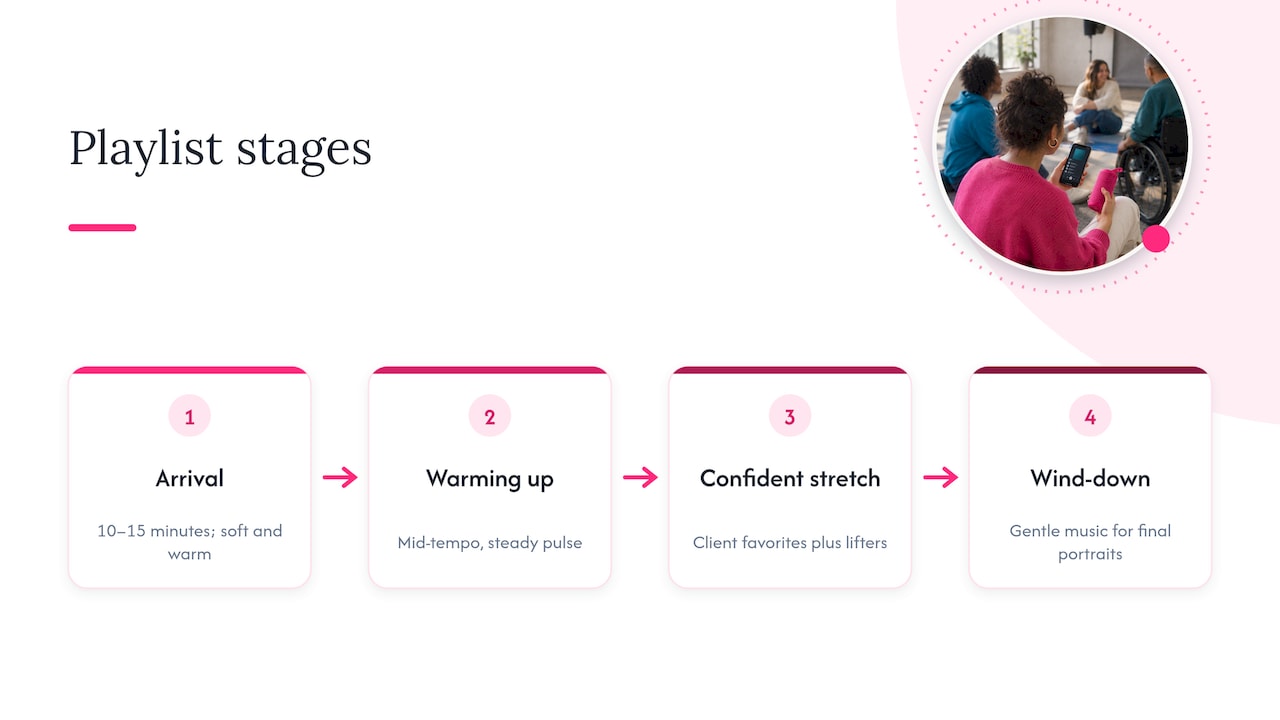
A starter playlist you can adapt
These are a sketch of structure rather than a fixed list. Swap in the client’s choices as soon as you have them.
Arrival and settling in (10 to 15 minutes)
Soft, warm, no big drops. Arlo Parks, Sampha, Perfume Genius, Moses Sumney.
Warming up
Mid-tempo with a steady pulse. Kehlani, Janelle Monáe, Years & Years, Rhye.
The confident stretch
The client’s favourite songs, plus a few lifters. Hayley Kiyoko, Lady Gaga, girl in red, Kaytranada.
Wind-down
Back to something gentle for the last portraits and the goodbye. This is often when the most honest frames arrive.
Build each section to roughly 20 to 30 minutes, with a longer buffer than you think you need. A playlist that runs out mid-shoot breaks the mood more than a bad song does.
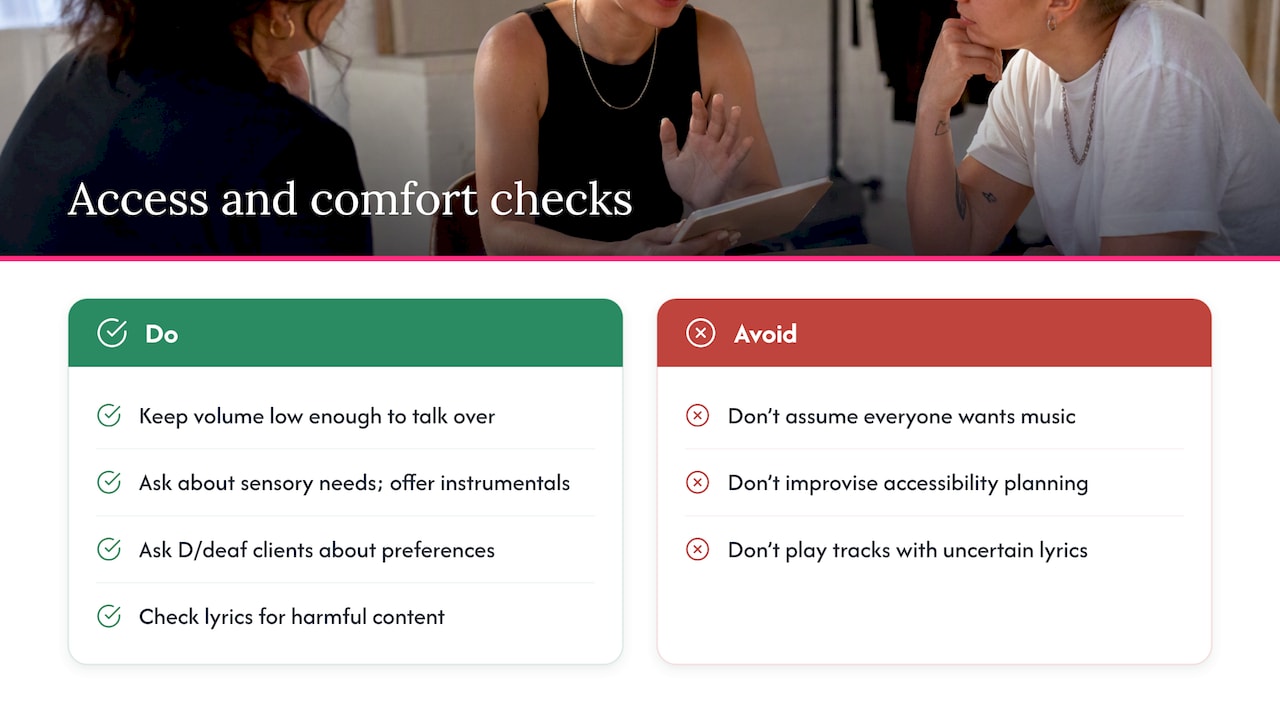
Access and comfort: the part most playlists skip
An inclusive playlist is not only about identity. It is about who can comfortably be in the room.
Volume. Keep it low enough to talk over without raising your voice. Loud music makes it hard to give direction and hard for someone to say they are uncomfortable.
Sensory needs. Some neurodivergent clients find sudden bass, repetitive beats or lyric-heavy tracks tiring. Ask, offer instrumental options, and keep a silent option on the table. If you work with music and visuals yourself, the thinking in this guide to sensory-friendly music and visuals is a useful prompt for what to adjust.
D/deaf and hard-of-hearing clients. Do not assume music is a shared pleasure. Ask what they would like: some will want vibration and rhythm, some will want none, and some will want their interpreter’s preferences considered. The Musicians’ Union’s piece on D/deaf representation in BSL performance stresses advance planning to support D/deaf people’s participation, and the same applies on a shoot: plan it, do not improvise it.
Lyrics. Check for slurs, misgendering, violence or anything that might land badly, including in songs that sound harmless. Edited versions are your friend. If you are unsure about a lyric, skip the track.
Personal boundaries. Have a clear signal for “change the song” that needs no explanation. A raised hand will do.
Technical set-up that keeps it simple
- Download everything. Studios and flats can have poor signal, and adverts in the middle of a shy moment are a mood killer.
- Use a small speaker, placed away from the camera if you are recording any audio.
- Test the playlist beforehand. One photo-playlist guide suggests testing it during setup and adjusting the energy if it feels out of step with the shoot. We would add: and have a backup list ready.
- Keep your phone out of the frame and silence notifications.
- Have an offline emergency list of gentle, lyric-light tracks for nervous starts.
Commercial shoots and video: lyrics, captions and licensing
If the images stay as stills for a portfolio or a private album, a playlist is just atmosphere. It changes once video or audio is captured and published.
For commercial filming in the UK, one legal checklist advises reviewing the final cut for audible third-party music before publication, because music may need to be separately cleared. Practically, that means:
- For brand films, behind-the-scenes reels and social clips, switch the speaker off during takes that capture sound, or use music you have the rights to.
- Add music in the edit instead of letting it bleed into the recording.
- If a client wants a particular track on the finished video, check the licence first.
Accessibility matters in the finished video, too. Shelter’s digital guidance says captions should identify music that is part of the action or significant to the plot and include relevant non-dialogue audio. If music matters to the story you are telling, caption it.
Our queer video production and music video photographers handle these decisions in the brief, so you do not meet them for the first time in the edit.
How we use music on our shoots
We match every client with a vetted queer photographer, by a real person rather than an algorithm, often within 24 hours. Music is part of that matching conversation. If you are booking a personal brand session, which starts from £200, you can tell us what you want to hear (or not hear) when you book, and your photographer will plan around it. Shoots follow your pronouns and boundaries, and the imagery is original, never stock or AI generated.
See all packages, from mini sessions to full events, on our prices page, or get in touch through the site and we will find you the right photographer.
FAQ
What music is best for a photo shoot?
It depends on the shoot and, above all, the person. Slow, warm, lyric-light music suits portraits and boudoir; mid-tempo suits couples; upbeat dance-pop suits content days. The most reliable method is to ask the subject for two or three favourite artists and build around those.
How do I make a photo shoot playlist inclusive?
Let the subject choose and veto tracks, mix queer artists across genres, keep the volume low, and check lyrics for anything that could hurt. Think about access too: sensory needs, D/deaf and hard-of-hearing clients, and the option of no music at all.
Should I play music at a photo shoot at all?
Mostly yes, because it eases nerves and gives people something to move to, but offer a choice. Some clients focus better in near silence, and any shoot recording video or audio needs thought about what ends up in the final cut.
Can I use any song on a commercial video?
Not automatically. Music audible in a published video may need to be cleared separately, so review the final cut before it goes out and check licences for any track you want to keep.
What songs are good for a queer couples shoot?
Start with the couple’s own songs: the ones they danced to, drove to or first shared. Then add warm mid-tempo tracks from artists such as Kehlani, Years & Years or Janelle Monáe to fill the gaps.
Sources
- How to Make Photography Music to Your Ears, Fstoppers
- Melodies of Pride: Queer Anthems for LGBTQ+ Representation, Out
- Rooting for Inclusivity, ELLE Pride cover stars
- My mixtape: Sans Soucis’ 10 vital queer and trans artists, Southbank Centre
- Fostering True D/deaf Representation in BSL Performance, Musicians’ Union
- Video captioning, Shelter’s Digital Framework
- Legal Checklist for Filming in the UK, Sprintlaw UK
- AI Playlists for Photographers, photoshoot.site