Pack 3–5 Outfits: Photographer Tips for Actors and Pros on Headshots
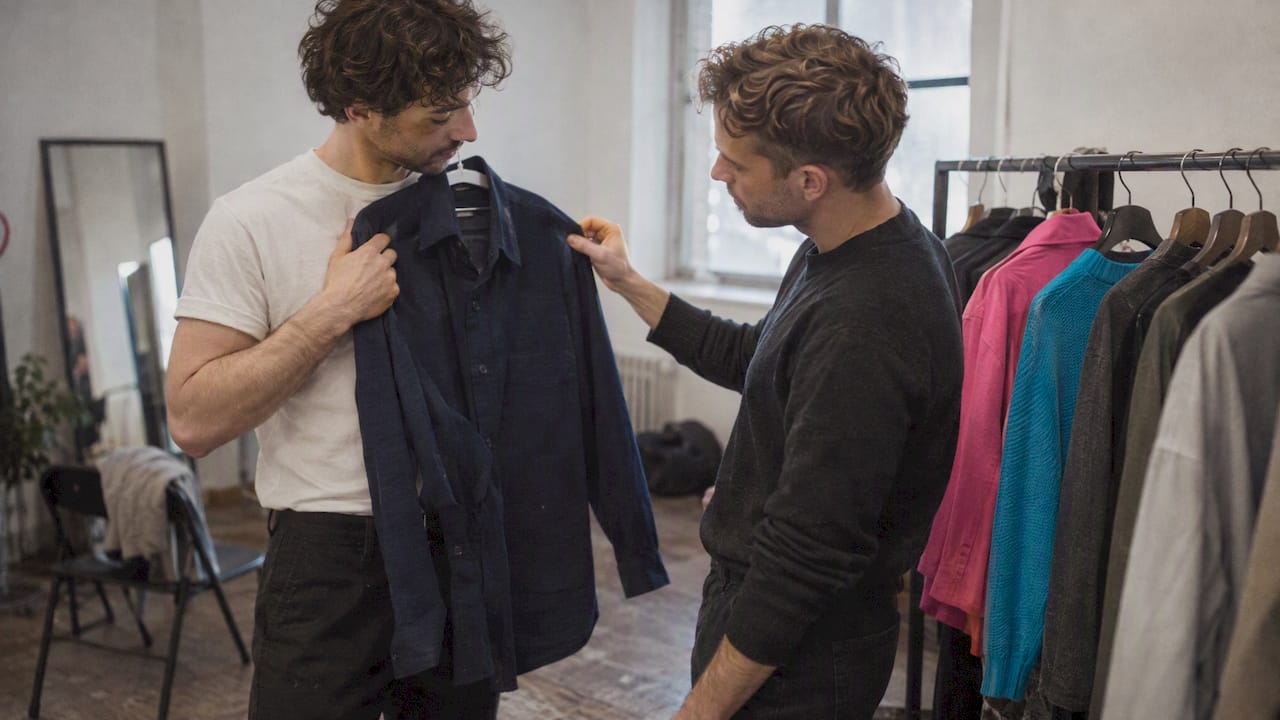
For headshots, choose well-fitted clothing in solid mid-tones or jewel tones, simple necklines and one or two layered options so your face stays the focus. Actors should bring a slightly wider range to cover different casting types, while professionals can keep it simpler. Either way, pack three to five outfit choices and at least one jacket or cardigan you can swap in on the day.
TL;DR:
- Choose mid-tone or jewel-toned clothing that complements your skin and eye color, avoiding pure white and black for better camera exposure.
- Ensure clothing fits well with tailored or structured lines and incorporate layers for easy adjustments during the shoot.
- Opt for subtle textures and matte fabrics to prevent reflections and distracting hotspots under studio lighting.
- Bring three to five outfits, including variations in neckline and fit, along with accessories that add personality without drawing attention away from your face.
- Prepare your wardrobe in advance by cleaning, pressing, and checking for fit issues to ensure a polished look on the shoot day.
Table of Contents
- Colours and tonal choices
- Fit, tailoring and layering
- Necklines, collars and framing your face
- Patterns, textures and accessories, including glasses
- Actor-specific considerations: casting types and range
- Grooming, hair and make-up for camera
- What to avoid and common mistakes
- What to bring and a shoot-day checklist
- Author and agency notes: why photographers use these wardrobe rules
- Recommendations on fabric textures that photograph well
- Consideration of background and setting coordination
- Advice on accessorizing subtly to enhance, not distract
- Tips for colour harmony with skin tone and eye colour
- Guidance on seasonal clothing choices for outdoor shoots
- Prepare wardrobe in advance (clean, pressed, varied options)
- How Queer.Photo can help with your headshots
- FAQ
- Sources
Colours and tonal choices
Mid-tones and jewel tones (think teal, burgundy, forest green, soft navy) flatter most skin tones because they sit close to the midpoint of the camera’s exposure range, keeping detail in both your face and your clothing. Darker, solid colours generally photograph well for head-and-shoulder shots, and photographer advice from The Actors’ Guild of Great Britain notes that white can wash you out while pure black can swallow light, so a mix of tones gives you more usable variety across the session.
A quick way to choose: hold each top near your face under lighting similar to your shoot and watch what happens to your eyes and complexion. If a colour makes your skin look flat or grey, skip it.
- Choose shades that echo your eye colour or hair tone for a subtle lift.
- Save pure white and pure black for one outfit only, not your whole selection.
- Jewel tones (emerald, sapphire, plum) tend to read as confident without competing with your face.
Photographers commonly recommend bringing at least three outfit options plus one jacket or layer, which gives you room to test colours against the light on the day rather than guessing at home.
Fit, tailoring and layering
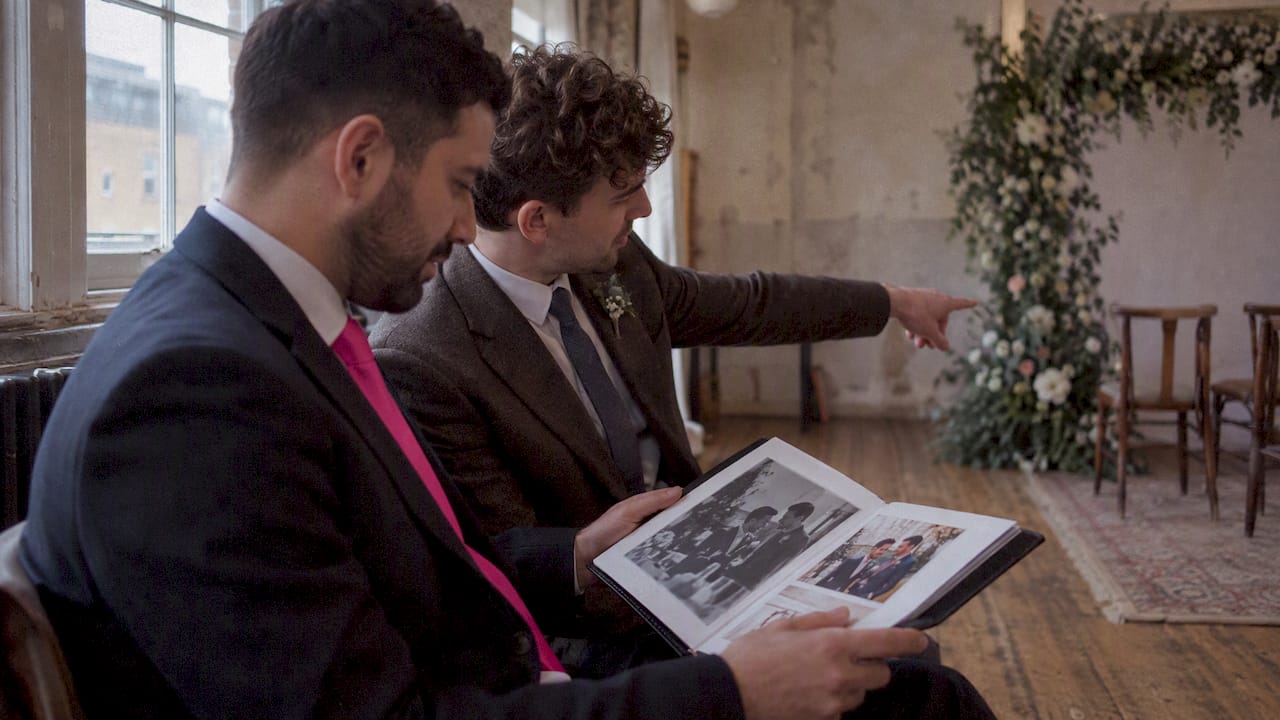
Baggy clothing adds bulk the camera will exaggerate, so a tailored or structured silhouette almost always reads better than something loose. A jacket that sits cleanly on the shoulder, or a top that follows your shape without pulling, gives the photographer a cleaner line to work with.
Layers earn their place here too. A cardigan, blazer or scarf lets you change the look of a shot without a full costume change, which matters when you are working through several crops in a limited session. For head-and-shoulders crops, sleeves that reach the mid-forearm or full length tend to photograph more naturally than short sleeves, which can crop awkwardly at the shoulder.
- Take a few phone selfies in your intended outfit before the shoot and check for pulling, bunching or gaping.
- Try the jacket both buttoned and open, since one will usually sit better on you.
- Bring a second top in a different fit (fitted versus relaxed) to widen your options.
Pro Tip: Photograph yourself from a slight angle, not straight on, since that is closer to how most headshots are framed.
Necklines, collars and framing your face
A crew neck, modest V neck or open collar gives a photographer a clean frame around your face without pulling the eye downward. Collars and lapels also affect posture: a structured collar encourages you to sit a little taller, which helps define the jawline.
For men, an open collar without a tie tends to suit most professional headshots, though a simple tie works for formal corporate briefs. Avoid very wide or plunging necklines, since they draw attention away from your face and can look exaggerated in a tight crop.
- Crew and boat necks suit a relaxed professional look.
- A modest V neck elongates the neckline without feeling formal.
- An open collar with no tie works well for most business and creative headshots.
Patterns, textures and accessories, including glasses
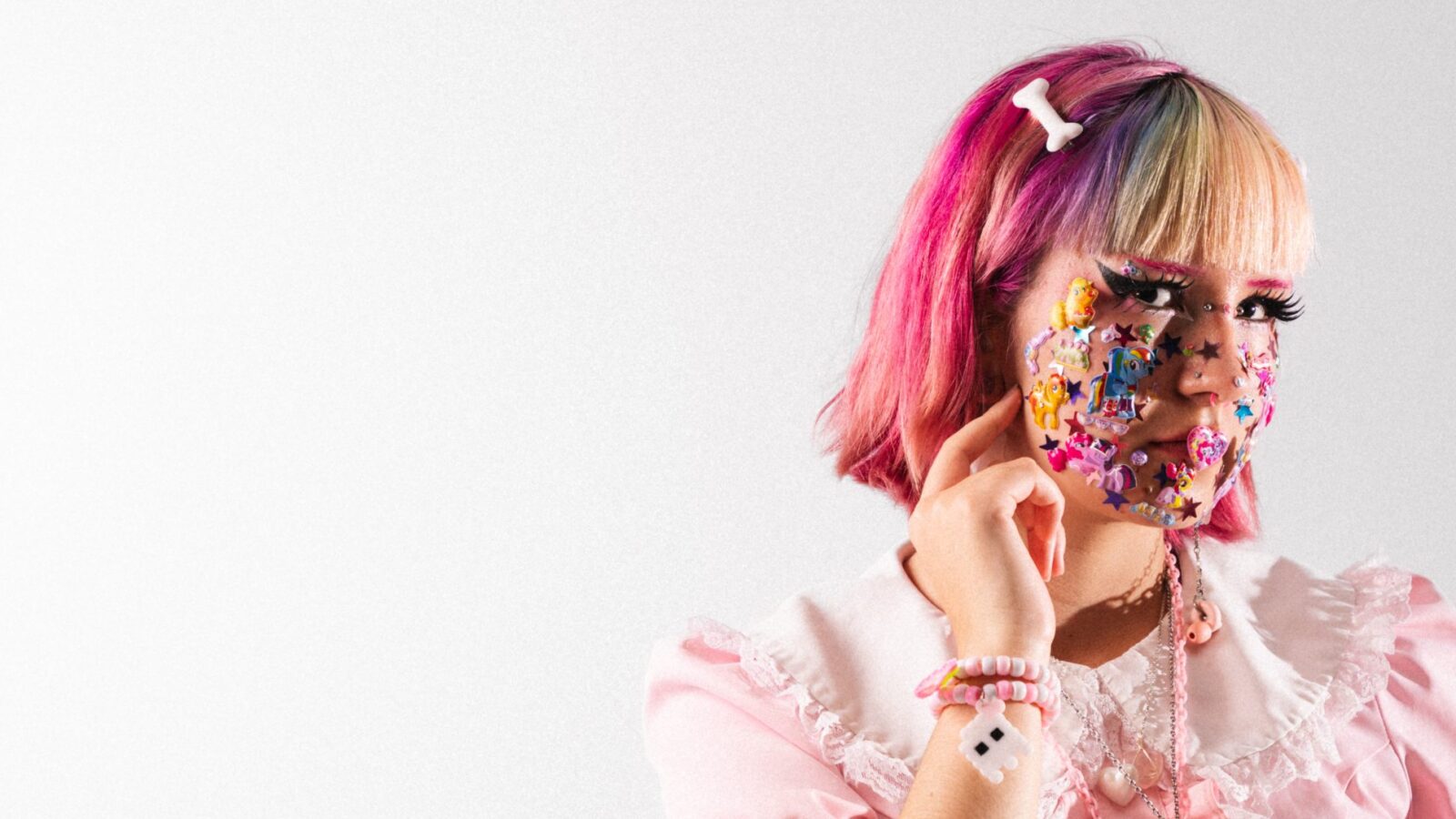
Loud patterns, large logos and glossy or shiny fabrics distract from your face and can create odd reflections under studio lighting. Subtle textures, like a fine knit or a soft herringbone, add depth without reading as busy, so they are a safer choice than anything with a bold print.
Keep jewellery minimal and purposeful: a simple pair of earrings or a thin chain works, while anything large or noisy competes with your expression.
If you wear glasses, clean the lenses thoroughly beforehand and ask your photographer about anti-reflective coating or angling tips, since glare is one of the most common fixable issues in headshot sessions. Bring an alternate frame or your contact lenses as a backup in case of persistent glare.
- Choose fine knits or matte fabrics over anything glossy or sequinned.
- Skip large logos and branded prints entirely.
- Pack a spare pair of glasses or contacts in case of reflections.
Actor-specific considerations: casting types and range
Casting directors want to see a real range of what you could be cast as, not a costume. The clearest way to manage this is to translate your casting types into wardrobe cues rather than literal outfits, since guidance from Backstage notes that wardrobe should signal the range you want to be considered for, not dress you as a character.
- Bring a corporate or professional look: a blazer or structured top in a mid-tone.
- Bring a casual, relatable look: a simple jumper or soft shirt that feels like “you on a normal day”.
- Bring one outfit that hints at a character type you are often cast as, without full costume elements like hats or props.
- If you have an agent, check which types they want represented before the shoot.
- If you are unaffiliated, research common casting categories for your age and type so your choices feel grounded rather than guessed.
Authenticity matters more than variety for its own sake. A casting director is looking for you, dressed as a slightly elevated version of yourself.
Grooming, hair and make-up for camera
Aim for a “good day” version of yourself rather than a dramatically different look. Photographers often say the goal is a natural, polished appearance rather than heavy make-up, since studio lighting tends to exaggerate anything too strong or too shiny.
If you are planning a haircut, schedule it a week or two before the shoot so it settles rather than looking freshly cut. Keep styling simple and tame any stray hairs with a light hold product. For men, trim facial hair a day or two in advance and tidy the hairline so it reads crisply under bright lighting.
- Use a light matte foundation or powder to reduce shine under studio lights.
- Keep eye and lip colour close to natural tones unless your brief calls for something bolder.
- Bring a small mirror and tissues for quick touch-ups between outfit changes.
Pro Tip: Studio lights tend to flatten colour, so slightly warmer make-up tones often look more natural on camera than they do in the mirror.
What to avoid and common mistakes
Shiny fabrics, oversized logos, busy prints and ill-fitting clothes are the most common wardrobe mistakes we see before a shoot, and they are also the easiest to fix in advance. Retouching can smooth small details, but it will not rescue a poor fit or a distracting pattern, so it pays to sort the basics beforehand.
- Pack a lint roller to catch stray fibres and pet hair before you step in front of the camera.
- Bring spare buttons and a small sewing kit for last-minute repairs.
- Steam or iron clothes the night before so creases do not show under bright lighting.
- Carry a small touch-up kit: blotting papers, a comb and a stain remover pen.
What to bring and a shoot-day checklist
A little preparation the night before makes the session itself far smoother.
- Pack three to five outfits with varied necklines, including at least one jacket or cardigan.
- Bring a lint roller, hairbrush and any make-up you use for touch-ups.
- Pack spare jewellery options in case your first choice does not photograph well.
- Bring your contact lens case if you wear glasses and want a backup option.
- Confirm changing facilities and plug sockets with your photographer in advance, especially if you are styling hair on site.
- Include any props that genuinely communicate your work, such as a scarf you design or sell, rather than generic styling items.
Arrive slightly early so you are not rushing through your first outfit change, and keep your choices laid out in the order you plan to wear them.
Author and agency notes: why photographers use these wardrobe rules
This guide draws on established photographer advice and agency practice for professional and actor headshots. Small wardrobe choices, correct fit, calm colour, a clean collar, directly affect how many usable images come out of a session, since a photographer spends less time correcting distractions and more time capturing genuine expression.
At Queer, we match clients with vetted queer photographers who understand how to translate these wardrobe principles into real sessions, whether for corporate headshots, personal branding or trans and non-binary portrait work.
Recommendations on fabric textures that photograph well
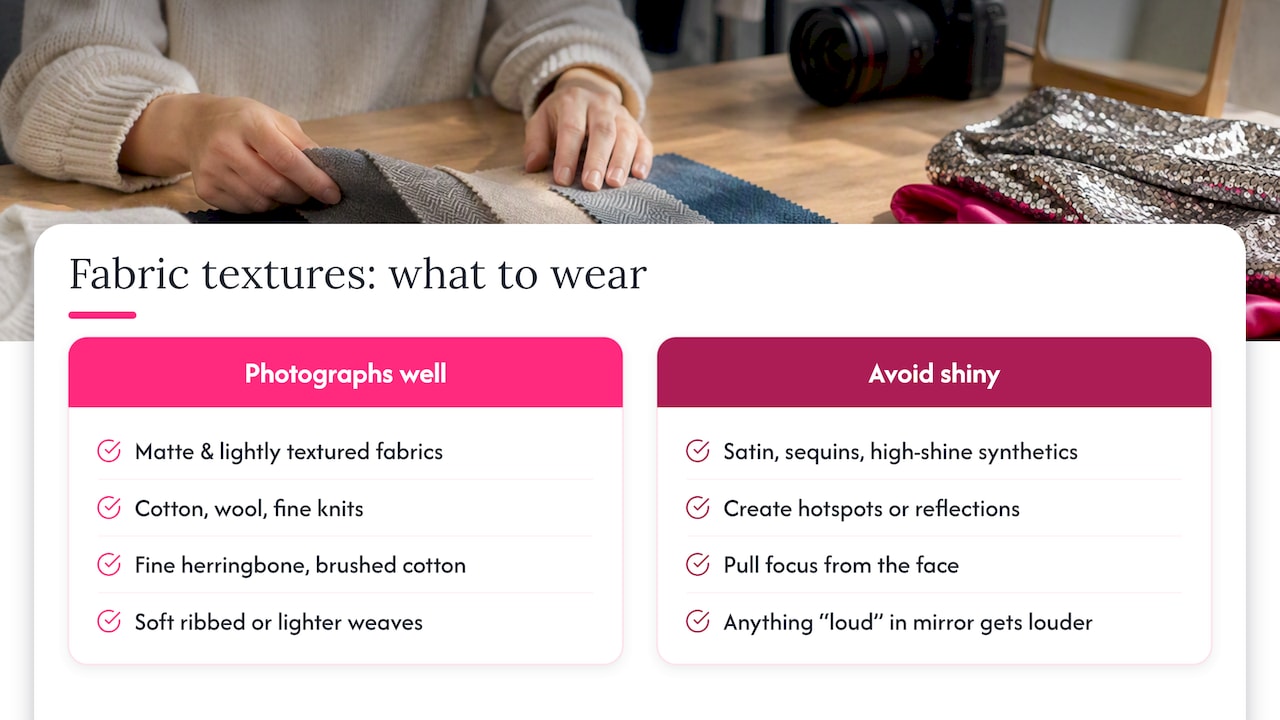
Fabric texture matters almost as much as colour once you are under studio lights. Matte and lightly textured fabrics, cotton, wool, fine knits, absorb light evenly and keep attention on your face rather than on the fabric itself. Satin, sequins and high-shine synthetics catch studio lights and can create distracting hotspots or reflections that pull focus away from your expression.
A fine herringbone, a soft ribbed knit or a brushed cotton shirt all photograph with a pleasing, subtle depth without reading as busy. Linen can work outdoors in soft light but tends to crease quickly, so it needs steaming shortly before you shoot. Heavier knits add visual weight and suit colder-season sessions, while lighter weaves suit a softer, more approachable look.
If you are unsure how a fabric will photograph, check it in natural daylight near a window rather than relying on indoor lighting, since daylight shows texture and sheen more honestly. A fabric that looks subtly rich in person usually translates well on camera, while anything that looks slightly “loud” in the mirror will likely look louder still once lit.
Consideration of background and setting coordination
Your outfit should work with the background you are shooting against, not fight it. Broadcast guidance from the BBC recommends plain-background portraits with a selection of usable crops, since uncluttered backgrounds keep the image flexible for editorial, marketing and casting use.
If you know your background in advance—grey, white or muted colour—choose clothing that contrasts gently rather than blending in or clashing. A navy top against a pale grey backdrop reads clearly, while a similar navy against a dark backdrop can lose definition entirely. Outdoor shoots bring more variables: brick, foliage and stone backgrounds all carry their own undertones, so a quick test shot against the actual location helps you judge whether your outfit holds its own.
Studio sessions tend to offer more control, since the photographer can adjust the backdrop to suit your clothing rather than the other way round. If you have flexibility, ask your photographer which backdrop options they offer before finalising your outfit choices, so the two decisions work together rather than being made separately.
Advice on accessorizing subtly to enhance, not distract
Accessories should support your face, not compete with it. A simple pair of stud earrings, a thin necklace or a watch with a slim band all add a touch of personality without pulling focus from your expression. The test is straightforward: if an accessory catches the eye before your face does, it is too much for a headshot.
Avoid large statement pieces, stacked rings or anything that moves or reflects light unpredictably, since these can create distracting glints under studio lighting. Scarves can work well as a styling layer, particularly for actors wanting a softer, more character-driven look, but keep the pattern simple and the colour in the same family as your main outfit.
If you are unsure whether an accessory works, photograph yourself wearing it under similar lighting to your shoot and compare the result with a version without it. In most cases, the simpler version will look cleaner and more professional, and you can always add a single accessory back in for variety between outfit changes rather than wearing everything at once.
Tips for colour harmony with skin tone and eye colour
Colours that echo your eye colour or complement your hair tone tend to bring a natural warmth to your headshots, since they create a subtle visual link between your face and your outfit. Someone with warm undertones often suits richer colours like rust, olive or warm burgundy, while cooler undertones tend to suit jewel tones like sapphire, emerald or plum.
Eye colour offers an easy shortcut: a top in a tone close to your eye colour, or a complementary shade, can make your eyes appear brighter without any additional styling. Green eyes often pair well with burgundy or warm brown tones, while blue eyes tend to stand out against navy, rust or soft camel.
This is not a strict formula, and the safest approach remains testing colours under lighting similar to your shoot, since skin and eye tones respond differently depending on the light source. If a colour consistently makes your face look flat or washes out your features in test shots, it is worth replacing even if it technically “matches” your colouring on paper.
Guidance on seasonal clothing choices for outdoor shoots
Outdoor headshots bring weather and light into the equation alongside colour and fit. In colder months, layering becomes practical rather than purely stylistic, a coat or jacket keeps you comfortable between shots, but remove it for the actual frame unless outerwear suits your brief. Darker, richer tones tend to suit autumn and winter light, which is often softer and cooler in tone.
In warmer months, lighter fabrics and slightly brighter mid-tones photograph well in stronger daylight, though very pale colours can still wash out in direct sun. Early morning or late afternoon light tends to be more flattering than the harsher light of midday, so timing your outdoor session, where possible, makes as much difference as your outfit.
Whatever the season, bring a spare top in case of changeable weather, since a sudden shower or gust of wind can undo careful styling in seconds. A small umbrella and a change of shoes are worth packing for any outdoor session booked outside the height of summer.
Prepare wardrobe in advance (clean, pressed, varied options)
Preparation the week before your shoot matters more than anything you can fix on the day. Stylist advice from The Guardian recommends pre-planning outfits and checking that garments are clean and pressed, since small details like fresh laces and clean shoes genuinely affect how polished the final images look.
Lay out your chosen outfits several days ahead rather than the night before, so you have time to notice a missing button, a stain or a crease that needs attention. Steam or iron each piece the day before your shoot rather than on the morning itself, when time is tighter and mistakes are more likely.
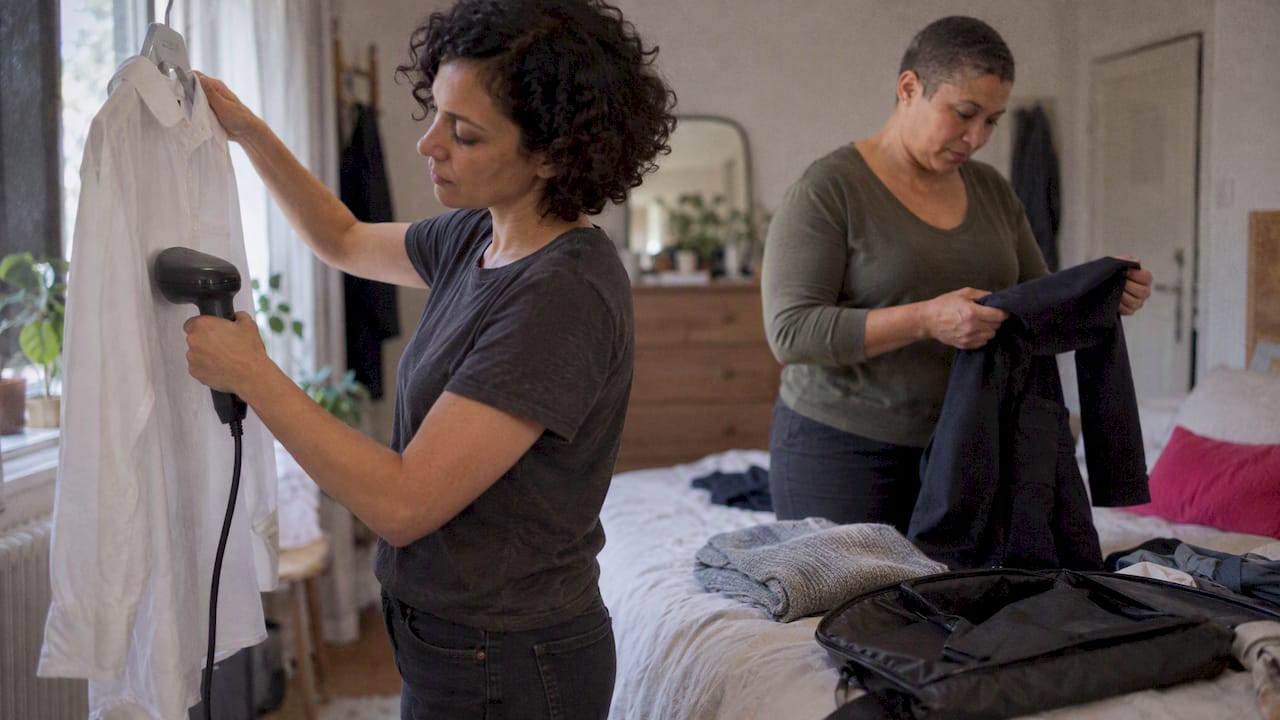
Variety matters as much as cleanliness: aim for a spread of necklines, tones and at least one layering piece across your chosen outfits, so you are not relying on a single look to carry the whole session. Pack everything in a garment bag in the order you plan to wear it, which saves time and stress once you are actually on set.
How Queer.Photo can help with your headshots
Once your wardrobe is sorted, the next step is booking a photographer who understands how to use it. We connect clients with photographers for headshots, personal branding and professional portraits, aiming to arrange sessions promptly after your enquiry.
Our Personal brand package starts from £200, with other headshot and portrait options, including studio sessions and trans and non-binary portrait work, listed on our pricing page. Book directly online and we will match you to the right photographer for your brief.
FAQ
What’s the best colour to wear for a headshot?
Mid-tones and jewel tones such as teal, burgundy or navy generally photograph best, since they flatter most skin tones and keep attention on your face. Photographer advice suggests avoiding an outfit made entirely of white or entirely of black, since each can affect exposure in different ways.
What should I avoid wearing for a headshot?
Avoid shiny or glossy fabrics, large logos, busy prints and anything baggy or ill-fitting, since all of these distract from your face or photograph poorly under studio lighting. Excessive jewellery and very plunging or wide necklines are also worth skipping for most professional or acting headshots.
What is the best outfit to wear for a headshot?
A well-fitted top in a solid mid-tone or jewel colour, with a simple neckline and a jacket or cardigan as a layering option, works for most people. Photographers commonly recommend bringing a few outfit variations so you can adjust during the session rather than committing to a single look beforehand.
What colours should actors avoid for headshots?
Actors are generally advised to avoid busy patterns, very bright primary colours and all-white or all-black outfits, since these can distract from facial expression or create exposure problems. Solid colours and jewel tones tend to work better because they keep the focus on your face while still offering some personality.
Sources
- Carl Proctor – Headshot Advice « The Actors’ Guild of Great Britain
- Actor Headshots: a Comprehensive Guide | Backstage
- ‘Preplan your outfits like meals’: a screen stylist’s tips for looking perpetually polished | The Guardian
- Photography creative image guide — BBC