5 Questions to Vet Trans Inclusive Makeup for Photos (UK)
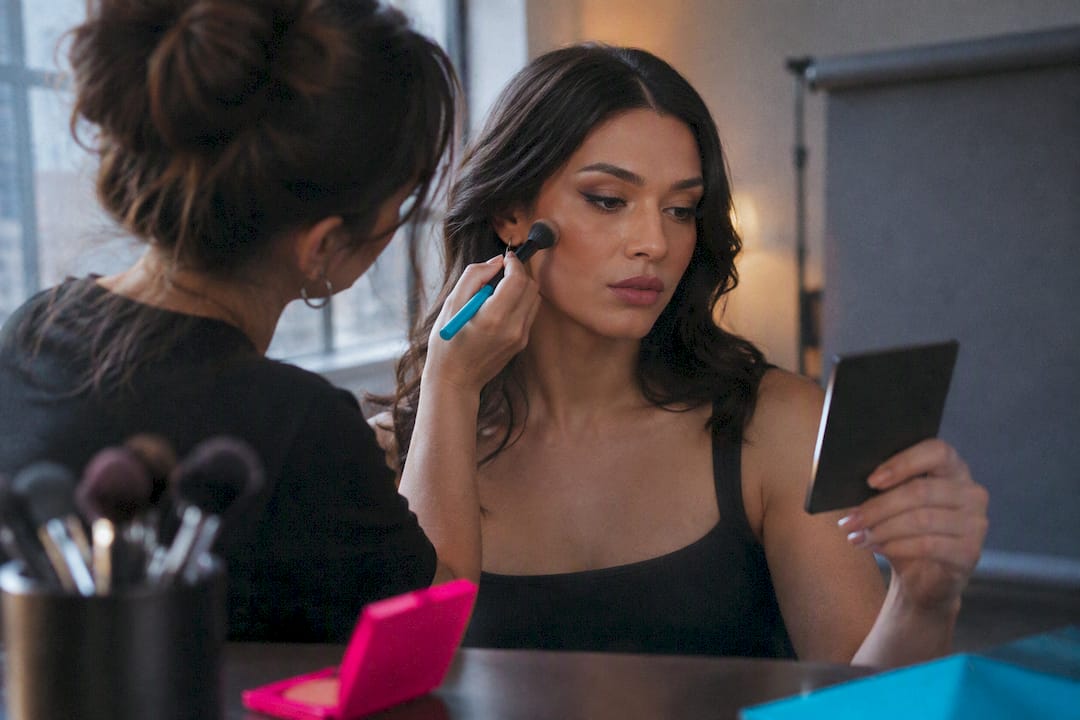
“Trans inclusive makeup for photos” isn’t a product or a technique. It means hiring a trans-competent, queer-affirming photographer who coordinates pronoun practice, privacy and respectful makeup and styling on your behalf. The next step is simple: ask any photographer you’re considering about their pronoun practice, privacy arrangements and whether they can show sample galleries of trans clients before you book, such as a Chicago boudoir photographer experienced in inclusive work.
TL;DR:
- Most trans-affirming photographers are part of established networks like the Trans Photography Collective, and request sample galleries or references before booking.
- Confirm in writing that the photographer practices explicit pronoun use, privacy respect, and consent for image sharing, especially under the protections of the Equality Act 2010.
- Ensure your briefing includes clear details on makeup, styling preferences, retouching limits, and lighting needs to prevent rushed or uncomfortable sessions.
- A qualified makeup artist should have experience with diverse skin tones and transitioning-related techniques, offering adaptable, natural results across different stages of transition.
- Queer.Photo simplifies finding vetted, trans-competent photographers and stylists, with services that prioritize respectful practice and clear communication for inclusive photoshoots.
Table of Contents
- How do you vet a trans-affirming photographer for photos?
- What should you ask before booking a session?
- How do you brief a photographer on makeup and styling?
- What good on-set conduct looks like
- What skills should a trans-affirming photographer bring?
- Where to find trans-competent makeup artists
- What to look for in an inclusive makeup artist
- Talking about makeup preferences at different transition stages
- Making makeup last through a full photo session
- Creating a comfortable makeup environment on the day
- Booking with confidence through Queer.Photo
- Sources
- FAQ
How do you vet a trans-affirming photographer for photos?
Start with the words people use before you even see their photos. A booking page that includes a pronoun field, avoids gendered assumptions in its copy, and links to community directories tells you more about a photographer’s competence than any polished portfolio shot. These are the signals worth checking first, and the ones worth walking away from.
Look for explicit pronoun practice on enquiry forms, galleries that show a genuine range of gender presentation, rather than one “after” shot repeated, and listings on trans-led networks. The Trans Photography Collective runs a UK directory and community projects, including its Trans Portraits initiative, specifically to connect clients with trans photographers and trans-led work. A photographer who’s part of that community, or who can point to comparable affiliations, has usually already done the thinking you’d otherwise have to do yourself.
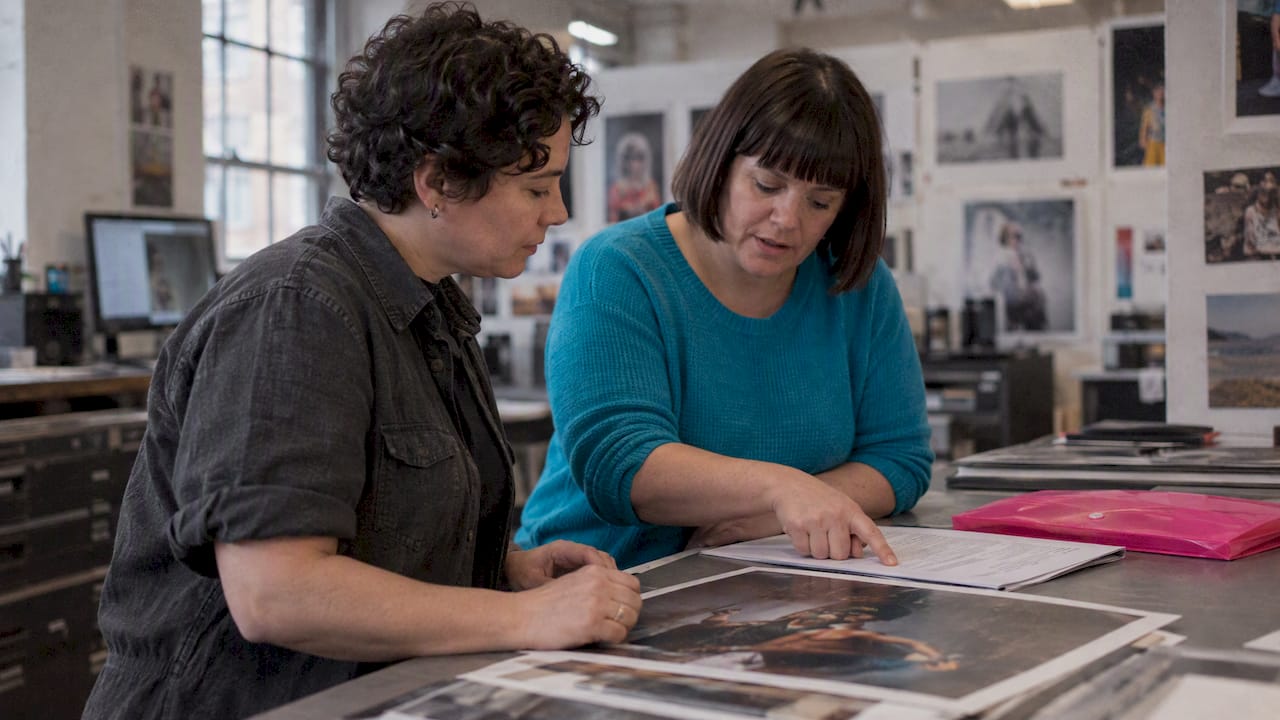
Before booking, ask directly for a gallery of previous trans or gender-diverse shoots, and don’t be shy about requesting references. A photographer confident in their practice will have both ready.
Watch for the warning signs too:
- Portfolios padded with stock or AI-generated imagery instead of real client work
- Vague or defensive answers when you ask about pronouns or privacy
- No mention of consent, image storage, or sharing permissions anywhere on their site
- Zero visible connection to LGBTQ+ community spaces, directories, or training
Pro Tip: Send your pronoun and privacy questions in your very first enquiry email, not after you’ve paid a deposit. How quickly and comfortably someone answers tells you almost everything about how the actual shoot will feel.
What should you ask before booking a session?
A good contract protects your identity as much as your image rights. Before you pay a deposit, get clear answers to the following, ideally in writing.
- Pronoun and name practice. Ask how they introduce themselves and check pronouns on the day, and how they’d handle an accidental mistake mid-shoot.
- Image usage rights. Confirm whether photos can be shared on social media, used in a portfolio, or published anywhere, and whether you can withdraw that permission later. Community guidance is blunt on this point: a photographer should never assume consent to publish simply because a shoot took place, and should offer a clear opt-out for social sharing.
- Privacy and changing arrangements. Ask whether there’s a private, single-use changing space and who else will be present during the session.
- Chaperone policy for intimate or undressed shoots. IMI guidance on working with trans and gender-diverse people recommends asking permission about the photographer’s gender for intimate photography and offering a choice of chaperone rather than imposing one. Apply the same standard here.
- Fees, retouching and sensitive edits. Get a written breakdown of costs, what’s included in retouching, and how the photographer handles requests for specific edits (skin, jawline, body shape) without it becoming an uncomfortable conversation.
Under the Equality Act 2010, people who are proposing to undergo, are undergoing, or have undergone gender reassignment are protected from discrimination when receiving a service. That’s not just a legal footnote. It means you’re entitled to expect the same standard of respect and care as any other paying client, and a contract that spells out pronouns, privacy and image use isn’t an unusual request. It’s a reasonable one.
How do you brief a photographer on makeup and styling?
A brief is where the shoot actually gets planned, weeks before anyone picks up a camera. Send it early enough that your photographer, and any makeup artist or stylist involved, can prepare properly rather than improvising on the day.
Clarify roles first. Some photographers lead the whole session and bring in trusted makeup artists themselves; others expect you to arrange your own and simply coordinate timing. Neither is wrong, but you need to know which one you’re getting before the day arrives.
Your brief should cover:
- Pronouns and preferred name, stated plainly at the top
- Reference images showing the look, angles or presentation you want
- Retouching limits, including anything you’d specifically like left alone
- Clothing choices and any accessible changing requirements
- Timing for makeup application, so it isn’t rushed against the photography slot
Lighting choices matter here too. Softer, diffused lighting reduces the appearance of shadow along jawlines or facial contours that some trans clients feel self-conscious about, and a few warm-up frames before the “real” shots begin can take the pressure off enormously. Build in a buffer for makeup adjustments, because touch-ups mid-session are normal, not a sign anything’s gone wrong.
What good on-set conduct looks like
A respectful session usually starts before the camera comes out. IMI guidance suggests a simple opening script for practitioners: something like “My pronouns are she/her; what are yours?” as a natural, low-pressure introduction rather than an interrogation. A photographer who opens a session this way, and explains what’s about to happen and what consent looks like at each stage, has usually thought about this properly.
Ask, too, who will see the final files, how long they’re kept, and whether anything gets shared beyond the two of you without further permission.
Pro Tip: Agree a simple pause word or hand signal before you start. Dysphoria can surface unexpectedly mid-pose, and having an easy way to say “let’s stop for a second” without explaining yourself changes the whole tone of a shoot.
Good photographers also build in alternative poses on the spot if something isn’t landing, and stay alert to cultural or religious sensitivities around dress and touch without needing to be asked twice.
What skills should a trans-affirming photographer bring?
Technical competence and interpersonal care go together here, not in sequence. A photographer who understands lighting but not consent will produce technically fine, personally uncomfortable photos. One who understands consent but not lighting will produce kind, unflattering ones.
Look for someone who can demonstrate:
- Lighting and framing choices adapted to different gender presentations, not a single default setup applied to everyone
- Collaborative posing at a pace that responds to how you’re feeling, not a fixed shot list ticked off regardless
- A transparent retouching process, with documented consent before and after significant edits
- Direct experience or representation working with trans clients, ideally with a visible connection to trans-led photography networks
Preparation matters more than people expect. Commentary on commercial photography and gender diversity argues that casting, storytelling and collaboration with trans people both behind and in front of the camera produce noticeably less stereotyped, more authentic results than a photographer improvising on the day. That preparation work is invisible in the final image, but it’s the difference between a photo that feels like you and one that feels performed.
Where to find trans-competent makeup artists
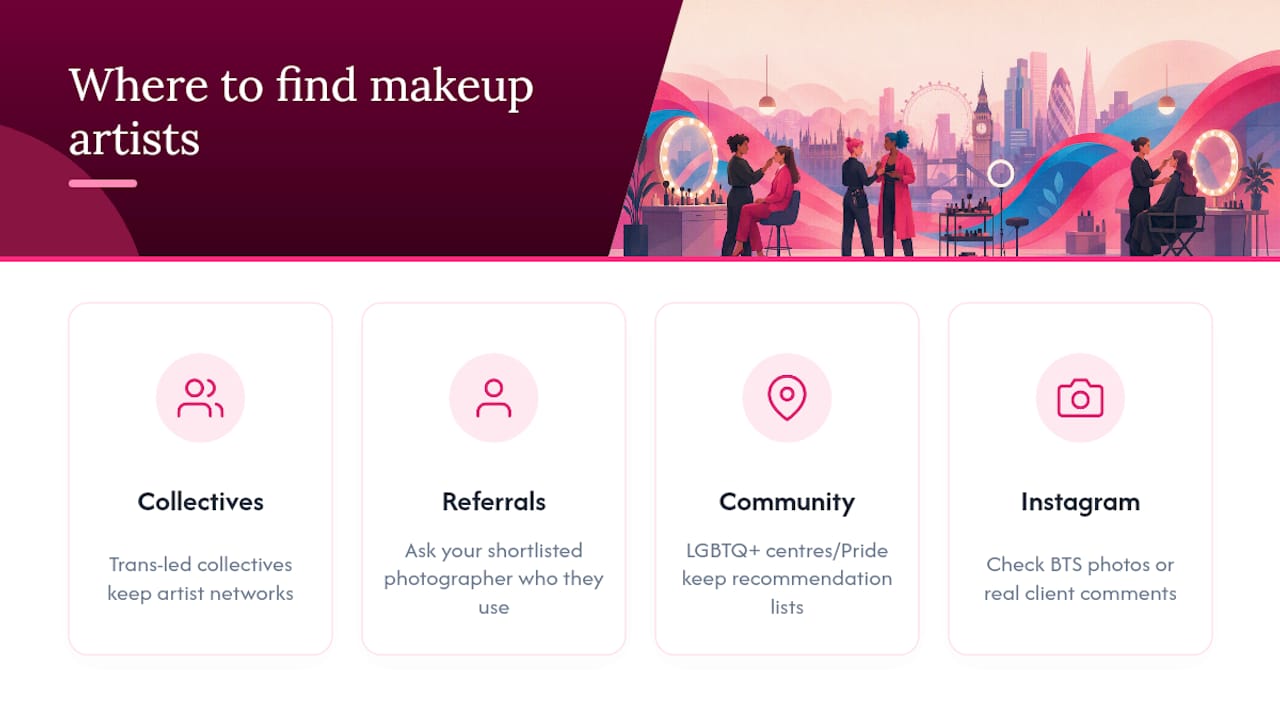
Coordinating makeup for photos usually means recommending or vetting someone alongside your photographer, not doing it yourself. The good news is the same community networks that help you find trans-affirming photographers tend to overlap with makeup artists who work the same circuit.
Trans-led photography collectives and directories, including the Trans Photography Collective, often maintain informal networks of makeup artists and stylists who’ve worked their events and shoots. Asking a shortlisted photographer directly who they usually collaborate with is often faster than searching independently, because they’ll already know who handles trans clients well under studio lighting and time pressure.
Local LGBTQ+ community centres, Pride event organisers, and queer creative collectives are worth approaching too. Many keep informal recommendation lists built from real client feedback rather than marketing copy. Instagram and portfolio sites remain useful, but treat a polished grid with caution unless you can also see behind-the-scenes work or read a genuine client comment about the experience, not just the result.
When you do find a candidate, apply the same vetting logic you’d use for a photographer: ask about their experience with trans clients specifically, request examples, and pay attention to how comfortably they answer. A makeup artist who’s done this work before won’t need the question explained to them.
What to look for in an inclusive makeup artist
Experience with trans makeup techniques isn’t a single skill. It’s a combination of technical range and a working understanding of what different clients are actually trying to achieve, which varies enormously from person to person.
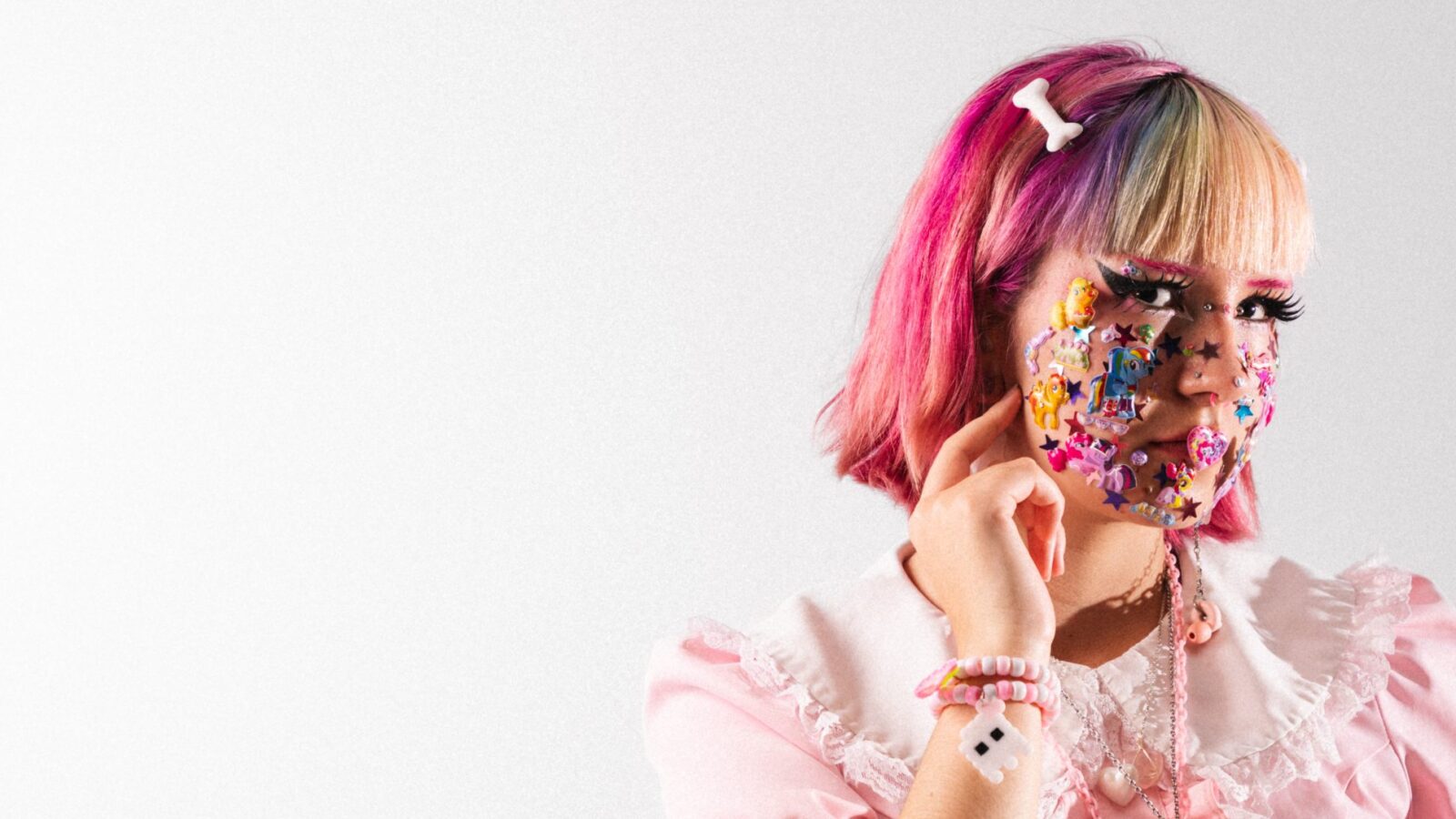
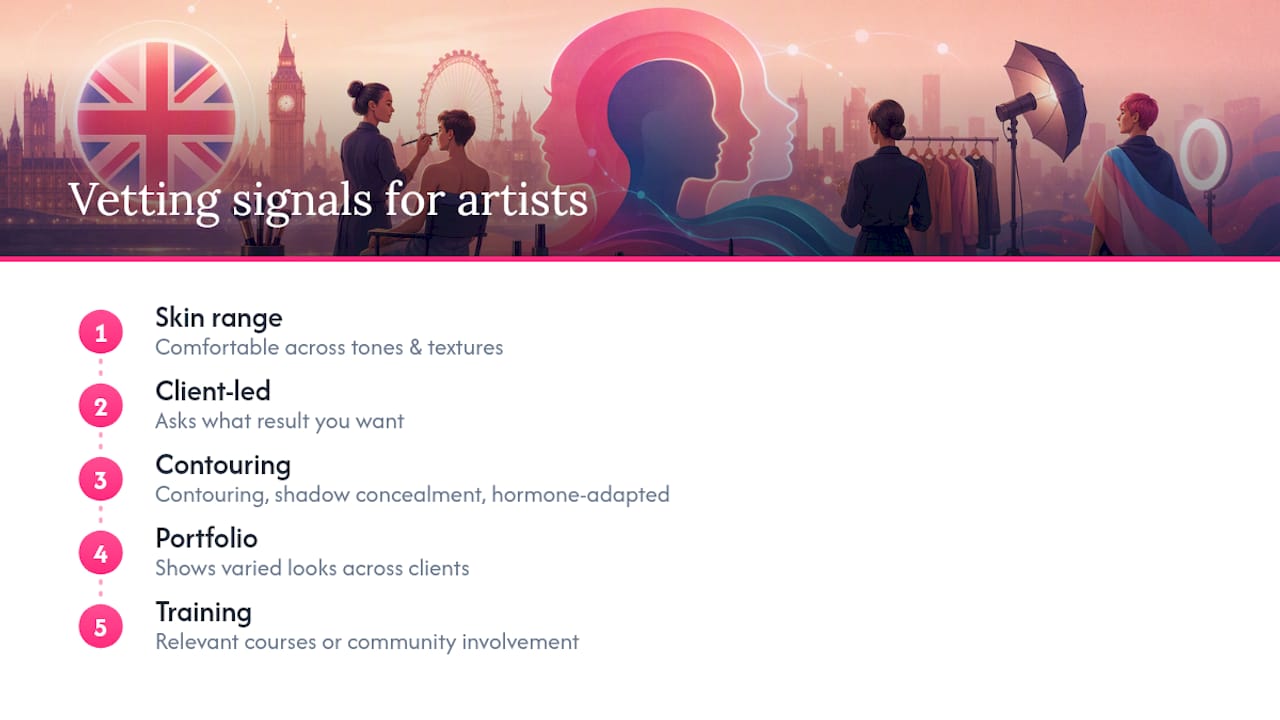
A genuinely inclusive makeup artist should be comfortable working across a wide range of skin tones and textures without treating any of them as unusual, and should ask what result you want rather than assuming based on appearance. Someone contouring for a softer jawline, someone wanting bold, unapologetic colour, and someone wanting barely-there natural coverage are all reasonable requests, sometimes from the same client on different days.
Ask a prospective makeup artist how they’ve approached contouring, concealing five o’clock shadow, or adapting technique for testosterone or oestrogen-related skin changes, if that’s relevant to you. Their answer should sound like lived professional experience, not a script. Portfolio diversity matters here too: a book full of one look repeated on different faces suggests limited range, whereas varied results across different clients suggests genuine adaptability.
Training and community involvement are good secondary signals. Some UK photography and image-making courses now build queer and trans representation directly into their curriculum, reflecting a wider shift toward formal education around inclusive practice. A makeup artist who’s engaged with that kind of training, or who works regularly alongside trans-led photographers, tends to bring the same care to a session that a well-vetted photographer does.
Talking about makeup preferences at different transition stages
There’s no single “trans makeup look,” and any artist who suggests otherwise hasn’t worked with enough clients. What someone wants from their makeup can shift significantly depending on where they are in their own transition, and the conversation should reflect that rather than assume a fixed endpoint.
Someone early in transition might want makeup that softens or reduces the appearance of certain features they’re not yet comfortable with. Someone further along might want the opposite: makeup that celebrates and emphasises features they’ve worked hard to develop or accept. Neither preference is more valid than the other, and a good makeup artist will ask rather than guess.
The most useful approach is a short, direct conversation before the shoot, not on the day when there’s pressure to keep things moving. Bring reference images if you have them, and be specific about anything you’d rather they didn’t touch or emphasise. If you’re unsure exactly what you want, saying so honestly is far more useful than pretending certainty you don’t feel. A skilled artist will offer options and adjust in real time rather than committing to one look and hoping it lands.
It’s worth revisiting these preferences each time you book, too. What felt right a year ago might not feel right now, and a photographer or makeup artist who assumes your last shoot tells them everything they need to know isn’t paying proper attention.
Making makeup last through a full photo session
Makeup that looks perfect at 10am and patchy by the final frames undermines everything else about a well-planned shoot. Durability matters more for photography than everyday wear, because studio lighting is unforgiving and sessions often run for hours.
A good makeup artist will prime skin properly before application, accounting for skin type and any texture changes related to hormone therapy or ageing, and will set makeup in stages rather than applying it all at once and hoping it holds. Setting spray, translucent powder in the right places, and periodic blotting between shots all matter more than the initial application itself.
Lighting interacts with makeup in ways that catch people out. Warm studio lighting can wash out cooler-toned products, while harsh flash can exaggerate texture that would otherwise be invisible. An experienced makeup artist adjusts for the specific lighting setup being used that day, not a generic formula.
Build touch-up time into the schedule rather than treating it as an emergency measure. A five-minute pause every hour or so to blot shine, reapply lip colour, or check for creasing keeps the whole session looking consistent from the first frame to the last, rather than visibly deteriorating across the gallery.
Creating a comfortable makeup environment on the day
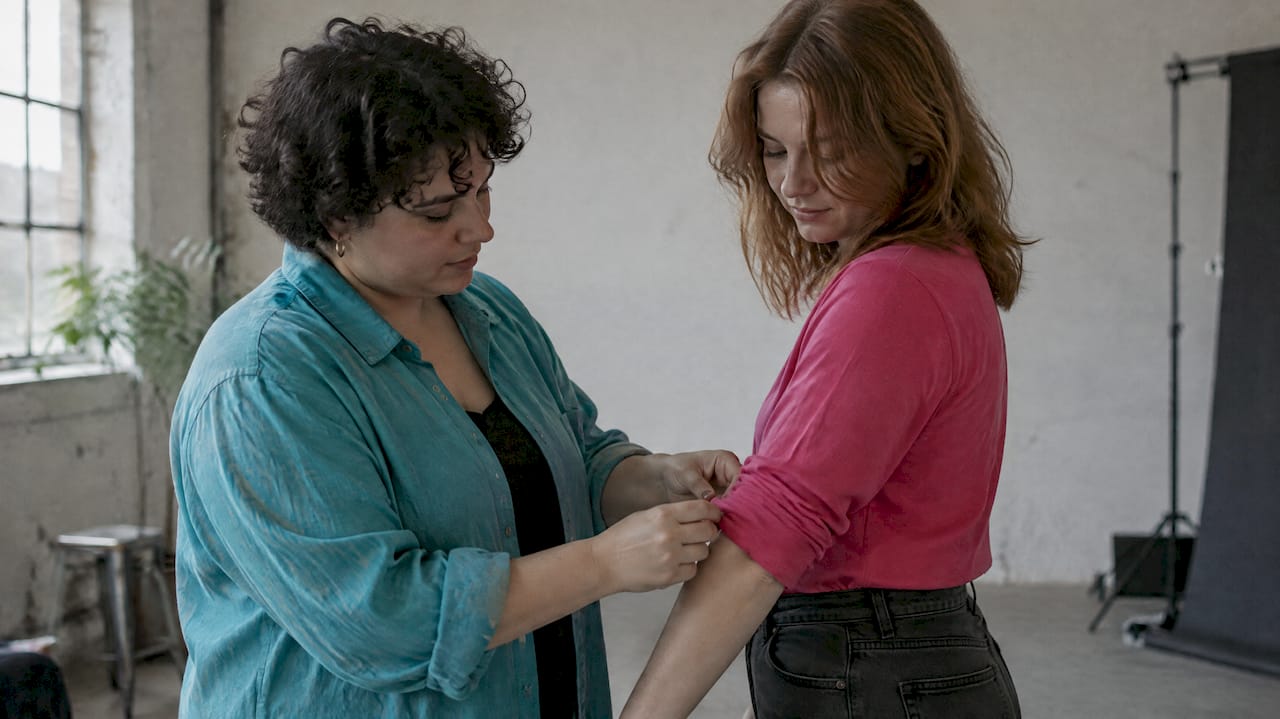
The atmosphere during makeup application shapes the rest of the shoot more than most people expect. If someone feels rushed, judged, or misgendered while getting ready, that tension shows up in every photo that follows, no matter how skilled the photographer is.
Simple things matter here. A private or curtained-off space for makeup and changing, rather than an open area shared with the whole crew, gives people room to relax without an audience. Playing music the client actually likes, rather than whatever’s already on, sounds trivial but genuinely changes the mood of a room. Checking in verbally, rather than working in silence, helps too: a quick “how does that feel?” partway through goes a long way.
Time pressure is often the real enemy. Rushing makeup to stay on schedule almost always shows in the final images, so build in more time than you think you need, particularly for a first session with someone new. And if dysphoria or discomfort does surface mid-application, having already agreed a pause signal means nobody has to explain themselves under pressure to keep moving.
Booking with confidence through Queer.Photo
Everything above describes what good practice looks like when you’re vetting on your own. Queer.Photo removes most of that legwork by personally matching you with a vetted photographer from its roster, usually within 24 hours, rather than leaving you to check galleries and send enquiry emails one by one.
Every photographer represented is vetted directly by the agency, not simply listed, and every shoot is built around respecting pronouns, personal boundaries and proper credit. If you’re specifically looking for someone experienced with trans clients, the trans portrait photographer service page outlines exactly that offering, while studio-based sessions with private changing and clear logistics are covered on the queer studio portrait page.
When you get in touch, tell Queer.Photo your pronouns, any privacy needs, and the type of session you’re after, whether that’s a personal portrait, a couples shoot, or brand work for an organisation. A personal brand session is offered, with other formats, from mini sessions to full-day coverage. For the latest pricing, see the pricing page. Every image is original work, never stock or AI-generated, and your brief goes straight to a real person matching you with the right specialist, not an algorithm sorting through a database.
Sources
- Equality Act 2010 code of practice — services, public functions and associations
- Working with trans and gender-diverse (TGD) patients — IMI guidance
- Trans Photography Collective — about
- Photoshoot inclusivity guide — Isobel Greenhalgh Creative
- Capturing gender diversity in the 2020s for commercial photography — FotoFemmeUnited
FAQ
What does “trans inclusive makeup for photos” actually mean?
It refers to hiring a photographer who coordinates makeup, styling and privacy respectfully for trans clients, not a specific makeup product or technique. The focus is on the photographer’s practice around pronouns, consent and comfort, alongside the makeup artist they work with.
How do I know if a photographer is genuinely trans-affirming?
Check for explicit pronoun fields, diverse and non-stereotyped portfolio galleries, and any listing on community directories such as the Trans Photography Collective. Ask directly for references or sample trans shoots before booking, and note how comfortably they answer.
Should I ask about a chaperone for intimate shoots?
Yes. IMI guidance recommends offering a choice of chaperone for intimate photography rather than assuming one arrangement suits everyone, and a professional photographer should raise this themselves before you have to ask.
What am I legally entitled to as a trans client booking a photographer?
Under the Equality Act 2010, people undergoing or who have undergone gender reassignment are protected from discrimination when receiving a service, including photography. That means you can reasonably expect the same standard of care and respect as any other client.
Does Queer.Photo offer trans-specific portrait sessions?
Yes, through its dedicated trans portrait photography service, which matches clients with vetted photographers experienced in trans-affirming work. Session pricing varies by format, with full details on the pricing page.
What if I feel uncomfortable or dysphoric during the shoot?
A good photographer will have agreed a pause signal or word with you beforehand and will offer alternative poses or a short break without needing a lengthy explanation. Raising it early in your brief, rather than hoping it won’t come up, makes this far easier to handle on the day.