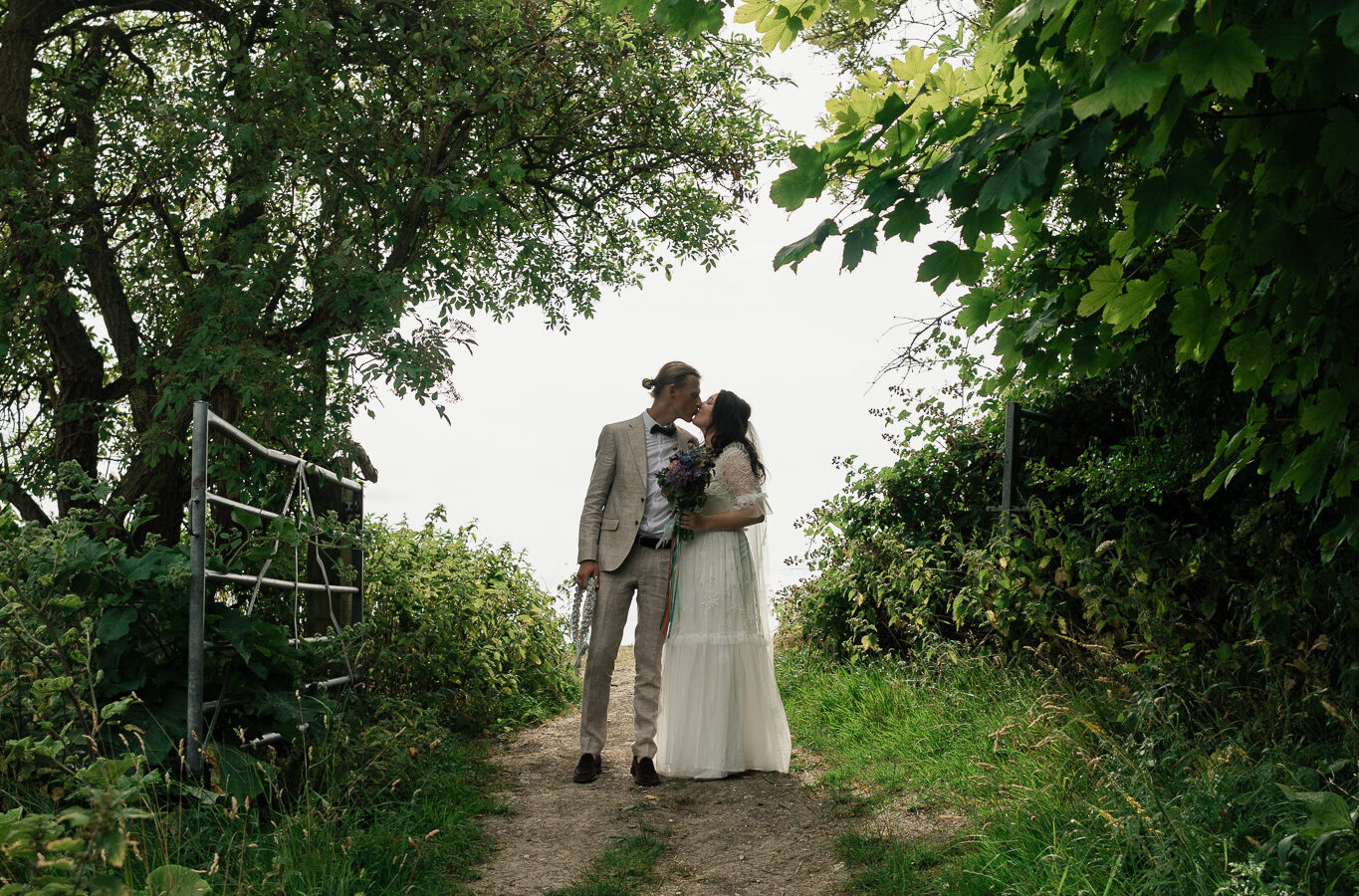
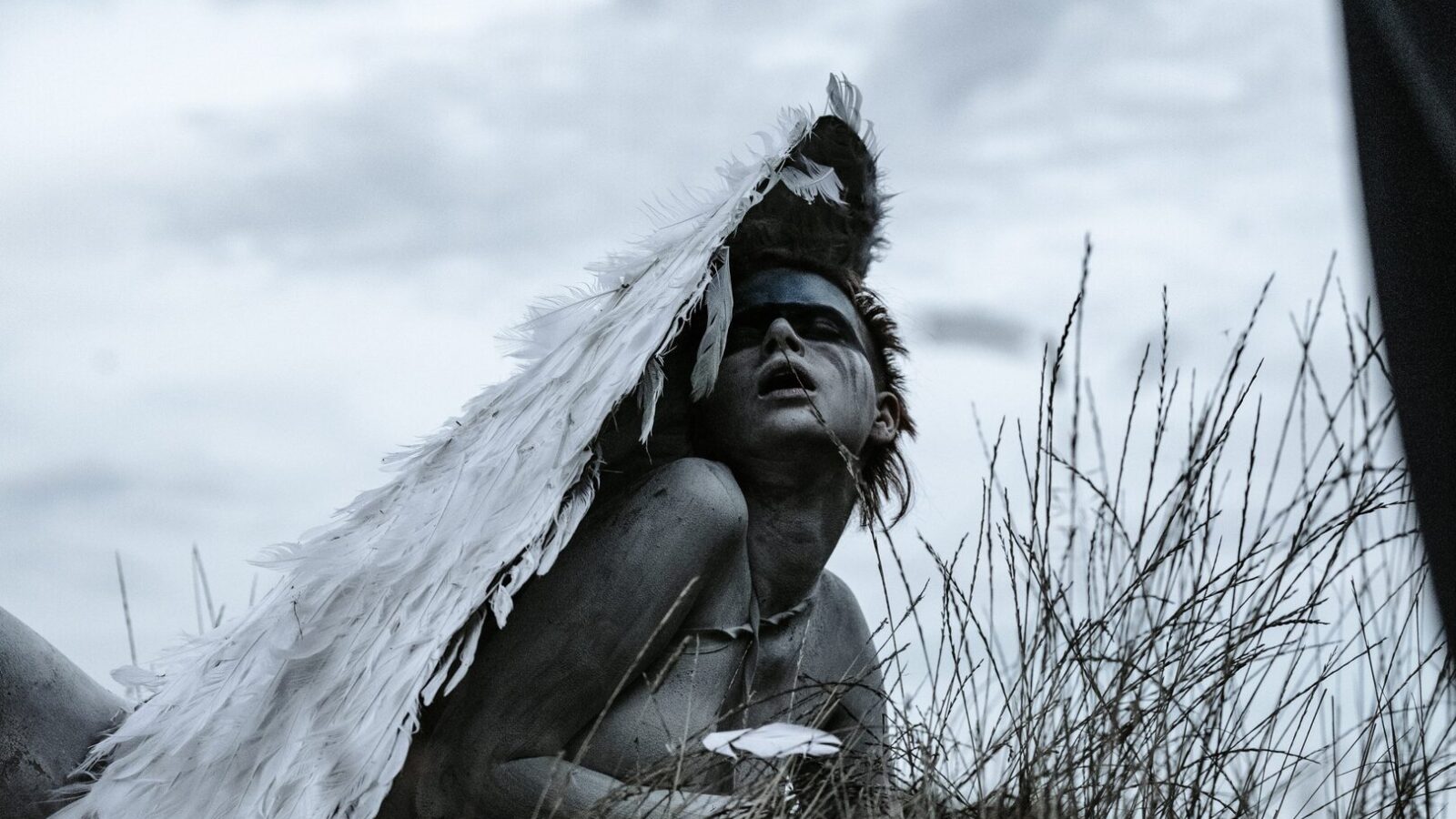
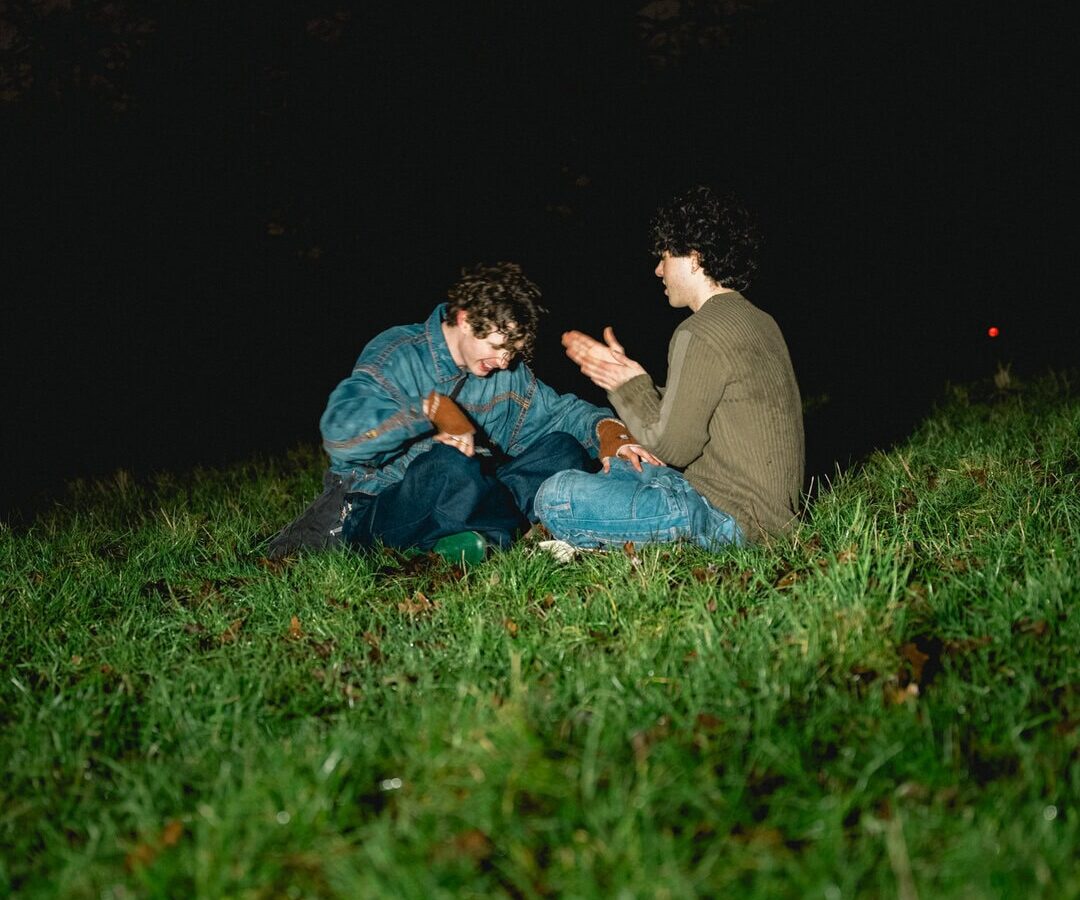
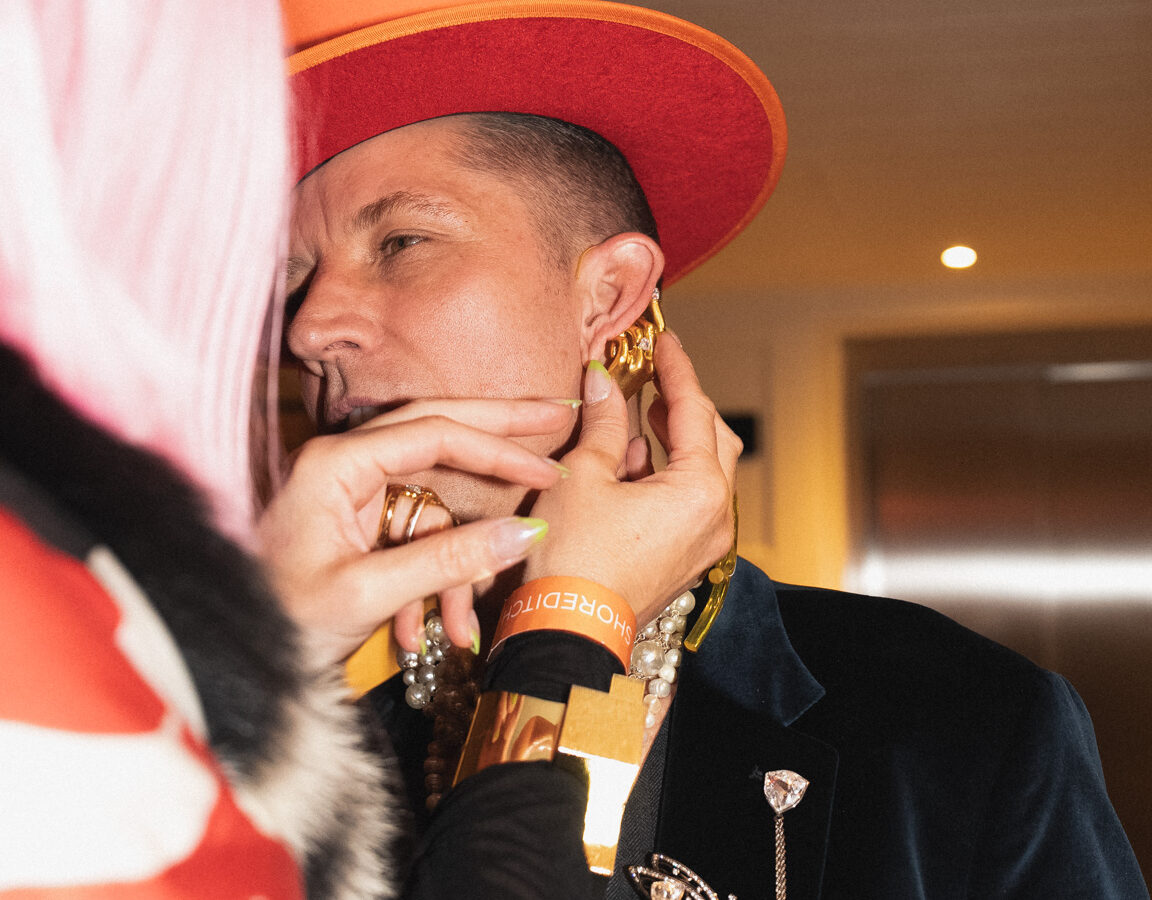
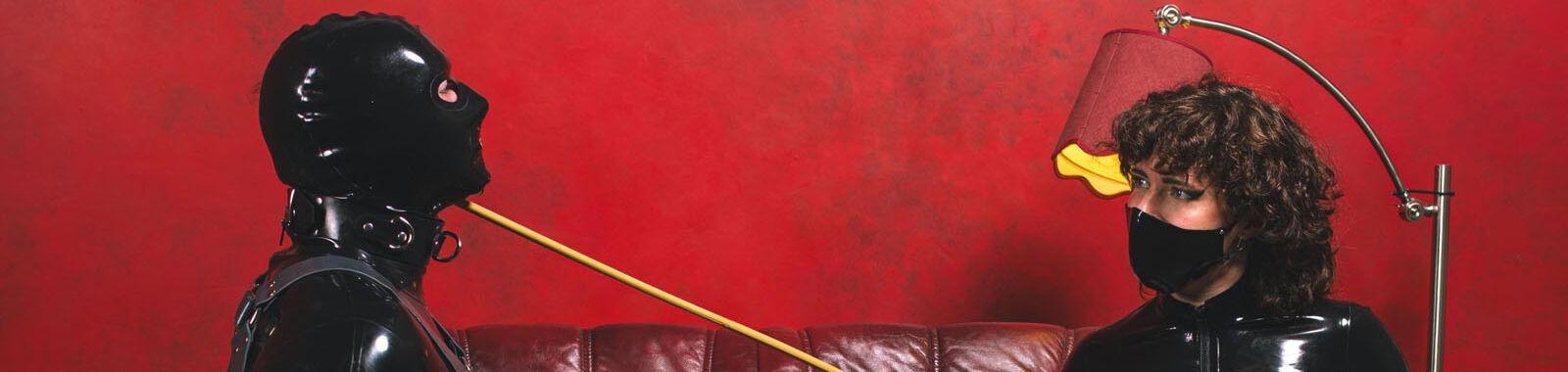
Polyamorous and chosen family portraits in London, everyone in the frame
A triad I shot last autumn told me they’d given up trying to book a normal family photographer. Every enquiry hit the same wall. The form had two slots for adults. The photographer assumed someone was a friend who’d wandered into the frame. One studio asked, gently, which two of them were the actual couple. They were three people who’d built a life together, and they wanted one good photo of that life.
Instead they kept getting asked to shrink it down to a shape a stranger found legible. So we just photographed the three of them as what they are, equal in the frame, none of them framed as an add-on. A family, together. Photographing families that sit outside the nuclear template is some of my favourite work, because the people in front of the camera have so rarely been seen properly.
Your family is the family, however it’s shaped.
Why most family photographers struggle here
Family photography is built around a default, two parents and their kids, and the whole workflow assumes it. The posing, the booking forms, the language all expect that shape. Step outside it and a lot of photographers visibly stall.
You feel it in the small questions. Who’s the couple, where should your friend stand, is this everyone. Each one quietly tells you your family doesn’t compute, which is a miserable thing to navigate at what’s meant to be a happy shoot.
A photographer who works with polyamorous and chosen families doesn’t flinch. Three partners, four, a queer platonic pair raising a kid together, a tight web of found family, all of it is just Tuesday to them.
Posing a family that isn’t a pyramid
Standard family posing builds a pyramid with the couple at the apex. That collapses the moment there’s no single couple, and forcing it makes everyone look subtly wrong. I pose by the actual relationships instead, who’s closest to whom, who holds whom, where the easy contact already is.
For larger groups we play with shape, clusters, a loose line, people at different heights. The goal is a frame where everyone’s clearly equal and clearly together, which is harder than it sounds and worth getting right.
The photo ends up reading true because it’s built on how you genuinely stand near each other, rather than on a template.
Triads, quads, and bigger
Three is straightforward and reads beautifully once nobody’s being ranked. Four and up just need a little more choreography so nobody gets lost at the edge or stuck behind a shoulder.
Tell me the group’s size and shape when you book so I can plan the space and the lens. A wider group wants room to breathe, and a cramped backdrop fights against the very thing we’re trying to show.
If your constellation includes people who aren’t romantically linked but are absolutely family, they belong in the photo on equal footing, because chosen family is family.
Kids in non-nuclear families
Plenty of polyamorous and queer platonic families are raising children, and those kids deserve photos that show their actual home. Three parents, two households that function as one, the auntie who’s really a co parent.
I shoot the kids’ bits early while they’re fresh, then get the adult frames once the little ones have run out of patience. We can also make clear in the photos who the child’s people are without forcing anyone into a role they don’t hold.
If you’re thinking about how to talk to kids about their family being different from their friends’, Stonewall has written sensibly about LGBTQ families.
Where in London
Home suits these shoots when your family is rooted in a shared space, because the place is part of the story. Your kitchen, your sofa, the chaos of a life several people built together.
A studio works when you want clean and timeless, and I run one in east London called Lemon Shark Studio with room for a bigger group. Outdoors is lovely too, and the parks and streets around Hackney hold a crowd without feeling staged.
For a sense of how I handle groups in natural light, more of my work is at LemonLens.
Coordinating without matching
Matching outfits push a family toward looking like a uniform, which is the opposite of what most chosen families want. A shared palette works far better, a few colours everyone pulls from in their own way.
That keeps the group cohesive while letting each person look like themselves, which matters more when your family is already a deliberate, chosen thing. Send me a photo of the planned outfits and I’ll tell you if anything will fight on camera.
Texture and individuality read as warmth, while everyone in identical white shirts reads as a stock photo.
The privacy question
Some polyamorous families are fully out and want these photos everywhere. Others are selective, out to their circle but not to a boss or a relative. That’s completely normal and it shapes what we agree about the images.
You decide where the photos can go, and I won’t use anything publicly without your say so. If discretion matters, a private studio session keeps the whole thing contained.
Tell me your comfort level when you book, and we work within it, because the shoot should feel safe rather than like a step toward an outing you didn’t choose.
When the family changes shape
Chosen and polyamorous families shift over time, and that’s not a reason to skip the photos, it’s a reason to take them. People join, people move on, a metamour becomes a co parent, a close friend drifts into the centre of things. The family you are this year is worth recording as it actually is now.
I’ve shot the same constellation more than once across a few years, and watching it grow and rearrange in the photos is its own quiet record. There’s no rule that a family portrait has to be the final, fixed version, because most families never are.
If your shape has just changed, a new arrival or a new partner folded in, that’s a lovely moment to mark.
Handling nerves across a group
Group shoots carry group nerves, and someone’s usually the reluctant one who hates photos. I shoot loose and keep it light, giving people small things to do rather than telling everyone to relax, and the stiff frames thaw within a few minutes.
Because you all see the back of the camera as we go, the doubters tend to come round fast once they spot a frame they actually like. By the end the reluctant one is usually suggesting poses, which is how you know it’s working.
It helps to give everyone a heads up about the shoot beforehand so nobody arrives cold, and to pick a time when the kids, if there are any, aren’t due a nap. Small bits of planning take the pressure off the day and let the session feel like a get together that happens to be photographed.
What it costs
A polyamorous or chosen family session in London usually starts around £220 and rises with larger groups, multiple locations, or a bigger edited set. More people means more to choreograph and edit, which the rate reflects.
Every photographer on the queer.photo/ roster sets their own rate, so you'll see a real number on each profile before you book. You weigh the work against the price rather than guessing.
If you’re splitting the cost several ways across the family, it often works out very reasonable per person for something you’ll all keep.
Choosing the right photographer
Hire someone who won’t make you explain or rank your relationships, and whose work and words make clear they shoot families of every shape as equal and whole. The ease they bring lets everyone relax into it.
Tell us who’s in your family and how you’d like to be shown, and we’ll match you with someone from the roster who’ll photograph all of you as the family you actually are. We aim to come back within a day.
Common questions
Will the photographer treat us as one family, not a couple plus extras?
Yes. The photographers here work with polyamorous and chosen families regularly, so there’s no main couple and no plus-one. The posing is built around your actual relationships, so everyone reads as equal and clearly together.
Can you photograph a triad, quad, or larger group?
Of course. Three reads beautifully, and larger groups just need a bit more choreography so nobody gets lost at the edge. Tell the photographer the group’s size when you book so they can plan the space and the lens.
We have kids across a non-nuclear family. Can you shoot that?
Absolutely. The kids’ bits get shot early while they’re fresh, and the photos can show who the child’s people are without forcing anyone into a role they don’t hold. Three parents or two merged households are completely normal here.
We’re not all fully out. Can we keep the photos private?
Yes. You decide where the images can go and nothing is used publicly without your say-so. If discretion matters, a private studio session keeps everything contained, and you set your comfort level when you book.
How much does a chosen family photoshoot in London cost?
From around £220, rising with larger groups, extra locations, or a bigger edit. Each photographer lists their own rate, so you see the number before booking, and split across the family it often works out reasonable per person.
Ready when you are. see portrait options, or find a photographer.