Nightlife Event Photography in London: How to Brief and Book

Good nightlife photography in London makes a room feel the way it felt at 1am: the heat, the lights, the people who came to be themselves. To get that, you need a photographer who can work in low light and who understands the crowd. You also need a brief that says what you want, what the room allows, and what happens to the pictures afterwards. This guide covers all of it, with a particular eye on queer nights, where consent and trust matter even more than a fast lens.
TL;DR
- Nightlife coverage is more than crowd shots. A full brief covers the door, the dancefloor, DJs and performers, the bars and the quiet corners, plus details of the venue itself.
- Photographers should work with the light in the room, not flatten it. Ask to see low-light work in a venue like yours before you book.
- Consent comes first. At queer events, agree who may be photographed, where cameras are not allowed, and how to stop when someone asks.
- Agree hours, editing, delivery, gallery time and usage rights in writing before the night. Hours are usually counted from arrival to wrap.
- We match you with a vetted queer photographer, usually within 24 hours, by a real person rather than an algorithm.
Table of Contents
- What nightlife event photography covers
- How photographers work in a dark, fast room
- Photographing queer nightlife with care
- Consent, privacy and image use in the UK
- What goes in your brief
- Hours, editing, delivery and rights
- Book a photographer who belongs in the room
- Planning the night: a simple timeline
- FAQ
- Sources
What nightlife event photography covers
People often picture one thing: a packed dancefloor with arms in the air. That is a good frame, but it is one frame. The Guardian’s photo essay on the birth of Ministry of Sound shows how much a club night actually holds: queues and entry, clubbers and their style, DJs, sound systems, bars, security, chill-out areas and the odd details that make a venue itself.
For a London event, a sensible shot list usually has these layers:
- Arrival. The queue, the door, wristbands, outfits as people walk in. This is where the night starts, and it is often the most flattering light you will get.
- The floor. Wide shots that show scale, and tighter ones that show faces, sweat and joy.
- The stage or booth. DJs, drag performers, live acts, hosts. These are the pictures press and promoters ask for first.
- Between moments. Friends laughing at the bar, someone fixing glitter in a mirror, a cloakroom queue. These are the pictures people actually share.
- The room. Signage, lighting rig, decor, sponsor branding if there is any.
- The late hours. The last song, the lights coming up, the walk out into the street.
If you are planning the programme around moments like these, it helps to think through the entertainment as well as the photography. Some corporate event entertainment ideas for Central London are worth reading so you can tell your photographer exactly when each act or set begins.
Who books it
Most enquiries fall into a few groups: club promoters and collectives who need content for the next flyer, brands running launch parties, workplaces hosting after-hours socials, and people throwing a private party who want something better than phone footage. Each needs something slightly different. A promoter wants volume and speed. A brand wants clean, usable images with the right people in frame. A private host wants the atmosphere and the friends, not a press wall.
How photographers work in a dark, fast room
You do not need to know camera settings to hire well, but a little knowledge helps you ask better questions.
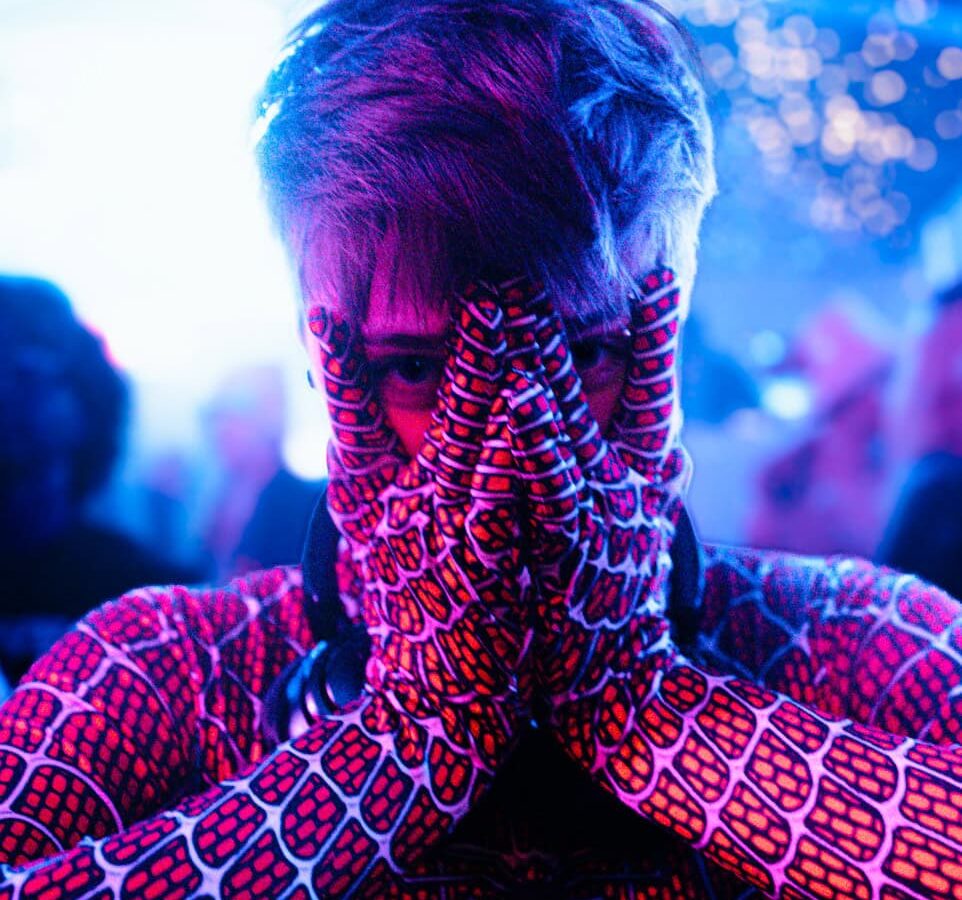
The main skill is respecting the light that is already there. The Abbey Road Music Photography Awards’ guidance on lighting for live music advises working with the light provided in clubs and using low-key lighting to preserve the atmosphere and drama, rather than overpowering the scene. In practice, that means a photographer who lets the purple wash and the strobes be part of the picture, not someone who fires a harsh flash at every face.
That does not rule out flash entirely. Many nightlife photographers use it selectively, for example for fast portraits at the door or a step-and-repeat. What you want is a photographer who chooses on purpose.
Settings matter too. Eventbrite’s concert photography tips note that manual mode makes it easier to drag the shutter, because automatic mode may change the shutter speed to produce a crisper image without light streaks. Those streaks and blurs are often exactly what gives a club photograph its movement. A photographer in manual mode can decide how much blur is a feature and how much is a mistake.

What to look for in a portfolio
When you scroll through someone’s work, check these things:
- Faces in low light. Are eyes sharp and skin tones believable, or muddy and orange?
- Variety. Is there more than one kind of picture: wide, tight, details, candid, posed?
- A similar venue. A rooftop bar and a basement club behave differently. Look for work in rooms like yours.
- Consistency across a night. Ask for a full gallery from a single event, not only the ten best frames.
- How people look. Do the subjects look comfortable? You can tell when a photographer is trusted.
That last point is not minor. In a Guardian interview, the photographer Ewen Spencer explained that taking part in the scene as well as observing it helped him win his subjects’ confidence. People relax around someone who belongs in the room, and it shows in the pictures.
Photographing queer nightlife with care
A queer night is often a place where people are more themselves than anywhere else in the week. Some are out at the club and not at work. Some are exploring their gender. Some are simply not interested in being tagged. A camera in that room has a responsibility that a corporate drinks reception does not.
The community toolkit Building Inclusive Queer Spaces is clear on the basics. It says safer LGBTQIA+ spaces should not allow anyone to be photographed without explicit consent, should avoid assumptions about identity, and should respect boundaries, accessibility needs and requests to stop.

Some events go further. British Vogue’s account of the London queer rave Riposte describes strict no-camera and no-phone rules in the playroom, with wellness teams and medics on site. If your night has zones like that, your photographer needs to know before doors open, and the rule should be written into the brief, not left to a quick chat on the night.
Identity is not yours to announce
A caption can do harm even when a picture is lovely. ILGA-Europe’s 2022 guidelines for journalists say not to identify someone as LGBTI without their express permission unless they are public about it, and not to reveal identity details merely to sensationalise. They also warn that public disclosure can expose people to discrimination later. For a promoter posting a gallery, the practical lesson is simple: a photo of someone at a queer night is not an invitation to label them.
Here is what that looks like when it is done well:
- The photographer introduces themselves and asks before taking portraits.
- Pronouns and names are taken from the person, never guessed.
- Anyone can ask for a picture to be deleted or left out of the gallery, and that request is honoured.
- Captions describe the night, not the people in it.
- Safer-space and no-photo areas are marked and respected.
This is how we work at Queer.Photo. Every shoot respects pronouns and personal boundaries, and photographers are properly credited. If you are running a club night, our page on an LGBTQ club night photographer in London explains how that looks in practice.
Consent, privacy and image use in the UK
The law and good manners overlap here, but they are not the same thing. Two useful reference points:
- A public-sector protocol, the Royal Borough of Kensington and Chelsea’s photography and video guidance, sets out a typical approach: consent is needed when people are identifiable, the image is used for publicity or marketing, and the person is the subject or prominent in it. Consent is not generally needed for incidental people in the background at public events where they might reasonably expect to be photographed.
- The Information Commissioner’s Office says in its advice on taking photographs that personal use, such as a family album, falls outside data protection law, and that legitimate interests may be a lawful basis for promotion and marketing. That advice is written for schools, but the principle carries over to organisers who publish event pictures.
A private club night is not a public street, so a venue’s own entry terms and your own signage matter. If you are publishing pictures for marketing, put a clear notice at the door and on your ticket page, and tell guests how to ask for removal. If your event handles sensitive data in any other way, or you are unsure which lawful basis applies, ask a data protection adviser or the ICO before the night, not after a complaint.
For workplace and brand events, our event photography shot list includes UK consent prompts you can copy into your own plan.
What goes in your brief
A brief does not have to be long. It has to be specific. These are the things we ask clients for, and the things you should give any photographer.
The basics
- Venue name, address, load-in route and any access needs
- Doors, headline set and finish times
- Who is the on-site contact, with a phone number that works in a loud room
The pictures
- The three to five shots you must have (a headliner, a sponsor logo, a particular performer)
- How the images will be used: social, press, a website, print, sponsor reports
- Style references, in two or three images, not twenty
The rules
- Areas where cameras are not allowed
- People who must not be photographed, or who need to approve first
- What to do if a guest objects
- Whether flash is acceptable and in which areas
The afterwards
- How many edited images you expect and by when
- Where they will be delivered
- Who is allowed to use them and for how long
For a corporate event, our corporate event photography brief goes into more detail.
Hours, editing, delivery and rights
This is where misunderstandings happen, because every photographer sets terms a little differently. Ask each to write theirs down. To give you a feel for what clear terms look like, one published London rate card from 2026 is useful. It defines a half day as up to 4 hours and a full day as up to 8 hours, counted from arrival on site to wrap. Time beyond a full 8-hour day is charged as overtime at 1.5 times the hourly rate. Editing is included, raw files are not part of standard rates, and online galleries stay live for 30 days before files are archived. Standard web and social use is included, while full copyright transfer or broadcast licensing costs extra through a separate buyout.
Those are one photographer’s terms, not a rule of the trade. Use them as a checklist of questions:
| Question | Why it matters at a nightlife event |
|---|---|
| When does the clock start and stop? | Nights run late. Arrival-to-wrap counting is fairer than start-of-doors-to-last-song. |
| What happens if the night overruns? | Overtime rates should be agreed before, not argued about at 2am. |
| How many edited images, and when? | A fast turnaround matters for promoters who want to post the next morning. |
| Are raw files included? | Often they are not. If you need them, say so up front. |
| How long will the gallery stay online? | Download and back up the files before the link expires. |
| What can you use the images for? | Social and web are common. Print campaigns, paid ads and resale may need a wider licence. |
| Is the photographer credited? | Credit is part of fair practice, and many photographers expect it. |
What does it cost?
Prices in London vary with hours, the photographer’s experience, how many images you want and the licence. Because each photographer sets their own terms, the most reliable way to budget is to ask for a written quote based on a clear brief. A longer shoot and wider usage rights both push the price up. For our own work, you can see what is published on our prices page. We do not publish a single nightlife rate, because a two-hour launch and an all-night festival are very different jobs.
Book a photographer who belongs in the room
At Queer.Photo we are a London agency that represents a select roster of queer photographers. Each one is vetted and personally represented, not just listed. You tell us about your night, and a real person matches you with the right specialist, usually within 24 hours. Everything we deliver is original: never stock, never AI generated.
If you are planning a party, a club night, a launch or a Pride after-party, start with our queer party photographer service or tell us about your event, and we will take it from there.
Planning the night: a simple timeline
A realistic run-up looks like this.
- Four to six weeks before. Share the date and venue, and ask for a match. Agree hours and usage rights. Popular weekends, such as those around Pride in June, tend to fill early, so ask sooner.
- Two weeks before. Send the running order, the must-have shots and the rules about no-photo areas. Add a photography notice to your ticket page.
- A few days before. Confirm your on-site contact and the entry route for the photographer. Ask about equipment: do they need power, a place to leave a bag, a wristband that allows re-entry?
- On the night. Introduce the photographer to the door team and the host. Arrange a signal for stopping, for example a hand over the lens.
- The day after. Expect a first selection fast if you agreed a quick turnaround. Check the gallery for anyone who asked not to appear.
- Within the gallery window. Download and back up everything. Credit the photographer when you post.
Common mistakes
- Briefing only on the headliner. The best pictures usually happen between sets.
- Leaving consent to chance. A sign at the door takes five minutes to make.
- Asking for “everything” with no deadline. Pick the number of images and the day you need them.
- Forgetting accessibility. Think about step-free routes and quiet areas, both for guests and for the photographer.
- Treating the photographer as staff. They are a guest in the room who is also working. Feed them, give them water and give them a name badge if the venue wants one.
FAQ
How much does it cost to hire an event photographer in London?
It depends on hours, experience, the number of edited images and the usage rights you need. Nightlife work is often priced by the hour or in half-day and full-day blocks, with overtime if the night runs on. Ask for a written quote based on your brief, and check whether editing, gallery time and licensing are included.
Can a photographer shoot a queer night without everyone’s consent?
Not if you want to follow community good practice. Safer-space guidance says nobody should be photographed without explicit consent, and that a request to stop must be respected. Agree the rules with your photographer in advance, signpost no-photo areas, and let guests ask for removal afterwards.
How quickly can I get the pictures?
That is something you agree before the event, because turnaround varies from one photographer to another. If you need pictures for the next morning’s post, say so when you book. We match you with a photographer within 24 hours of your enquiry, then agree delivery with you.
What should I look for in a nightlife photographer’s portfolio?
Look for sharp, natural-looking faces in low light, variety across a whole night, and work from venues like yours. Ask to see one complete gallery rather than a highlights reel. The people in the pictures should look at ease.
Sources
- The Guardian: the birth of Ministry of Sound, a photo essay
- Abbey Road Music Photography Awards: lighting for live music
- Eventbrite: concert photography tips
- The Guardian: Ewen Spencer interview
- Building Inclusive Queer Spaces community toolkit
- British Vogue: a night at Riposte
- ILGA-Europe Guidelines for Journalists 2022
- RBKC photography and video usage protocol
- ICO: taking photographs and data protection
- 2026 London photographer rate card


